Gravel Size Chart for Colorado: #57, #67, #8, #89 and 3/4 Inch Explained
A gravel size chart only helps if you know what the numbers on it mean. #57, #67, #8 and #89 stone all come out of the same crushing and screening process, but on a Colorado job they end up in very different places, from a French drain behind a foundation to the bedding under a flagstone patio. Order the wrong one and you spend the spring melt watching water sit where it should have drained, or regrading a surface that never locked together.
Gravel Size Chart for Colorado Projects
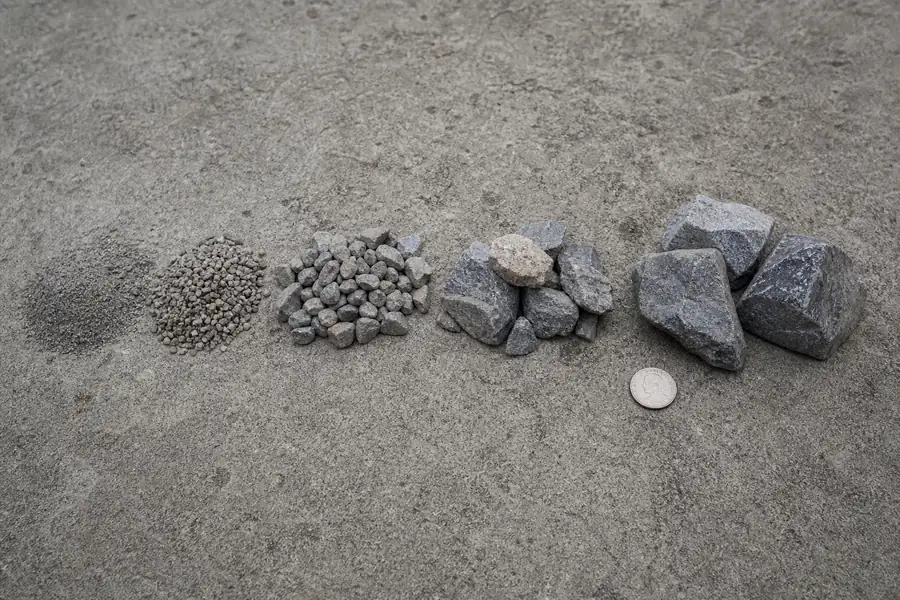
The chart below covers the graded stone sizes on this site, with the size each one runs and where it usually goes on a Colorado job. The clean grades, #57 stone and #67 stone along with #8 crushed stone, are washed so water moves through them. #89 crushed stone keeps its fines, so it firms up instead.
| Size | Stone size | Typical Colorado use |
|---|---|---|
| #4 | About 3/4 to 1-1/2 in | Open drainage layer under a wet mountain driveway, large trenches |
| #57 | 3/16 to 1 in, washed | French drains, foundation drainage, concrete work |
| #67 | About 1/4 to 3/4 in, washed | Pipe bedding, smaller trenches, wall backfill |
| #8 | About 3/32 to 3/8 in, clean | Permeable surfaces, pipe bedding |
| #89 | About 3/8 in down to fines | Paver and flagstone bedding that has to firm up |
What the Stone Numbers Mean
The numbers are standard aggregate size designations, not measurements. Lower single numbers are coarser stone: #4 runs well over an inch, while #8 sits around 3/8 inch. A two-digit grade blends two neighboring single sizes, so #57 is the #5 and #7 sizes together and #67 is #6 with #7.
A higher number does not always mean smaller stone either. #89 tops out at about 3/8 inch like #8, but it carries fines down to dust, which changes how it behaves more than the top size does. Read the grade and the size range together before you order.
3/4 Inch Minus, Crusher Run and Clean Stone
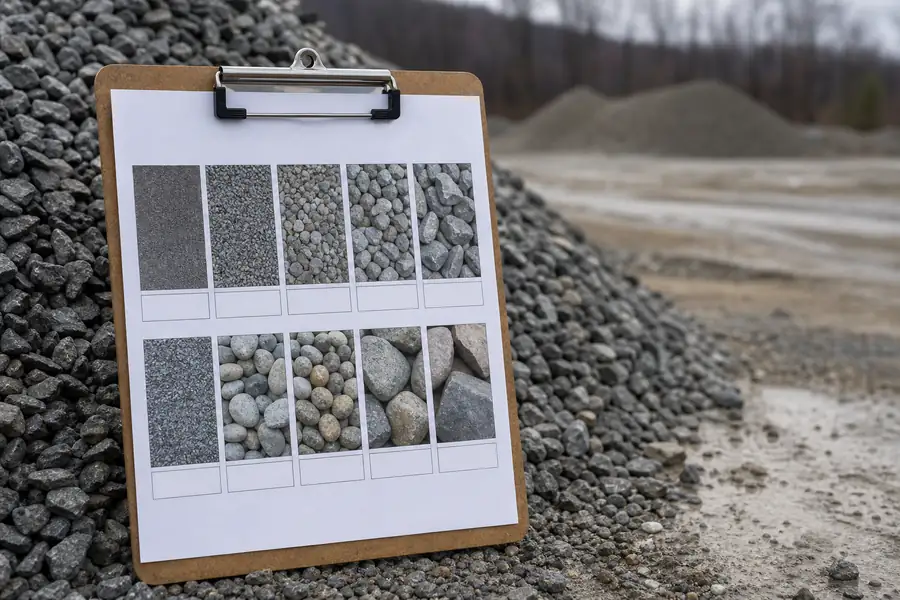
Minus on a gravel order means graded material rather than one clean size. Crusher run is 3/4 inch minus: angular crushed stone with the stone dust left in, so everything from 3/4 inch down to fines arrives in the same load. The fines fill the gaps between the larger pieces, and the layer compacts hard under a plate compactor. That is what you want under a driveway or a shed pad.
Clean stone such as #57 has the fines screened out, so water drains straight through it. Use it where water needs to leave: a French drain along a foundation, or the trench around a perforated pipe. Front Range clay does not absorb much water, so a drain that silts up with fines stops working in its first spring.
For single-size angular stone without the fines, this site also sells 3/4 inch crushed stone and 3/8 inch crushed stone. The 3/4 inch size handles sub-base and drainage work, and the 3/8 inch size makes a finer top layer for paths.
Gravel Depths for Colorado Driveways, Drains and Paths
Freeze-thaw sets the depth here. Along the Front Range the frost line sits around 36 inches and it runs deeper at altitude. High elevation also means strong sun and cold nights, so the ground can freeze and thaw many times in a single winter. Every one of those cycles lifts a thin base and drops it again, which is where potholes and ruts come from.
| Project | Depth (compacted) | Material |
|---|---|---|
| Driveway base, Front Range lot | 4 to 6 in | Class 6 road base |
| Driveway base, mountain or heavy use | 6 to 8 in | Class 6 road base |
| Driveway surface | 2 to 3 in over the base | Driveway gravel or 3/4 inch crushed stone |
| French drain | Full trench, 12 to 18 in deep | #57 stone or drain rock |
| Walkway or patio base | 3 to 4 in, then about 2 in of surface | Class 6 base, crusher fines on top |
For the full depth breakdown by soil and grade, see how deep a gravel driveway should be in Colorado, and run your own dimensions through the gravel calculator before ordering.
Front Range, Mountain and Western Slope Ground
Front Range lots in Denver, Boulder, Colorado Springs and Fort Collins commonly sit on heavy clay over decomposed granite. The clay swells when it is wet and shrinks when it dries, so the base has to be thick and well compacted. The grade also has to carry snowmelt away from the driveway rather than into it.
Mountain driveways around Evergreen and Durango face steep grades, thin rocky subgrade and snowplowing. A plow blade scrapes loose surface stone into the ditch every storm, so a compacted crusher run or Class 6 surface holds up better on a plowed grade than a thick layer of loose, clean stone. Set the plow shoes high enough that the blade rides over the gravel instead of cutting into it.
On the Western Slope around Grand Junction and Montrose, the climate is drier, but shale-derived clay soils there can swell when irrigation or a summer storm soaks them. The same rule applies: compacted base first, surface stone second. Keep the water moving away from the drive.
Colorado Names for These Sizes
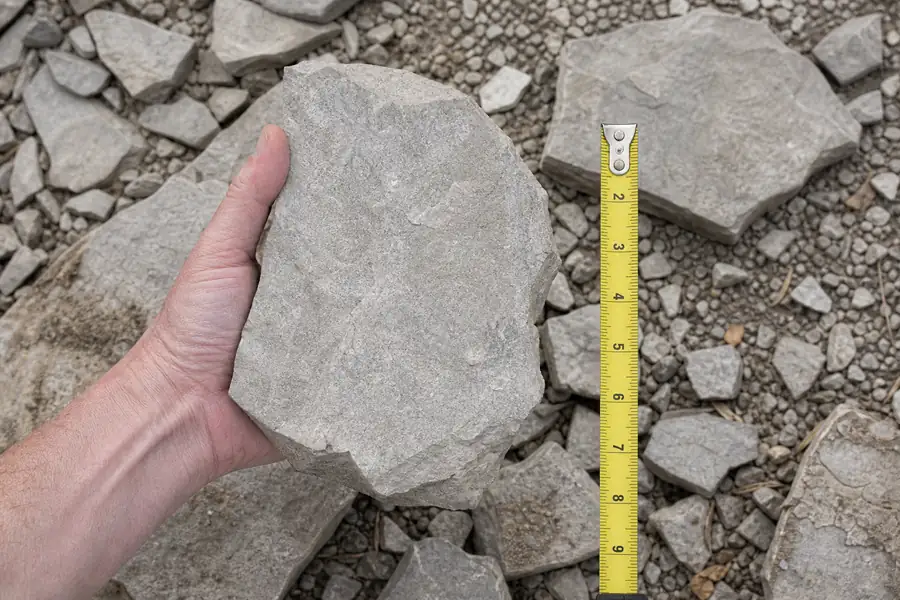
Colorado yards use a few local names for the same materials. The compacted base blend most Colorado driveways sit on is Class 6 road base, the blend Colorado road crews and contractors compact under gravel and asphalt. The fine, packable screenings used on garden paths are sold as crusher fines, sometimes called breeze. Some contractors ask for #57 as 3/4 inch washed rock.
Our guide to Class 6 road base in Colorado covers depth and tonnage for the base layer in detail, and squeegee vs crusher fines compares the two common path surfaces. For every town we deliver to, see gravel delivery across Colorado.
FAQs
What's the difference between #57 and #67 stone?
#57 stone runs 3/16 to 1 inch and #67 stone runs about 1/4 to 3/4 inch. Both are washed, so both drain. #57 moves more water through a French drain, while #67 is the smaller grade for pipe bedding and tighter trenches.
What does 3/4 inch minus mean?
3/4 inch minus is graded stone that includes every size from 3/4 inch down to fines in the same load. Crusher run is sold this way. The fines let it compact hard, which is why it goes under driveways and pads rather than into drains.
What gravel size is best for a Colorado driveway?
Most Colorado driveways need 4 to 6 inches of compacted Class 6 road base, or 6 to 8 inches on a mountain or heavy-use drive, topped with 2 to 3 inches of driveway gravel or 3/4 inch crushed stone. The base carries the load through freeze-thaw, and the top layer gives you the driving surface.
Is #8 crushed stone the same as pea gravel?
No. #8 crushed stone is angular stone of about 3/32 to 3/8 inch with little or no fines. Pea gravel is rounded natural stone around 3/8 inch. The angular edges of #8 stay put under load, while rounded pea gravel shifts underfoot.
What gravel should go in a French drain on Front Range clay?
Use a washed, clean stone such as #57 or drain rock around the perforated pipe, filling the trench. Keep fines out of the drain so it stays open through the spring melt, and grade the surrounding soil to move water away from the foundation.