#67 Stone: The Smaller Washed Grade for Bedding and Trenches
#67 Stone helps Colorado drainage layouts move water through angular crushed material while giving beds and paths a clean, intentional finish.
- Size: 1/4 inch to 3/4 inch
- Grading: #67
- Type: Angular crushed stone
From $459 for 1 ton, delivery included
Larger loads cost less per ton: 500 tons is $32,195 ($64.39 per ton). Pick any quantity below for a delivered price.
Free delivery included
Free delivery anywhere in Colorado
Pick a delivery date
Weekday delivery, earliest Oct 20
Get a Free Quote
Fill out the form and our sales team will get back to you within the hour.
Size and Grading
- Size
- 1/4 inch to 3/4 inch
- Grading
- #67
- Type
- Angular crushed stone
More loads of #67 stone leave for a curtain drain along a foundation than for anything else on the Front Range, and the reason is the clay. Water from snowmelt or a July cloudburst does not soak into it; it runs sideways along the top of it until it finds a basement wall. A trench packed with washed stone gives that water an easier route than the one it would pick on its own.
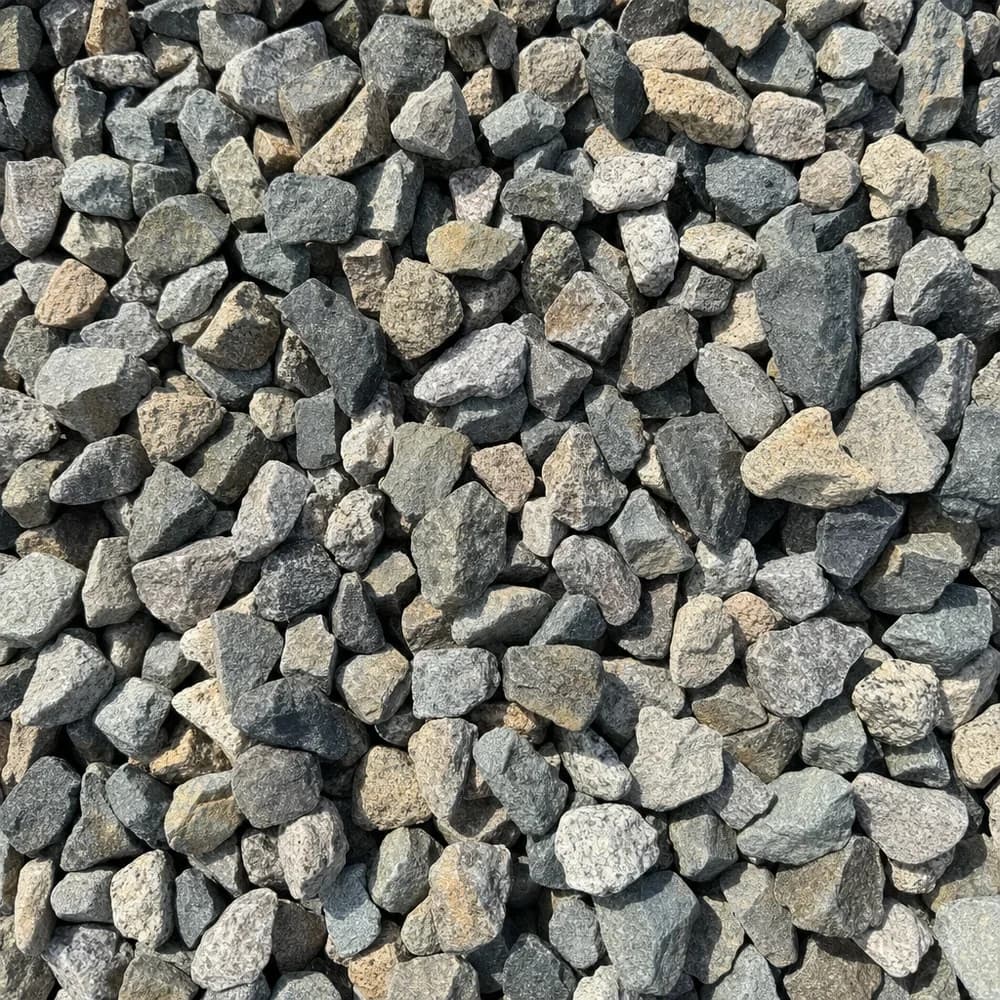
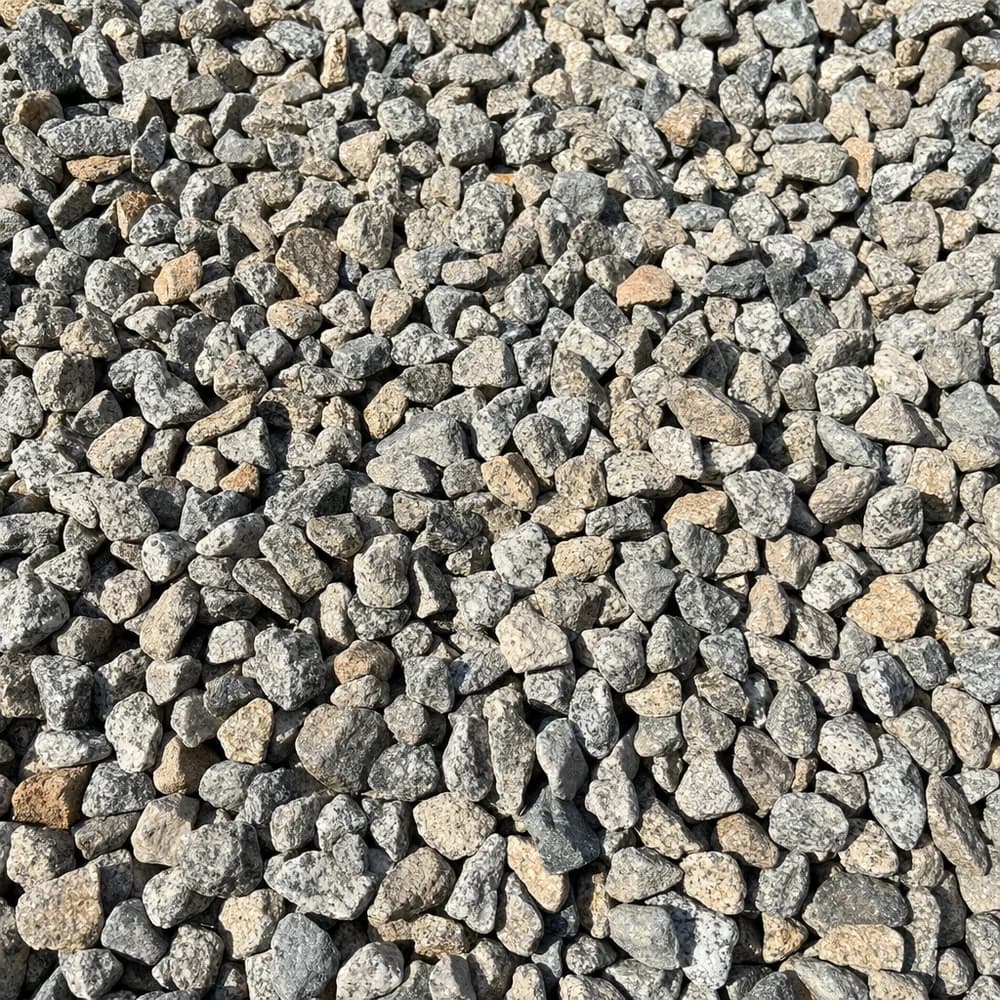
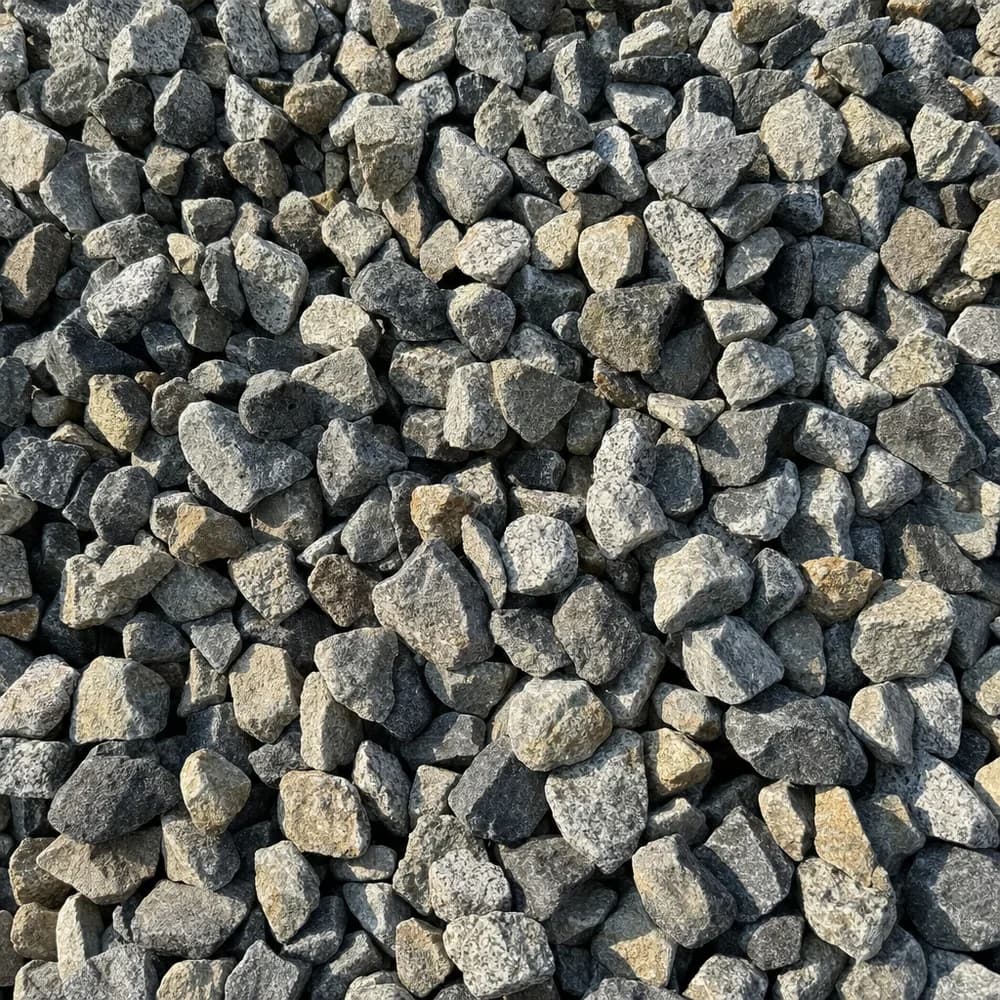
A bucketful is gray chips running from pea size to 3/4 inch
The grading is #67, the size runs from about 1/4 inch to 3/4 inch, and the type is angular crushed stone. Dig a bucket into the pile and you get sharp-faced pieces across that whole band, small ones filling in around larger ones, with no dust or fines in the mix because it has been washed.
That is a different animal from a single-size washed rock. There is still plenty of void space for water, but the smaller pieces sit closer together, so the surface reads as tidy rather than chunky and the bed under a pipe is more even. It is also why a concrete mix made with it finishes smoother: less coarse aggregate showing at the surface.
Pipe bedding, infiltration trenches and beds meant to look deliberate
Four jobs account for most of what goes out:
- Under and around buried pipe. Water, sewer and utility lines sit better on a bed of even-sized stone than on a bare trench bottom. The material supports the line along its whole length instead of leaving it bridging between high spots, and water drains away from the installation rather than sitting against it.
- Drain and infiltration trenches. The consistent grading leaves open passages for water, and the smaller pieces in the mix help slow fine sediment working its way into the stone from Front Range clay.
- Concrete aggregate. A smaller coarse aggregate gives a more workable mix and a finer surface, which is why it turns up in decorative and exposed concrete work.
- Tree rings, bed edges and landscape borders. The even size gives ground cover a neat, defined line in a way that a mixed-size stone does not.
In every one of those, the stone is doing a job that depends on the gaps between pieces staying open. Keep it out of the surrounding soil rather than mixing the two, or the drainage path stops being a drainage path.
Wrong pick for a rural lane, wrong pick for a bare-foot garden path
Two requests come up often enough to be worth heading off.
A long rural lane. Washed stone has no fines, so it never locks into a slab. Under tires it moves, it throws itself into the borrow ditch, and a plow blade scoops it off the top every winter. The lane wants Class 6 Road Base compacted, with a graded surface course on it.
A garden path people walk barefoot on. Angular faces at this size are sharp underfoot and they shift under a wheelbarrow wheel. If the path has to be comfortable, rounded Pea Gravel is kinder; if it has to be firm, compacted Crusher Fines is the standard answer here. This stone edges a path nicely. It is not much of a path.
It also has no business in a raised bed or spread as topsoil cover where plants need to root.
Trench depth, bed depth, and the drainage course under an RV pad
Depths worth planning around, all of them loose rather than compacted, because washed stone barely changes thickness:
| Job | Depth of #67 stone |
|---|---|
| Bedding under a pipe | 4 to 6 in below the pipe, then cover over it |
| Foundation or curtain drain trench | 12 to 18 in of trench fill |
| Drainage course under a parked-vehicle pad | 4 in, with base above it |
| Decorative bed or tree ring | 2 to 3 in over fabric |
| Bed edge or border strip | 2 in |
Under an RV or boat pad the stone is the bottom of the build, not the top. It keeps meltwater from sitting under the pad through the thaw, while a compacted base above it carries the trailer weight. Reverse that order and you get a surface that neither drains nor holds.
Filter fabric is the other habit worth keeping. Soft clay works up into the voids over a few seasons and closes a drain from below, which is the most common reason a trench that worked in its first spring stops working in its fourth.
Tons for a 70 foot drain line and a 10 by 24 boat pad
Three hypothetical jobs, run through the formula on this page: length times width in feet, times depth in inches divided by 12, divided by 27 for cubic yards, then times the weight. This site publishes about 2,800 lb per cubic yard for #57, #67 and 3/4 inch crushed stone, which is roughly 1.40 tons per cubic yard.
Curtain drain, 70 ft long and 2 ft wide at 18 inches. 70 x 2 = 140 sq ft. 140 x 18 / 12 = 210 cubic feet. 210 / 27 = 7.78 cubic yards. 7.78 x 1.40 = 10.9 tons.
Drainage course under a 10 by 24 ft boat pad at 4 inches. 240 sq ft. 240 x 4 / 12 = 80 cubic feet. 80 / 27 = 2.96 cubic yards. 2.96 x 1.40 = 4.1 tons.
Edge strip along a 45 ft garden path, 2.5 ft wide at 2 inches. 112.5 sq ft. 112.5 x 2 / 12 = 18.75 cubic feet. 18.75 / 27 = 0.69 cubic yards. 0.69 x 1.40 = about 1 ton.
Deduct the volume the pipe itself occupies on a bedded run if the line is large, and use the aggregate calculator for trenches you have to measure in sections.
One size up, one size down, and when the step is worth taking
#57 Stone sits in the 3/16 to 1 inch band. Bigger voids, faster flow, and the size most plan sheets name for a French drain. Step up to it where the trench is carrying real volume or where sediment is the main worry.
#8 Crushed Stone is smaller again, which suits paver joints, tight bedding and fine drainage work. Step down to it where the gap you are filling is narrow.
3/4" Crushed Stone is the general-purpose size for drive surfacing and construction entrances rather than a drainage specification. If a plan sheet names a number, order that number and do not substitute.
Ordering washed stone while the trench is still open
Dig first, measure second, order third. An open trench on clay does not want to sit through a week of weather, so line up the fabric, the pipe and the stone for the same stretch of days. Delivery is arranged at checkout by ZIP code, and the truck needs clear access to a firm place to tip, ideally within wheelbarrow reach of the run. Choose your tonnage and a date on this page, and check the delivery information if the access is tight.
Quickly Calculate How Much You Need
Material: #67 Stone
How to Measure
Measure the length and width of your project area in feet
Decide on depth in inches (2" for landscaping, 4" for driveways)
Enter the values above and we'll calculate the tonnage you need
Need help figuring out the right amount? We can help!
Call or text us at (719) 781-8522 and we'll help you calculate the right quantity for your project.
Not sure how much you need? The Stone Calculator has depth guides, coverage charts and worked examples for this material.