#8 Crushed Stone: The Clean One in the 3/8 Inch Family
#8 Crushed Stone helps Colorado drainage areas shed water through clay-prone ground and provides a clean finish around pavers.
- Size: About 3/32 inch to 3/8 inch
- Grading: #8, clean with little to no fines
- Type: Crushed stone
From $459 for 1 ton, delivery included
Larger loads cost less per ton: 500 tons is $32,195 ($64.39 per ton). Pick any quantity below for a delivered price.
Free delivery included
Free delivery anywhere in Colorado
Pick a delivery date
Weekday delivery, earliest Oct 20
Get a Free Quote
Fill out the form and our sales team will get back to you within the hour.
Size and Grading
- Size
- About 3/32 inch to 3/8 inch
- Grading
- #8, clean with little to no fines
- Type
- Crushed stone
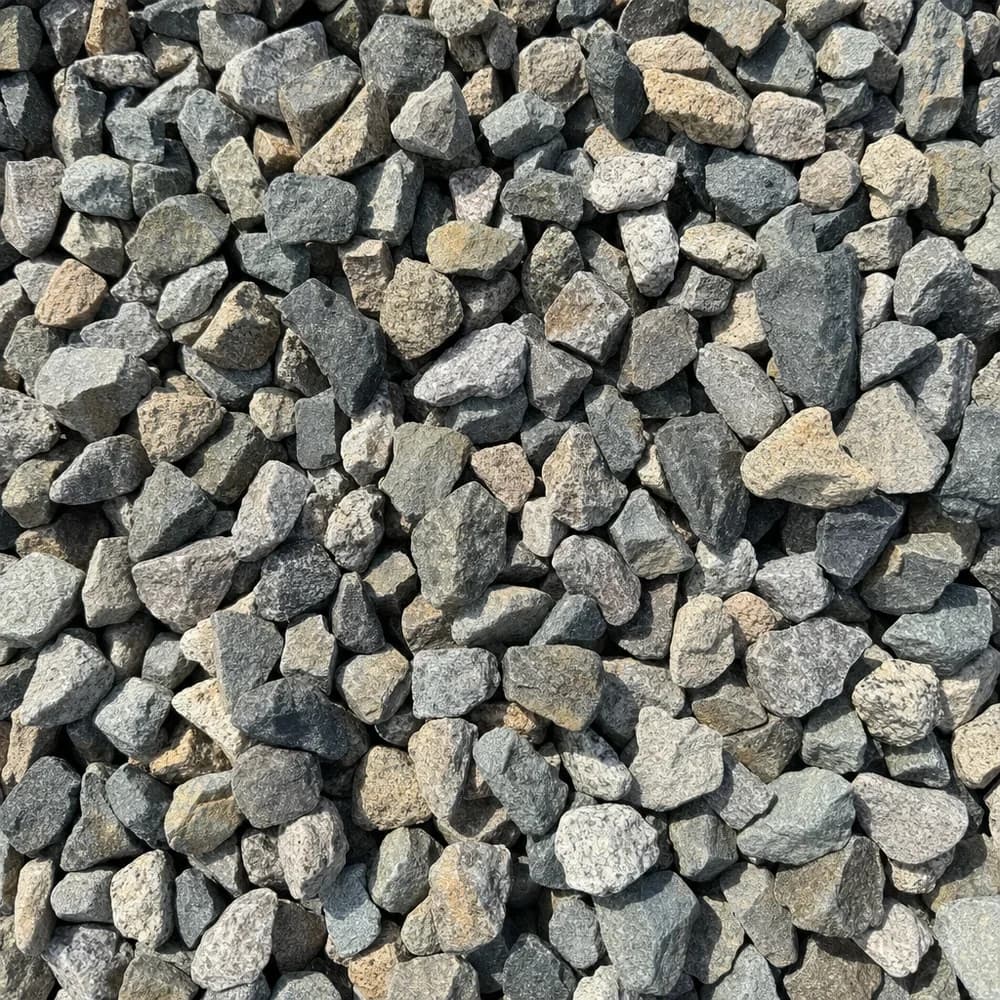
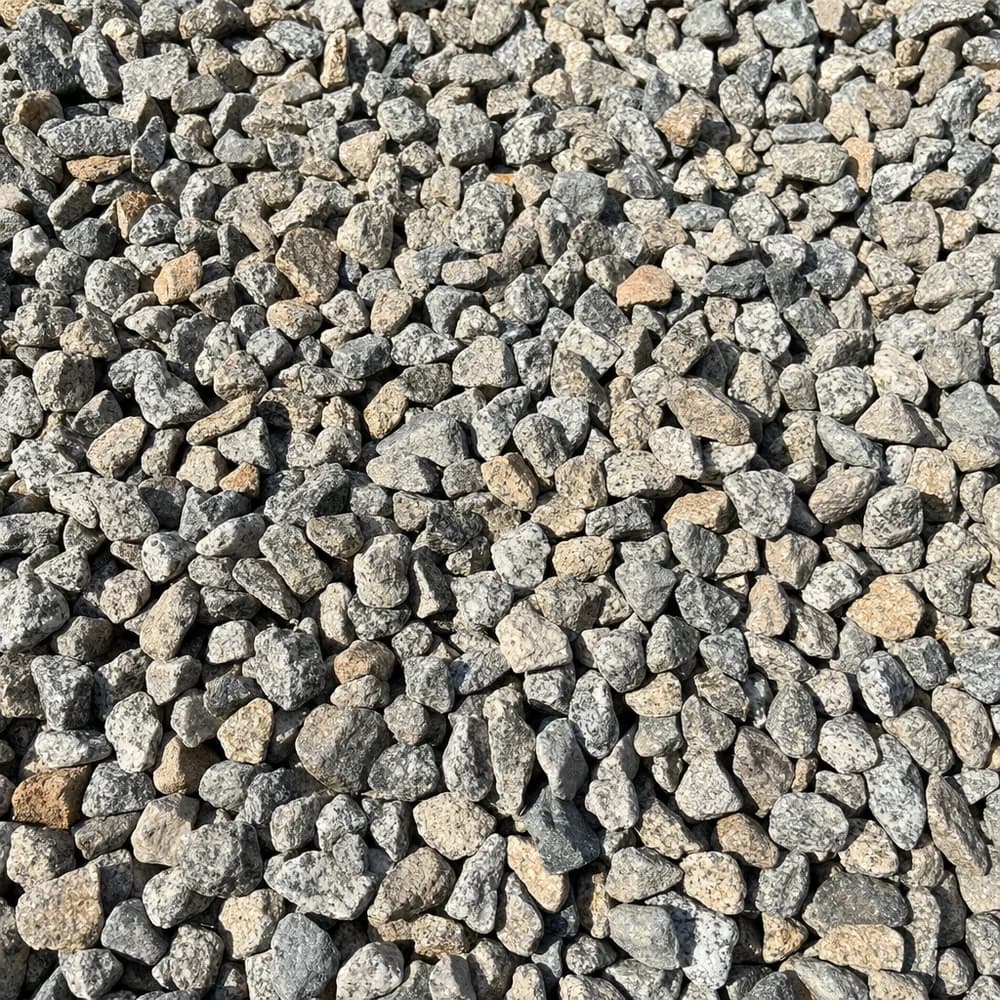
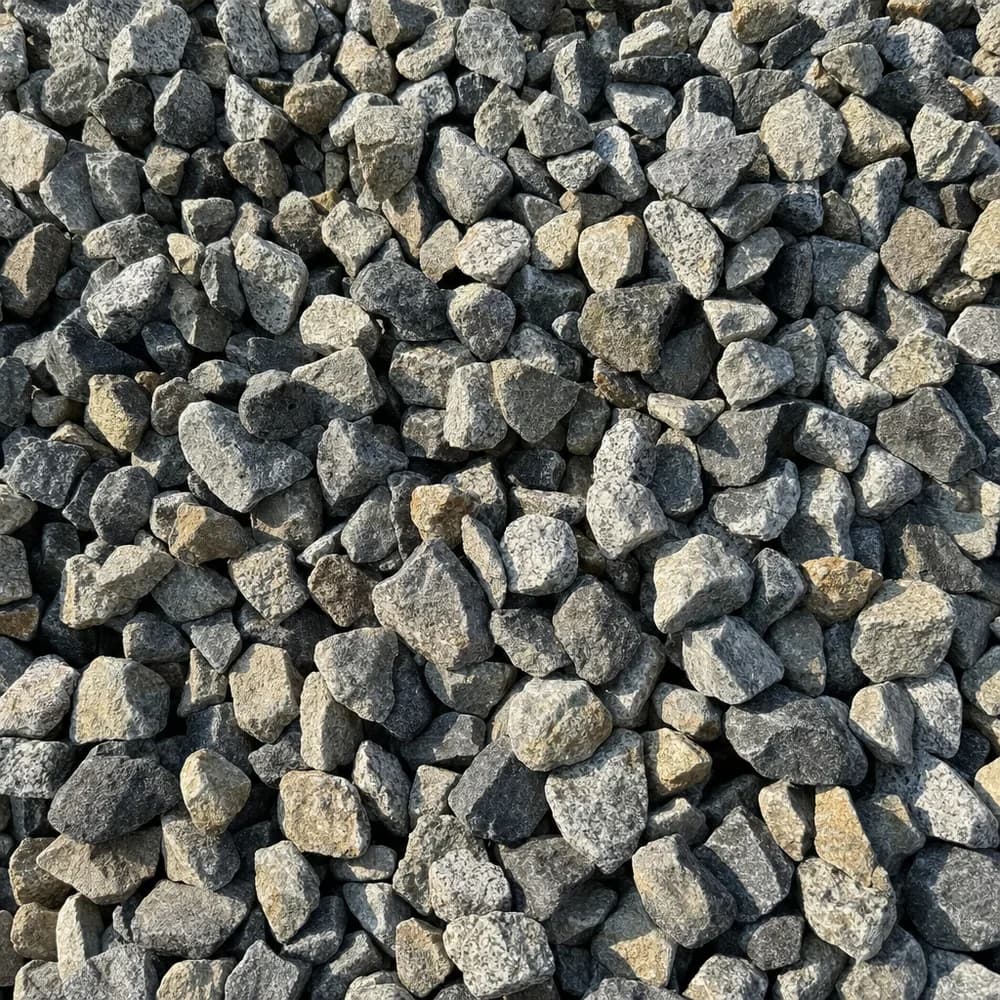
Most people arrive at this page with three small gray stones on a shortlist and no way to tell them apart from a photograph. On a Front Range job that choice decides whether water leaves a patio or sits under it through a freeze-thaw week, so it is worth two minutes. #8 Crushed Stone runs about 3/32 inch to 3/8 inch and is graded clean, with little to no fine material in it. That single fact is what it is bought for.
#8 crushed stone against #89, #57 and squeegee
Four materials that a supplier's yard keeps near each other, ranked by what they do rather than by what they look like.
| Material | Size | Fines | What that makes it |
|---|---|---|---|
| #89 Crushed Stone | 3/8 inch down to fines | Carries fines | Binds and firms up. A setting bed, not a drain. |
| #8 Crushed Stone | 3/32 to 3/8 inch | Little to none | Stays open under load. Bedding, joints, drainage. |
| #67 Stone | Up to 3/4 inch | Washed | The same idea one size up, for trench volume. |
| squeegee | 1/4 inch minus | All fines | Screeds flat and packs tight. No drainage at all. |
Two stones in that table pass water and two do not. If a layer has to stay open once soil and traffic press on it, the fines are the enemy, and this is the small stone that arrives without them.
Permeable pavers on clay, where the clean stone earns its keep
A permeable paver system only works if every layer under it stays open. On expansive clay that swells in a wet spring and shrinks through a dry summer, the water coming through the joints has to keep traveling, because anything held at the base is water that will freeze and lift the surface.
#8 Crushed Stone is the setting bed the pavers sit on and, swept in, the material filling the joints between them. Underneath it sits a thicker course of larger clean stone, usually #57 Stone, and under that the subgrade and a geotextile separation layer so clay cannot work up into the system. Keep site soil off the stone while you are working. One wheelbarrow of clay tracked across an open bed will do more damage than a season of weather.
Packing around a repaired line without leaving voids
The other job this size handles well is bedding. Around a pipe or a conduit run, a small angular stone shovels into the haunch under the pipe and supports it evenly instead of bridging over a hollow that shows up as a dip in the lawn two years later. Because it drains, water in the trench keeps moving along the bedding rather than pooling against the line.
Wrap the stone in filter fabric where the trench walls are clay, then backfill above it. The bedding layer is not what holds the surface up, so bring the last lift back to grade with compacted material suited to what goes on top.
A construction entrance wants a bigger stone than this
Take a hypothetical build access point, 12 feet wide by 40 feet, where a pickup and a delivery truck will turn off the road onto raw ground. A 3/8 inch stone pushes down into soft subgrade under a loaded axle and rides out onto the county road in the tire tread. That entrance wants #4 Crushed Stone at 6 inches over fabric: 480 square feet at 6 inches is 480 x 6 / 12 = 240 cubic feet, or 240 / 27 = 8.9 cubic yards. At roughly 2,900 lb per cubic yard for #4 stone, near enough 12.9 tons.
Why a dry creek bed will scatter it down the slope
The same size problem shows up in a decorative channel. A dry creek line that carries anything in a monsoon-season storm will move 3/8 inch stone to the bottom end of the run, and the angular gray chips never read as a streambed anyway. Runoff features want rounded stone with weight behind it, which is Large River Rock, and an outlet that actually scours wants RipRap.
Bedding depth on a 12 by 16 patio, plus a drain strip
Both hypothetical, worked at about 2,800 lb per cubic yard, which is 1.40 tons per cubic yard, and checked twice.
Permeable patio, 12 by 16 ft, 2 inch bedding course. 192 square feet. 192 x 2 / 12 = 32 cubic feet. 32 / 27 = 1.19 cubic yards. At 1.40, that is 1.7 tons. Joint filling comes out of the same pile, so keep the 5 percent the stone calculator adds by default rather than ordering a separate handful.
Drain strip along the patio edge, 4 by 30 ft at 4 inches. 120 square feet. 120 x 4 / 12 = 40 cubic feet. 40 / 27 = 1.48 cubic yards, or 2.1 tons.
Ordered together that is 3.7 tons. Shapes that bend or come in several pieces are quicker through the stone calculator, which takes rectangles and circles, up to five areas at once, and depth in inches.
Getting a washed load onto the patio side of the house
Clean stone is easy to shovel and easy to spoil. Pick the dump spot before the truck arrives, ideally on a tarp or a swept slab rather than on bare soil, and keep it clear of where the mud from the excavation is going. Delivery is arranged at checkout by ZIP code, and the truck needs clear access and room to tip. Set your quantity and delivery date on this page once the bedding depth is settled, or send dimensions through the contact form if the layer build is what you are unsure about.
Quickly Calculate How Much You Need
Material: #8 Crushed Stone
How to Measure
Measure the length and width of your project area in feet
Decide on depth in inches (2" for landscaping, 4" for driveways)
Enter the values above and we'll calculate the tonnage you need
Need help figuring out the right amount? We can help!
Call or text us at (719) 781-8522 and we'll help you calculate the right quantity for your project.
Not sure how much you need? The Stone Calculator has depth guides, coverage charts and worked examples for this material.
Frequently Asked Questions About #8 Crushed Stone
#8 Crushed Stone delivery across Colorado
- Denver
- Colorado Springs
- Aurora
- Fort Collins
- Thornton
- Arvada
- Westminster
- Greeley
- Pueblo
- Boulder
- Longmont
- Castle Rock