Gravel Driveway Maintenance: Fixing Potholes, Ruts and Washboarding, and When to Regrade or Regravel
Gravel driveways don't fail all at once. They fail in patterns: a pothole by the mailbox, a rutted track where tires spin on the grade, a washboard stretch where everyone brakes before the garage. Each pattern has a different cause, and guessing wrong means redoing the work after the next thaw. Front Range freeze-thaw cycles and spring runoff push gravel driveway maintenance onto a tighter schedule here than in flatter, drier states, but the fixes themselves are straightforward once you know which problem you're looking at.
Fixing Potholes in a Gravel Driveway
A pothole forms when water pools in a low spot, softens the base underneath, and vehicle weight punches through the weakened surface. The hole keeps growing because every tire pass pumps water sideways into the surrounding gravel, so patching just the surface without rebuilding the base underneath simply moves the problem a few inches over.
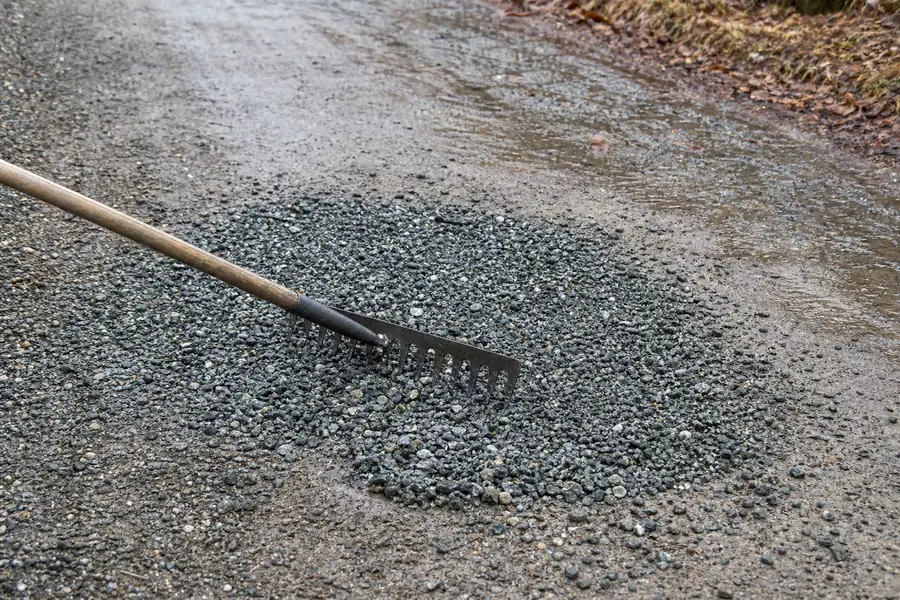
Dig the pothole out to firm, dry subgrade, usually 8 to 10 inches down, and rebuild it in compacted lifts rather than dumping loose rock in all at once. For a pothole around 3 feet across and 8 inches deep, figure on 300 to 400 pounds of road base to reconstruct the base and another 100 pounds of driveway gravel to cap it flush with the surrounding surface.
In a pothole that keeps reopening in the same wet spot, swap the base lift for three-quarter inch crushed stone instead of standard road base. The larger, angular rock locks together under load and drains water through it instead of holding it, which is usually why that one spot keeps failing.
Fixing Ruts and Washboarding on a Gravel Driveway
Ruts form when soft subgrade flexes under repeated wheel loads and gravel pushes outward instead of staying compacted in the travel lane. Washboarding, the rippled ridges that run across the driveway rather than down it, comes from loose, uniform-sized gravel with no fines to bind the surface, so tires skip across the stones and build small waves into bigger ones.
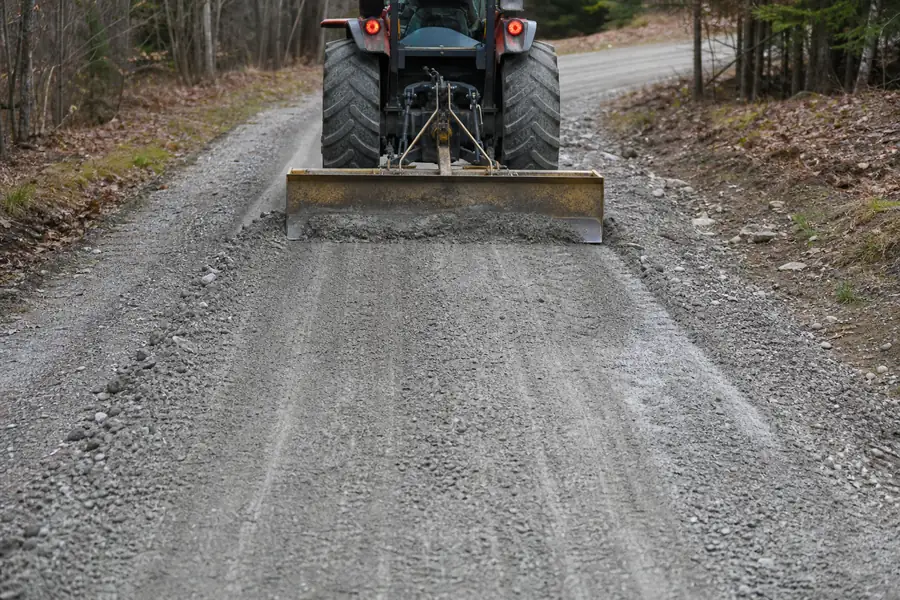
Both get fixed the same way: break up the ridges and ruts with a box blade or a rented grader, then blend fresh material into the loosened surface instead of just smoothing what's already there. Crusher run is the material for this job because it includes a range of particle sizes down to fine dust, and those fines pack between the larger stones to bind the surface instead of letting it ride loose again.
A driveway 12 feet wide and 100 feet long with washboarding across its full length typically needs 8 to 10 tons of crusher run worked into the top 2 inches. Run your own dimensions through the gravel calculator before ordering so you're not short a load halfway through the regrade.
Thin Spots and Edge Migration on a Gravel Driveway
Thin spots and edge migration come down to the same cause: gravel moving sideways and downhill faster than anyone replaces it. Plow blades, mower decks and storm runoff all push loose stone toward the shoulders a little at a time, and a crown that's too flat lets rainwater carry fines off the surface instead of shedding to the sides.
Reshape the crown first, pulling migrated gravel back toward the center with a rake or blade before adding anything new. A driveway that's lost about an inch of depth across its surface needs roughly 1 ton of gravel for every 200 square feet to bring it back to a working 2 inch depth.
Steel or timber edging along the shoulders stops the cycle from repeating. Without it, every regravel job just ends up feeding the same strip of lawn.
When to Regrade vs Regravel a Gravel Driveway
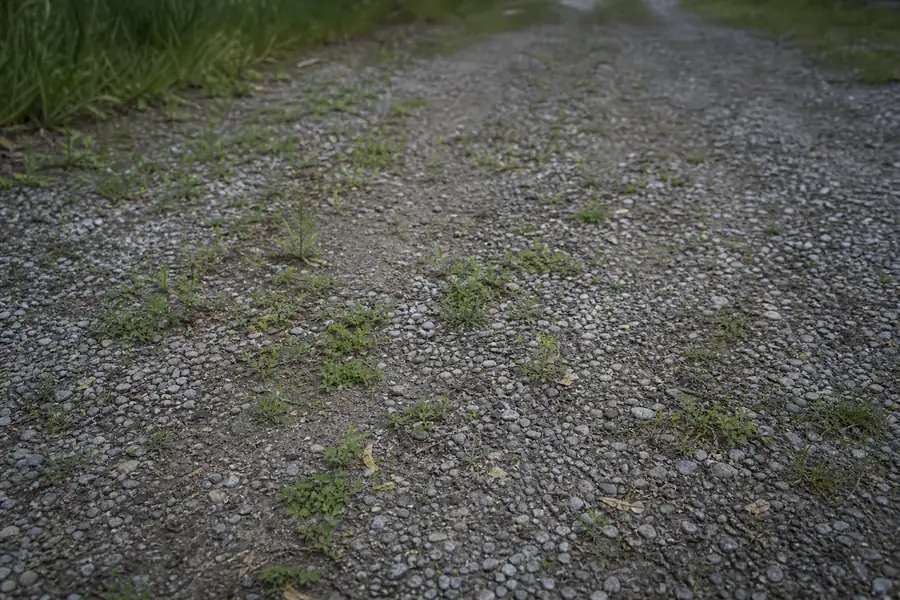
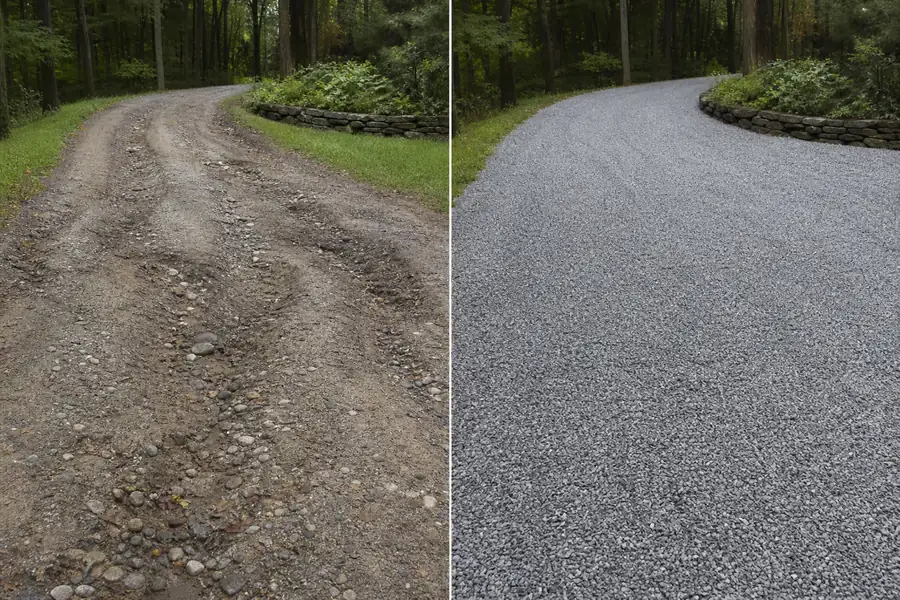
Regrade when the problem is shape and the existing gravel is mostly still there: ruts, washboarding, a flattened crown. A box blade or landscape rake redistributes material you already paid for and costs nothing but time or a rental fee. Regravel when the base has washed out, clay is showing through bald patches, or the surface has lost more than half its original depth; at that point there isn't enough material on the ground left to simply reshape.
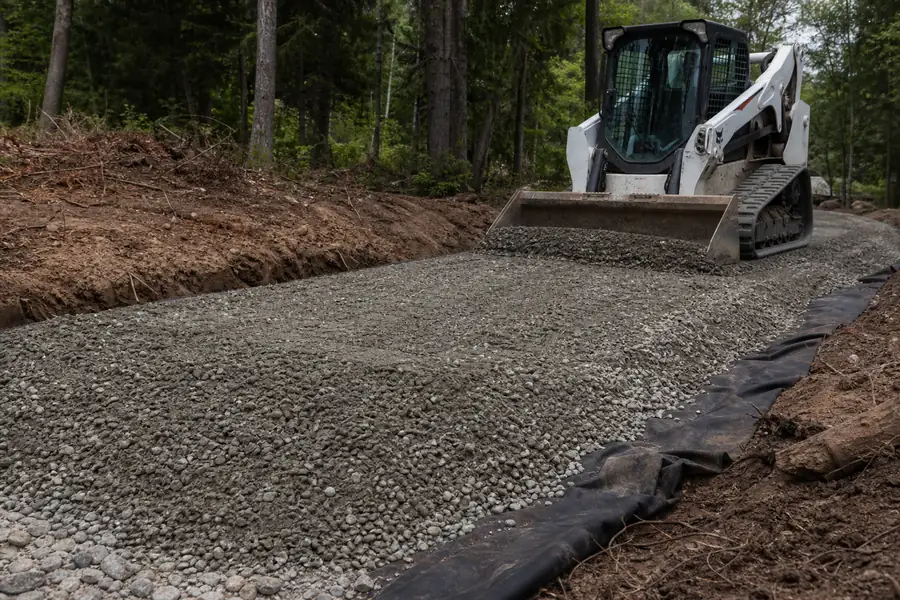
If you're rebuilding from bare clay rather than patching an existing drive, check how deep the base needs to be for Colorado conditions in our gravel driveway depth guide before the first load goes down. Skipping base depth is the single biggest reason a newly regraveled driveway ruts again by the following spring.
Colorado Gravel Driveway Maintenance Calendar
Gravel driveway maintenance in Colorado runs on two hard dates: right after spring melt, and before the first freeze locks up the ground. Everything else is upkeep in between.
| Timing | Task | Why |
|---|---|---|
| After spring melt (April-May) | Regrade ruts, refill potholes, check culverts | Freeze-thaw and runoff do the most damage over winter |
| Early-mid summer | Top dress thin spots, pull edges back in | Catches migration before it becomes a bare patch |
| Before first freeze (Sept-Oct) | Final regrade, top up low spots, order material early | Mountain and I-70 corridor deliveries slow once winter weather starts |
Mountain driveways above 8,000 feet have the least room for error. Order material before the first hard freeze, since grade- and weather-limited delivery routes along the I-70 corridor can lose weeks to winter closures once the snow sets in.
FAQs
How often does a gravel driveway need maintenance in Colorado?
Most Colorado gravel driveways need a regrade twice a year: once after spring melt and once before the first freeze. Driveways on a steep grade or above 8,000 feet often need a quick mid-summer touch-up too, since runoff and traffic wear them faster.
Can I fix a gravel driveway pothole myself?
Yes, a single pothole is a reasonable DIY repair if you dig it out to firm subgrade and rebuild it in compacted layers rather than just dumping loose gravel in the hole. Skipping the compaction step is why so many patched potholes reopen within a few weeks.
What causes washboarding on a gravel driveway?
Washboarding happens when loose, uniform gravel with no fine material to bind it gets driven over repeatedly, and small tire bounces build into bigger ripples over time. Blending in a material with a range of particle sizes, like crusher run, fixes it because the fines lock the surface together instead of letting stones roll loose.
How do I know if I need to regrade or fully regravel my driveway?
Regrade if the gravel is still mostly on the driveway and just needs reshaping, which covers most ruts and washboarding. Regravel if bare clay is showing through, weeds have taken hold, or the surface has lost more than half its original depth, since there's no longer enough material on the ground to redistribute.
How much gravel do I need to top dress a driveway?
A driveway that has thinned by about an inch needs roughly 1 ton of gravel for every 200 square feet to restore a 2 inch working depth. Measuring the exact length and width first and running it through a gravel calculator gives a tighter number before you order.