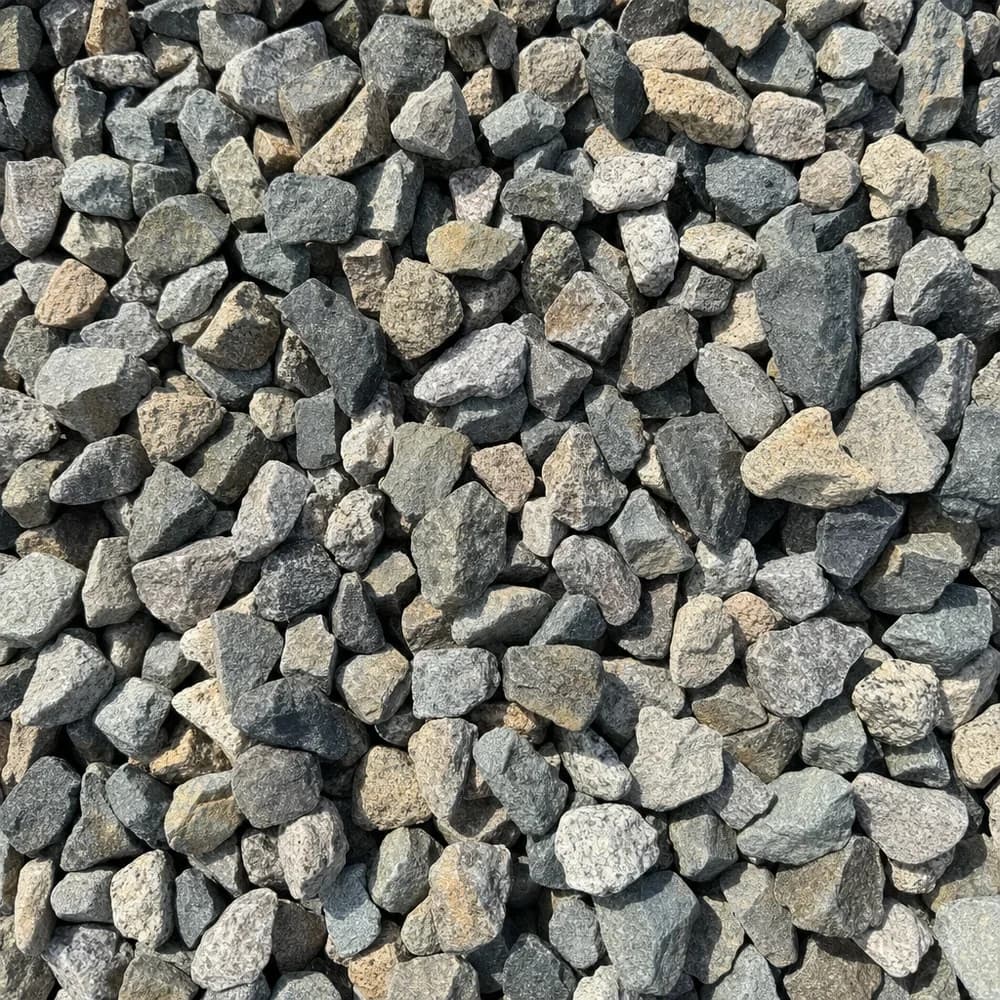
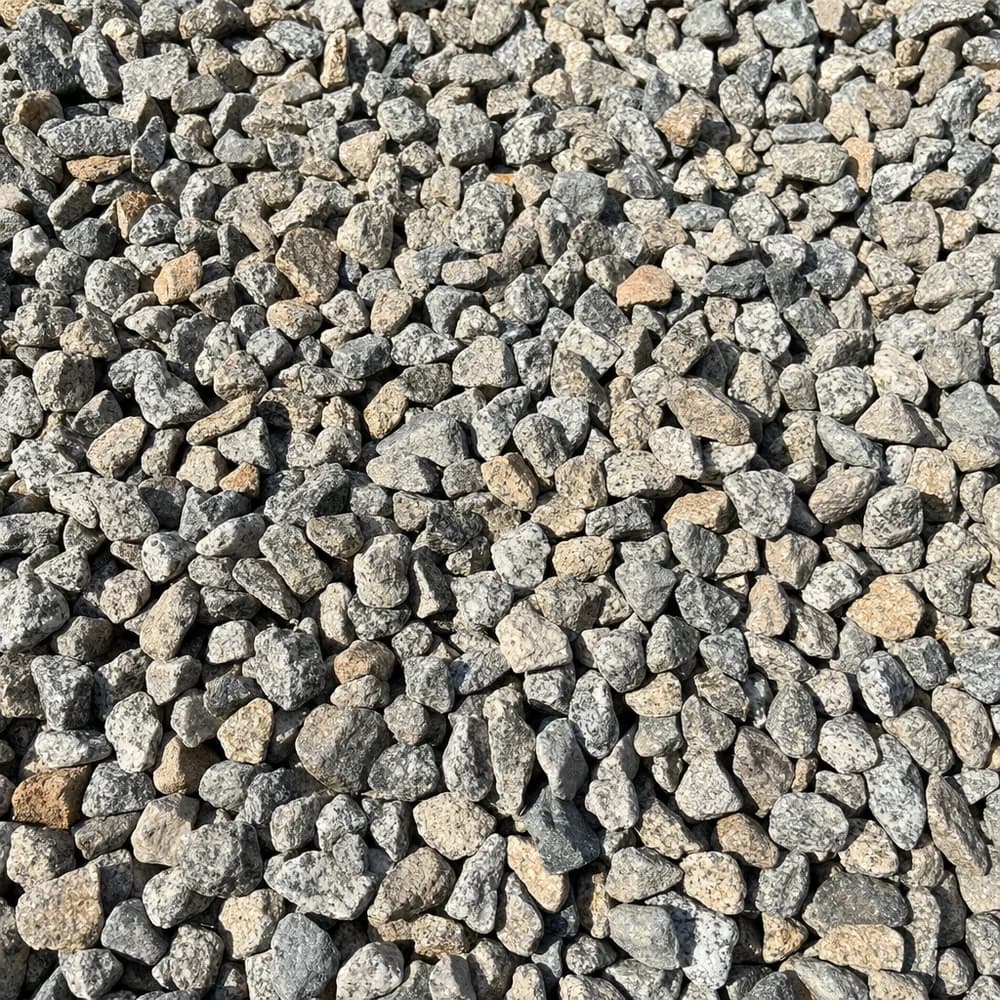
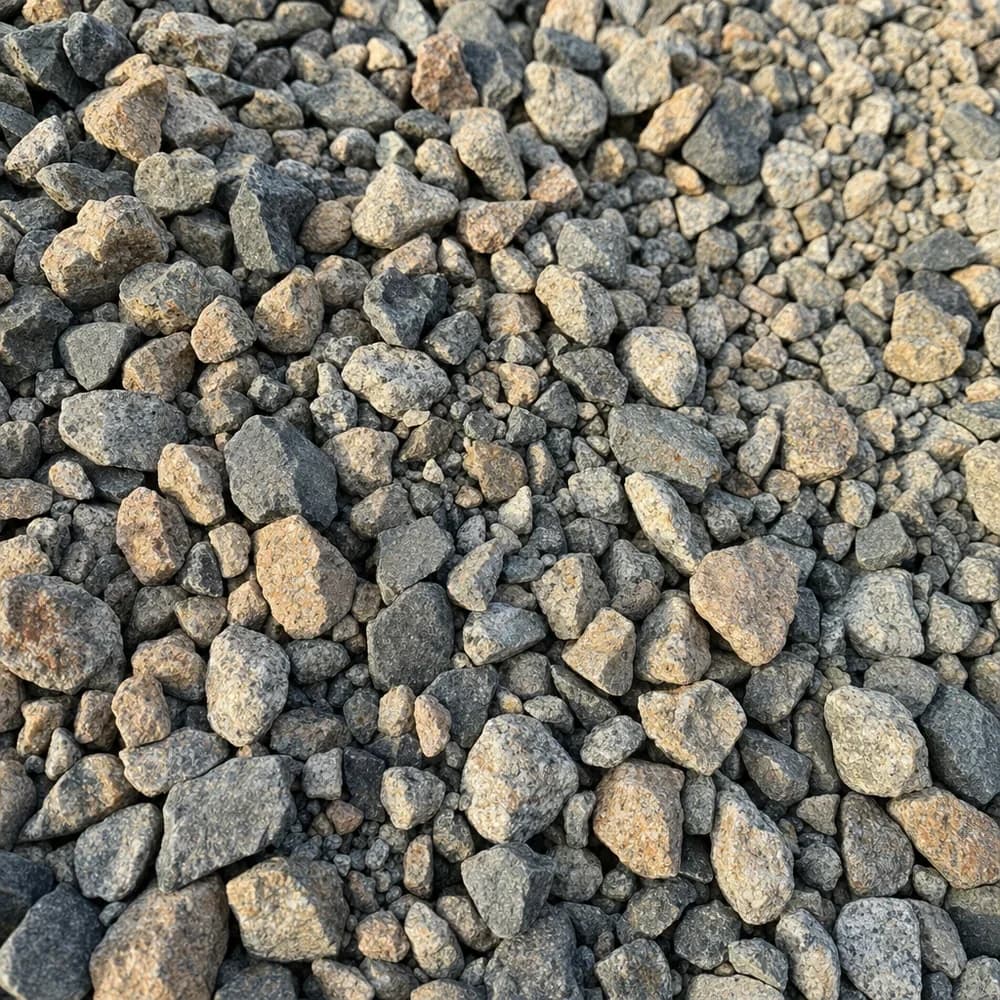
#57 Stone: Where Open Rock Beats a Compacted Layer
Also known as: 3/4 inch washed rock
Front Range clay and spring melt call for drainage that stays open. #57 Stone supports Colorado drain installations and concrete work.
- Size: 3/16 inch to 1 inch
- Grading: #57
- Type: Angular crushed rock
From $402 for 1 ton, delivery included
Larger loads cost less per ton: 500 tons is $29,175 ($58.35 per ton). Pick any quantity below for a delivered price.
Free delivery included
Free delivery anywhere in Colorado
Pick a delivery date
Weekday delivery, earliest Oct 20
Get a Free Quote
Fill out the form and our sales team will get back to you within the hour.
Size and Grading
- Size
- 3/16 inch to 1 inch
- Grading
- #57
- Type
- Angular crushed rock
Front Range clay does not absorb water so much as refuse it. A thunderstorm in July or a warm week in March puts more water on the ground than the clay will take, and the rest goes looking for a sideways route. #57 Stone is what you give that water when you would rather choose the route yourself, because the gaps between the pieces stay open instead of packing shut.
Choose it when water has to keep moving through ground that will not take it
The grading is the argument. Every piece is between 3/16 inch and 1 inch, angular crushed rock with nothing smaller mixed in. Because the sizes are close together, the voids between them are large and consistent, and there are no fines to wash down and plug them.
That makes it the right fill anywhere the job description is "keep water moving":
- A French drain trench where the pipe needs surround that will not silt up.
- A culvert outlet or ditch line taking the first hard flush after snowmelt.
- Backfill behind a retaining wall, where trapped water is what pushes the wall over.
- Coarse aggregate in a concrete mix.
It is also the reason the stone drains rather than compacts. You cannot have both from one material.
Skip #57 Stone where the layer has to carry a load and stay put
Angular faces do key together, so a compacted bed of it is more stable than rounded gravel of the same size. But there are no fines to bind it, so it never locks into a slab. Loose washed rock under tires migrates, throws stone onto the lawn and gets scooped up by a snow shovel or a plow blade every winter.
For a surface that has to stay flat and carry weight, the base layer is Class 6 Road Base and this stone is not a substitute for it. Nor does it belong in a raised bed or spread as a walking path, where the angular edges are unpleasant underfoot.
Ditch lines and culvert outlets after the snow lets go
Runoff on a slope or through a swale is a seasonal event here, not a constant one. The bank sits dry for months and then takes a concentrated flush during spring melt or a monsoon-season storm. Line the run where the water actually travels, carry the stone past the point of discharge so the flow lands on rock rather than bare soil, and tie the edges into the surrounding ground so the water cannot cut around the outside of your work.
Where the channel carries enough force to move 3/4 inch pieces, this is the wrong size and the job wants RipRap instead. A useful rule of thumb: if the stone you placed moved during the first runoff season, go heavier rather than deeper.
In a xeric bed, and what a rounded stone does differently
Plenty of xeric beds on the Front Range are finished in angular washed rock, and it has two advantages: it does not roll underfoot, and it stays where a shovel puts it on a slope. What it does not do is look soft. The faces are sharp and the color is whatever the crushed rock is, with none of the tan and gray variation of a rounded stone.
For a bed that is meant to be looked at rather than walked through, River Rock reads better. For a bed that has to take runoff as well as look tidy, angular stone holds the grade more reliably.
Under a shed pad: where clean stone stops and Class 6 begins
A shed or garage pad sitting on clay wants two things that fight each other: a firm layer that will not settle, and a way for water to get out from under the structure. The usual answer is a compacted base for strength with a shallow drainage course of clean stone under or around it, rather than trying to make one material do both.
- Dig out the sod and soft topsoil, then compact the subgrade.
- Lay geotextile fabric over soft or recently disturbed clay.
- Place and compact the base to the depth the structure needs.
- Use washed stone for the drainage layer, the perimeter trench or the footing drain.
Depths worth planning around: 3 inches of loose cover in a decorative bed, 4 inches under a pad as a drainage course, and 12 to 18 inches of trench fill around a French drain line.
Working out a ditch line, a xeric bed and a shed pad
Three hypothetical examples, run through the same arithmetic the tool on this page uses: length and width in feet, depth in inches, divided to cubic yards, then multiplied by the material weight of 1.40 tons per cubic yard.
Ditch lining, 60 ft long and 3 ft wide at 6 inches. 60 x 3 = 180 sq ft. 180 x 6 / 12 = 90 cubic feet. 90 / 27 = 3.33 cubic yards. 3.33 x 1.40 = 4.7 tons, or 4.9 tons with the 5 percent the stone calculator adds by default.
Xeric bed, 18 by 6 ft at 3 inches. 108 sq ft. 108 x 3 / 12 = 27 cubic feet. 27 / 27 = 1 cubic yard exactly, which is 1.4 tons.
Shed pad drainage course, 10 by 12 ft at 4 inches. 120 sq ft. 120 x 4 / 12 = 40 cubic feet. 40 / 27 = 1.48 cubic yards, so 2.1 tons.
For trenches, circles and awkward outlines, the stone calculator handles up to five areas in one go.
Getting a load of washed rock close to the trench
Delivery is arranged at checkout by ZIP code, and the truck needs clear access to a firm dump spot. Clean stone is easier to move by wheelbarrow than a damp base material, but it is still rock, so dump it as close to the trench line as the access allows. Pick a quantity and a date on this page once your depth is settled, and check the service area on the Colorado locations page first.
Quickly Calculate How Much You Need
Material: #57 Stone
How to Measure
Measure the length and width of your project area in feet
Decide on depth in inches (2" for landscaping, 4" for driveways)
Enter the values above and we'll calculate the tonnage you need
Need help figuring out the right amount? We can help!
Call or text us at (719) 781-8522 and we'll help you calculate the right quantity for your project.
Not sure how much you need? The Stone Calculator has depth guides, coverage charts and worked examples for this material.