How Deep Should a Gravel Driveway Be in Colorado?
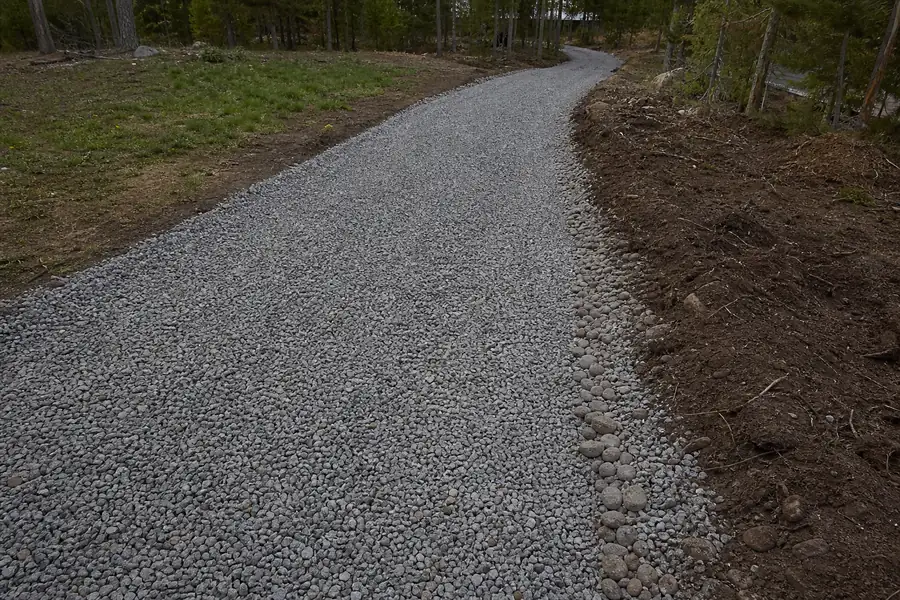
Quick answer: Most Colorado gravel driveways need 8 to 12 inches of total compacted depth: 4 to 8 inches of Class 6 Road Base underneath, topped with 2 to 4 inches of driveway gravel. Heavy clay soils along the Front Range and steep mountain driveways push you toward the deeper end of that range.
Skimp on depth and you'll see it every spring: ruts, potholes and a surface that pumps mud up through the gravel as the ground thaws. The base layer is what actually carries the load and sheds water. The surface gravel just gives you a clean, drivable finish on top of it.
What determines gravel driveway depth in Colorado
Depth depends on three things: the soil under the driveway, how heavy the traffic is, and how steep the grade runs. A short, flat driveway on decent soil that only sees passenger cars can get by on the lower end of the range. A driveway that handles trucks, trailers, or a steep approach needs more base, not more surface gravel.
Soil matters most. Front Range lots commonly sit on heavy clay over decomposed granite, and clay holds water and swells. A thin base over clay moves every time the ground freezes and thaws. A well-compacted base spreads the load and keeps water from pooling under the driving surface, which is the difference between a driveway that lasts and one that needs regrading every other year.
Recommended depth by base and surface layer
The table below is the starting point for most residential Colorado driveways. Adjust up for clay, slope, or heavy vehicle traffic, and down only if you're building over an already stable, well-draining subgrade.
| Driveway condition | Compacted base depth | Surface gravel depth | Total depth |
|---|---|---|---|
| Flat, stable soil, cars only | 4 in | 2 in | 6 in |
| Typical Front Range lot | 6 in | 2-3 in | 8-9 in |
| Heavy clay or poor drainage | 6-8 in | 3 in | 9-11 in |
| Trucks, trailers, or steep grade | 8 in | 3-4 in | 11-12 in |
Class 6 Road Base is the standard choice for the base layer because it compacts hard and locks together instead of shifting. For the surface, most homeowners run driveway gravel over the top for a finished look that still drains well.
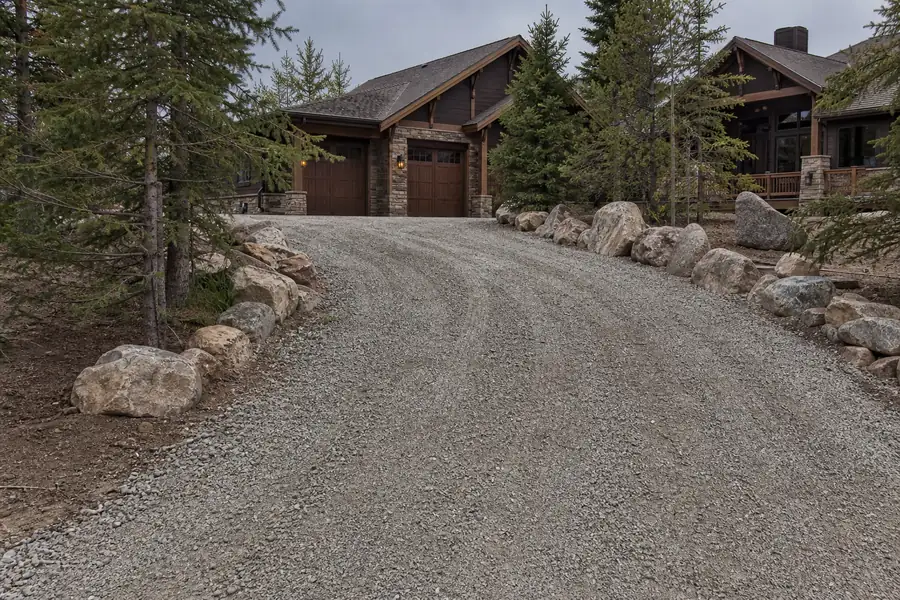
Why Front Range clay soil changes the numbers
Clay soil under a driveway is the reason a lot of Colorado driveways fail in the first few years, not the gravel choice on top. Clay absorbs water, expands, then contracts as it dries, and that movement telegraphs straight up through a thin base layer into ruts and low spots.
The fix is depth, not a different rock. Going to 6 to 8 inches of compacted Class 6 Road Base gives the clay something rigid to push against instead of flexing with it. Skipping a geotextile fabric under the base on wet clay lots is a common mistake, since the fabric keeps the base from slowly working its way down into the soil over a few seasons.
Mountain driveways need extra depth
Mountain driveways above the Front Range foothills should run toward 10 to 12 inches of total depth, because steeper grades and heavier spring runoff put more stress on the base than a flat suburban lot ever will. Frost depth in Colorado runs to about 36 inches, and while a driveway isn't a footing, the same freeze-thaw cycle that affects footings also heaves a thin gravel base on a mountain grade.
Freight is the other factor. Deliveries along the I-70 corridor and other mountain routes above 8,000 feet are grade and weather limited, and winter closures can push a job back weeks. Order and schedule delivery before the first hard freeze so the base goes down while the ground is still workable.
How to calculate how much gravel you need
Once you know your depth, the volume is straightforward: multiply the driveway's square footage by the depth in feet, then convert cubic feet to tons based on the material's density. A 20 by 100 foot driveway at 6 inches of Class 6 Road Base runs roughly 19 tons before you add the surface layer.
Run your own numbers with the road base calculator for the base layer and the gravel calculator for the surface course. Both account for compaction, so you're not guessing at how much settles once it's packed down.
FAQs
How deep does a gravel driveway need to be in Colorado?
Most Colorado gravel driveways need 8 to 12 inches of total compacted depth, split between 4 to 8 inches of compacted Class 6 Road Base and 2 to 4 inches of surface gravel. Clay soil, steep grades, and heavy vehicle traffic all push toward the deeper end of that range.
Can I use less base if I'm only parking a car on it?
Yes, a flat driveway on stable soil that only sees passenger vehicles can often get by with 4 inches of compacted base and 2 inches of surface gravel. That's the minimum, though, and it assumes decent drainage away from the driveway.
Do I need to compact the base layer or can I just spread it?
Compaction is what makes the base do its job. Loose Class 6 Road Base will shift and rut under vehicle weight almost immediately, while compacting it in lifts of a few inches at a time creates a dense, stable layer that spreads load and resists water.
Does frost depth affect how deep my gravel driveway needs to be?
Not directly, since a driveway isn't a structural footing and doesn't need to reach the 36 inch frost line. Freeze-thaw cycling in the top few feet of soil still moves a thin, poorly compacted base, which is why depth and compaction matter more than chasing frost depth on a driveway project.
What's the most common mistake with gravel driveway depth in Colorado?
Building the base too thin on clay soil is the most common issue. Homeowners often put down 3 to 4 inches of base thinking the surface gravel will hide problems, and then watch the driveway heave and rut through the first spring melt because the base couldn't handle the clay underneath it.