Crusher Fines: The Flat Layer That Stops Flagstone Rocking
Also sold as #10 Stone Screenings
Also known as: breeze, pathway fines, chips
Crusher Fines give Colorado patios and paths a smooth, firm finish after compaction. They provide a level bedding layer beneath pavers and stone.
- Size: 1/4 inch minus
- Grading: Stone dust and fine particles
- Type: Angular crushed stone
From $459 for 1 ton, delivery included
Larger loads cost less per ton: 500 tons is $32,195 ($64.39 per ton). Pick any quantity below for a delivered price.
Free delivery included
Free delivery anywhere in Colorado
Pick a delivery date
Weekday delivery, earliest Oct 20
Get a Free Quote
Fill out the form and our sales team will get back to you within the hour.
Size and Grading
- Size
- 1/4 inch minus
- Grading
- Stone dust and fine particles
- Type
- Angular crushed stone
Most loads of crusher fines are bought to fix something that already went wrong. A flagstone patio was bedded on loose sand, the first hard monsoon-season storm washed the sand out from under two of the stones, and now every step across the middle of the patio tips. Front Range ground gives water somewhere to go very quickly and not much capacity to soak it up, and a bedding layer with nothing to bind it moves the first time that happens.
What lands on the tarp is dust with grit in it, not gravel
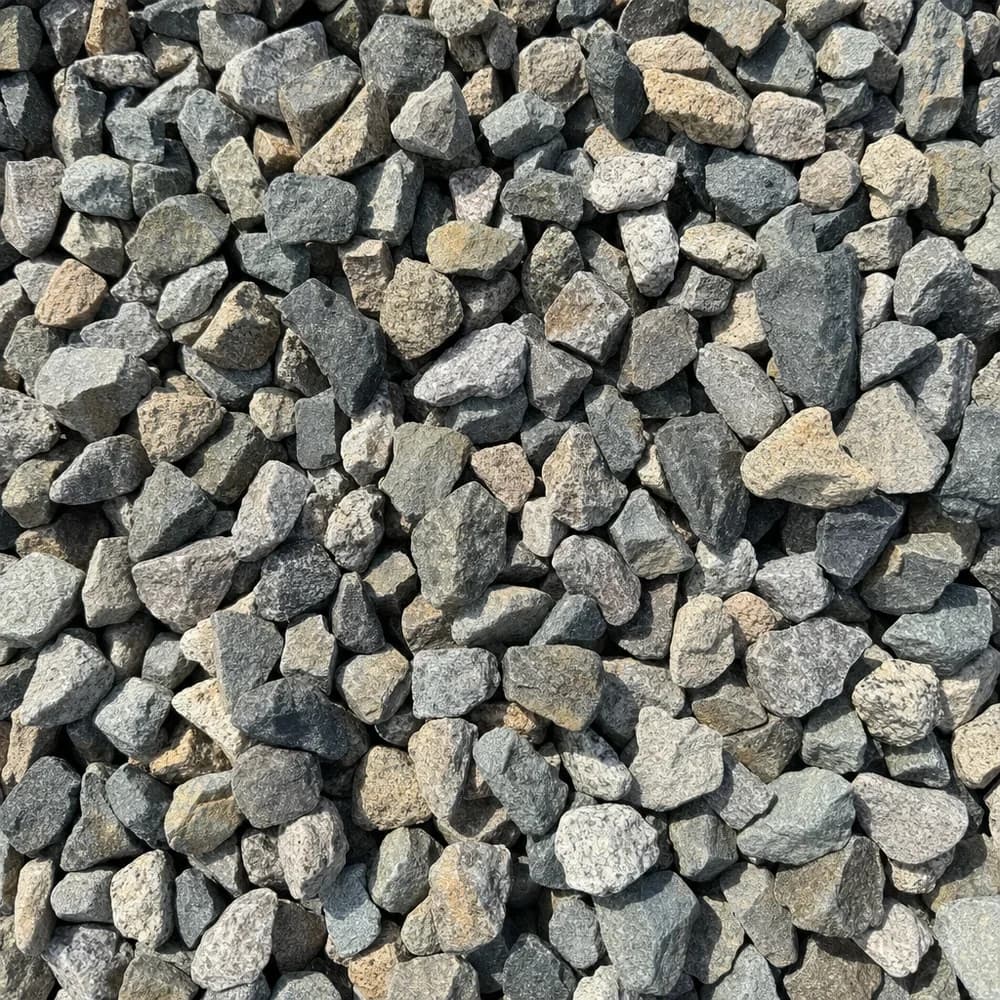
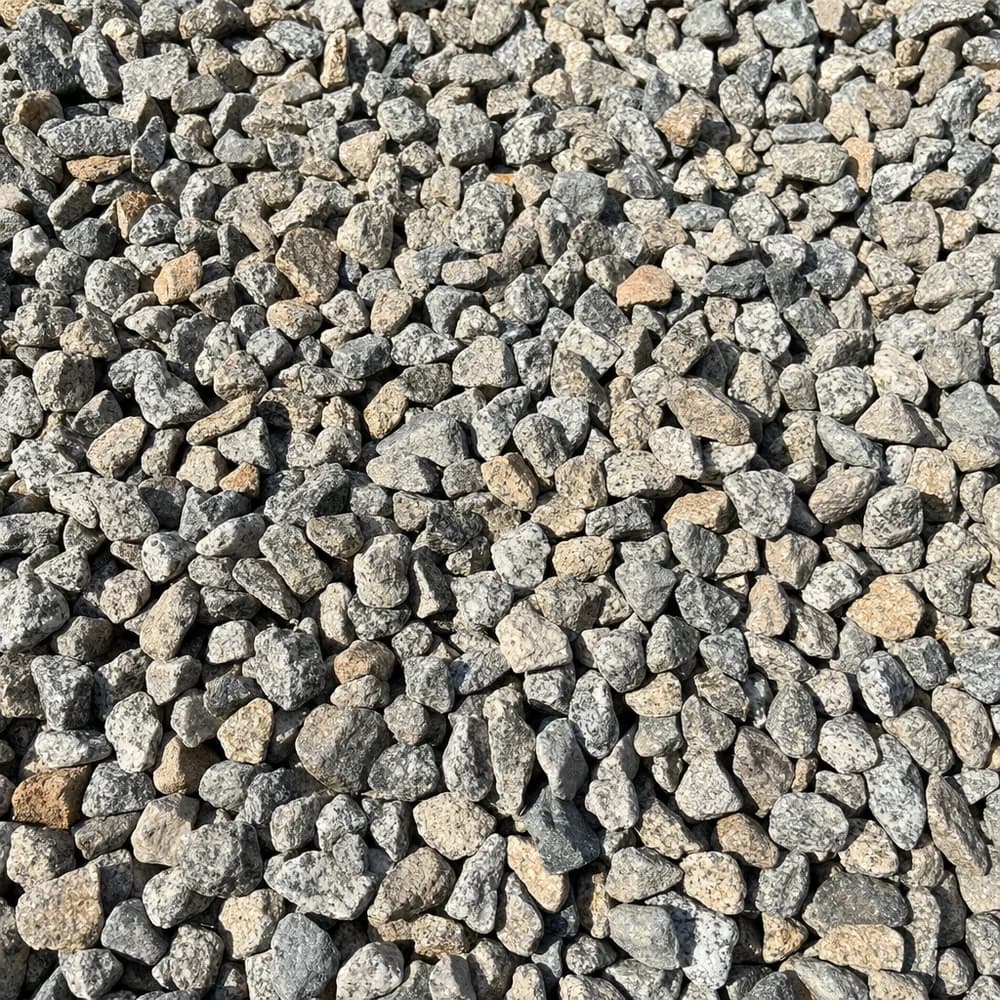
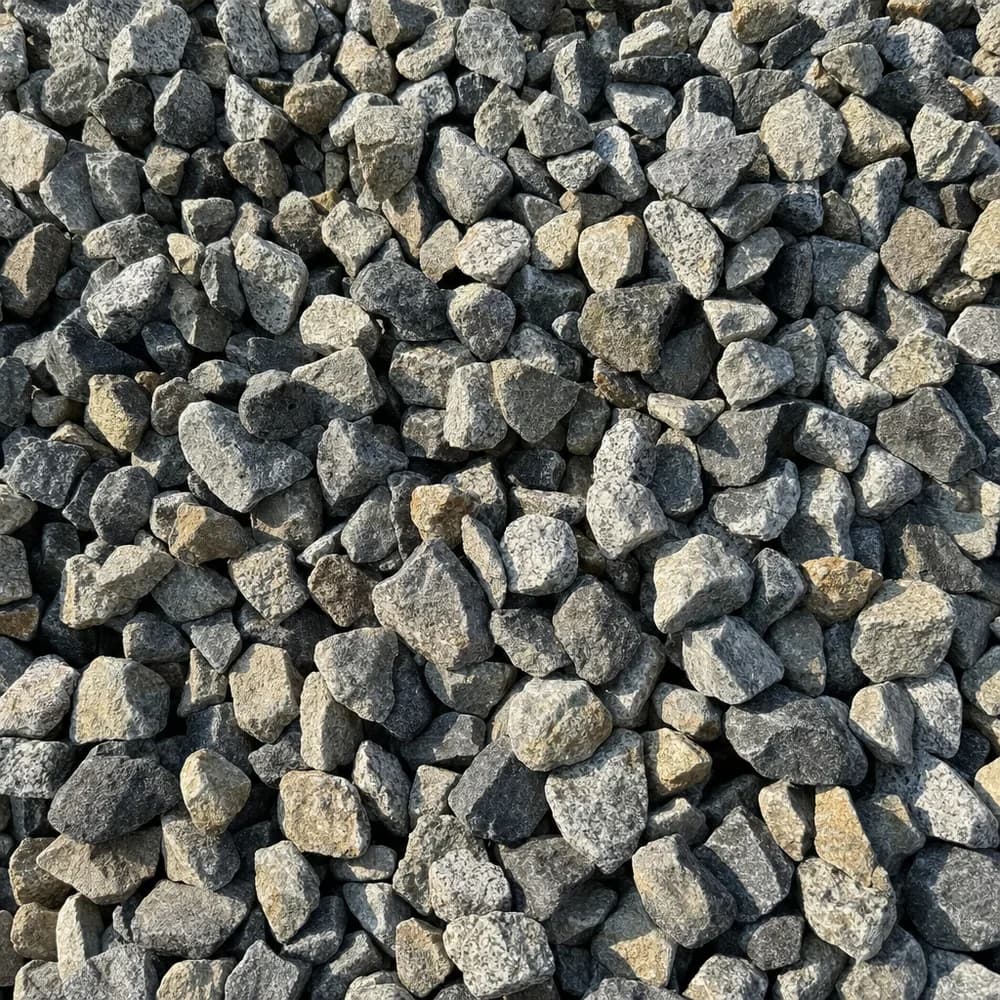
Tip a yard out and it does not look like a rock product at all. The size is 1/4 inch minus, the grading is stone dust and fine particles, and the type is angular crushed stone, so what you get is a gray pile of powder with chips of sharp rock running through it. Grab a damp handful and it holds a shape. Kick it dry and it puffs.
That mix of dust and angular grit is the whole point. Wet it and compact it and the dust fills every gap between the chips, the sharp faces key against one another, and the layer knits into something close to a solid floor. It is a finishing material, not a structural one, and the distinction matters more here than it does in stable soils.
Colorado has its own words for it. A parks crew building a trail calls it crusher fines. A mason screeding a bed under flagstone calls it squeegee. Same pile, two jobs.
A garden path, an RV pad and the last hundred feet of a rural lane
The jobs it does well have one thing in common: a firm layer already underneath, and a need for the top to be flat.
A garden path. Compacted fines make a dense, even walking surface that a garden cart or a wheelchair can cross, and it drains better than bare clay without turning into loose stone underfoot. This is the standard Colorado pathway finish and the reason so many trail systems here look the same.
An RV or boat parking pad. Not as the pad, as the last lift on it. A compacted base carries the weight of a trailer; a thin skim of fines over the top gives you a flat surface to jack from and something that will not chew up bare feet on the way to the hose bib.
The last hundred feet of a rural lane. Where a long gravel lane meets the house and the loose stone keeps ending up in the garage, a thin topcoat of fines smooths the transition and cuts the stone being tracked in. It does not belong on the whole lane.
Add joint filling and leveling under a shed or hot tub to that list, and the pattern is clear: fines finish things.
Three Colorado jobs that will ruin a load of crusher fines
Anywhere water has to pass through. Fines are the opposite of a drainage material. In a French drain, behind a retaining wall or in a downspout trench they silt the void space closed and the drain stops working. That job wants #67 Stone.
A drive that carries loaded trucks. Fines under repeated heavy wheel loads rut in wet weather and dust out in dry weather. The structural layer is Class 6 Road Base and fines do not replace it.
An unedged bed on a slope. Water running across a fines surface takes the dust with it first and leaves the grit behind, which is how a smooth path turns into a rough one over two runoff seasons. On any grade, edge it and shed the water sideways before it can run along the path.
Bedding depth, path depth, and what the plate takes out of both
Depths are small, and almost everyone orders too much.
| Job | Depth of fines | What sits under it |
|---|---|---|
| Flagstone or paver bedding | 1 in screeded | Compacted base, to the depth the hardscape needs |
| Joint fill, swept in | Nothing measurable | The pavers themselves |
| Garden path surface | 2 in | 3 in of compacted base on clay |
| Topcoat over an existing pad | 1 to 1.5 in | Whatever is already compacted there |
| Leveling under a shed or hot tub | To the low spots only | Prepared, compacted subgrade |
Wetting matters more than passes do. A dry lift will not bind no matter how many times the plate crosses it, and it will blow off the pile as dust in the wind. Dampen each lift, compact it, and expect to lose roughly a tenth of the loose thickness. Order to the finished depth and let the 5 percent the stone calculator adds by default cover what spreading eats.
Late spring through fall is when this work goes best. Frozen ground will not compact, and at altitude several freeze-thaw cycles can run through in a single week.
Tons for a 60 foot garden path and a 12 by 30 RV pad
Three hypothetical jobs, using the formula the tool on this page runs: length times width in feet, times depth in inches divided by 12, divided by 27 to get cubic yards, then times the weight. This site publishes about 2,900 lb per cubic yard for stone screenings and dust, which is roughly 1.45 tons per cubic yard.
Garden path, 60 ft long and 3 ft wide at 2 inches. 60 x 3 = 180 sq ft. 180 x 2 / 12 = 30 cubic feet. 30 / 27 = 1.11 cubic yards. 1.11 x 1.45 = 1.6 tons.
RV pad topcoat, 12 by 30 ft at 1.5 inches. 360 sq ft. 360 x 1.5 / 12 = 45 cubic feet. 45 / 27 = 1.67 cubic yards. 1.67 x 1.45 = 2.4 tons.
Rural lane approach, 300 ft by 10 ft at 1 inch. 3,000 sq ft. 3,000 x 1 / 12 = 250 cubic feet. 250 / 27 = 9.26 cubic yards. 9.26 x 1.45 = 13.4 tons.
For a path that curves or a pad you have to measure in sections, the stone calculator takes up to five areas in one pass.
The layers either side: Class 6 below, flagstone or nothing above
On a hardscape build the order is fixed. Compacted subgrade, then Class 6 Road Base to the depth the job needs, then an inch of screeded fines, then the stone. Skip the base and the fines will follow the clay wherever it moves.
Where a finer decorative surface is wanted instead of a compacted one, Walkway Gravel gives a loose 3/8 inch finish that reads as gravel rather than as a packed floor. Where the mortar mix is the job rather than the bedding, Mason Sand is the material.
Dropping a fine material somewhere the wind will not find it
This is the one product worth putting a tarp down for. Fines dumped on grass are difficult to sweep up, and a dry pile left uncovered through a windy week loses the dust that makes it work. Delivery is arranged at checkout by ZIP code, and the truck needs clear access to a firm spot to tip. Pick a tonnage and a date once you have measured, and check the delivery notes if the approach at your end is narrow.
Quickly Calculate How Much You Need
Material: Crusher Fines
How to Measure
Measure the length and width of your project area in feet
Decide on depth in inches (2" for landscaping, 4" for driveways)
Enter the values above and we'll calculate the tonnage you need
Need help figuring out the right amount? We can help!
Call or text us at (719) 781-8522 and we'll help you calculate the right quantity for your project.
Not sure how much you need? The Stone Calculator has depth guides, coverage charts and worked examples for this material.
Frequently Asked Questions About Crusher Fines
Crusher Fines delivery across Colorado
- Denver
- Colorado Springs
- Aurora
- Fort Collins
- Thornton
- Arvada
- Westminster
- Greeley
- Pueblo
- Boulder
- Longmont
- Castle Rock