How to Permanently Get Rid of Weeds in a Gravel Driveway, Path or Rock Bed
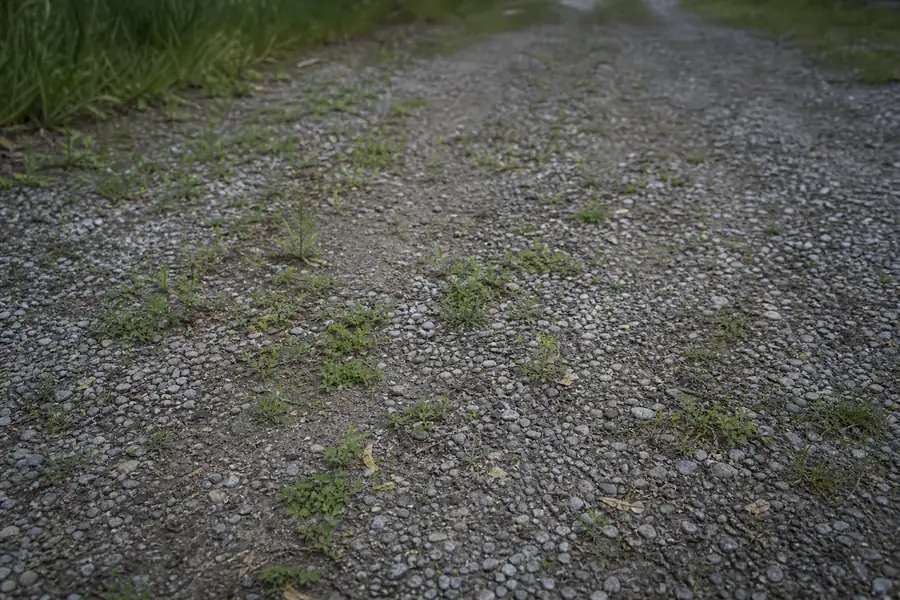
A gravel driveway that sprouts weeds every June usually has one problem: not enough depth under the stone, not too little herbicide. Killing what's already up top is a temporary fix if the base underneath is still bare dirt covered in windblown dust. Fix the structure first, then handle whatever pushes through anyway, and you stop refighting the same stretch of driveway every spring.
Why Gravel Driveways and Paths Grow Weeds in the First Place
Weeds root in gravel driveways because dust, sand and organic debris settle into the surface stone over time, building a thin layer of soil that seeds can germinate in. Front Range clay soils make this worse: a driveway laid straight over clay without a compacted aggregate base holds moisture near the surface, and that moisture plus blown-in seed is all most weeds need to get started.
Wind carries seed onto the driveway from vacant lots and roadside ditches, and traffic patterns leave the edges and low spots undisturbed enough for a taproot to take hold. That's why weeds show up along the border first, not down the center where tires pass every day.
How to Permanently Get Rid of Weeds in a Gravel Driveway
Prevention beats spraying, and it comes down to depth, locking fines and edging installed in the right order. Skipping any one of these is what turns a two-year-old driveway into a weed patch.
| Layer | Material | Depth |
|---|---|---|
| Base | Class 6 Road Base, compacted | 4-6 inches |
| Locking layer | Crusher Fines | 1 inch |
| Surface | Driveway Gravel or 3/4 inch crushed stone | 2 inches |
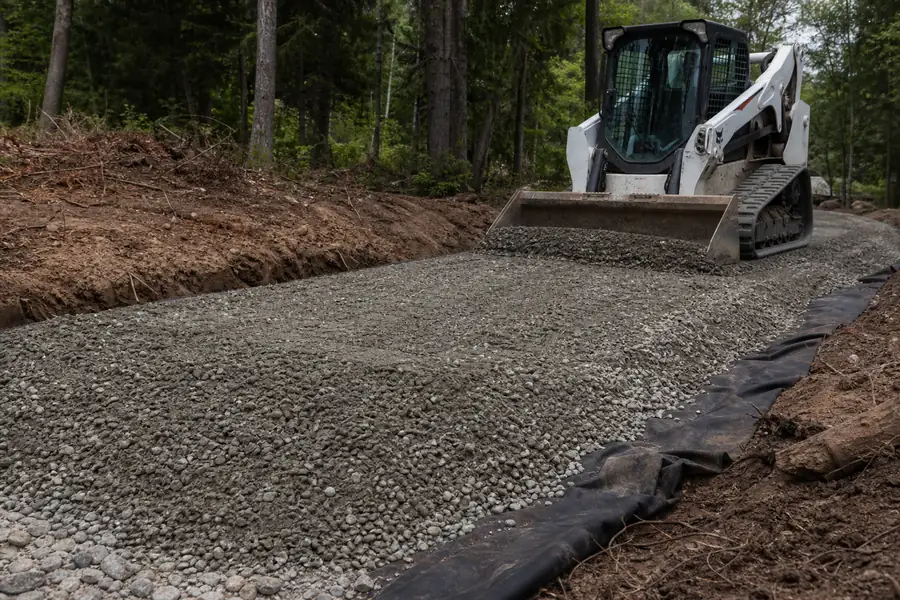
Landscape fabric belongs directly on top of the compacted base, under the surface stone, not on top of bare soil. Installed that way it blocks light from reaching seeds sitting in the subgrade without becoming a top layer that traps windblown dust, which is exactly where new weeds root when fabric goes down last instead of first.
Steel or paver edging keeps soil, mulch and lawn creep from migrating into the gravel, and keeps the driveway stone from spreading into surrounding beds where grass and weed seed collects year after year.
Removing Weeds That Already Broke Through
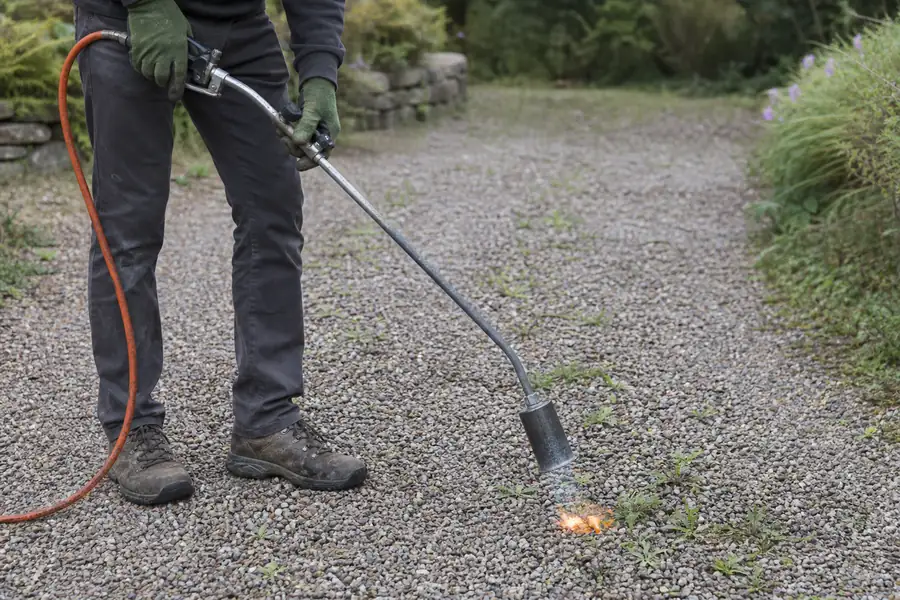
Pull driveway weeds by hand or spot treat with a systemic herbicide labeled for gravel and hardscape while the plant is actively growing, not after it has already flowered and set seed. A propane flame weeder works well on gravel driveways since there's no mulch or plant litter nearby to catch, and it kills top growth fast with no chemical runoff.
Table salt and household vinegar are common driveway weed advice, and both are a poor long term choice. Salt sterilizes the soil it touches, killing grass and garden plants at the driveway's edge and leaching into runoff that eventually reaches a storm drain. Vinegar burns back top growth on contact but rarely kills the root of a perennial weed like bindweed, so the plant regrows from the same root within a couple of weeks, often thicker than before.
Weed Control for Rock Beds vs a Gravel Driveway
Rock beds need a different approach than a driveway because there are ornamental plants nearby that a driveway doesn't have to protect. In a bed, fabric under the rock plus a granular pre-emergent applied in early spring handles most annual weeds without harming established shrubs and perennials, and pulling any survivors by hand keeps roots from spreading into the planting soil.
A driveway leans harder on compaction and traffic to do the work fabric alone can't. Locking the surface stone down over a layer of stone screenings keeps individual rocks from shifting apart and opening gaps a taproot can use, while a dense topping of driveway gravel or crushed stone leaves seedlings too little light to establish. Paths between beds benefit from that same screenings base, since foot traffic alone won't compact loose rock the way vehicle weight compacts a driveway.
Colorado Weeds That Thrive in Gravel
Four weeds account for most of the gravel and driveway complaints along the Front Range, and each one needs a slightly different plan.
- Bindweed: a perennial vine with roots reaching several feet deep. Pulling only breaks the top growth, so a systemic herbicide applied while it's flowering, repeated across two seasons, is what finally exhausts the root.
- Kochia: an annual that turns into a rolling tumbleweed by August, scattering thousands of seeds across a driveway before winter. Pull or spray it in June, before it sets seed.
- Puncturevine (goathead): forms a low mat with spiked seed pods that puncture bike tires and dog paws. Catching it before the pods harden in mid-summer is the only real control.
- Cheatgrass: a fast-drying invasive grass that fills gravel cracks and driveway edges by early summer. A pre-emergent herbicide applied in late winter keeps the seed from germinating at all.
FAQs
Will landscape fabric stop weeds in a gravel driveway forever?
No fabric is permanent under a driveway. It degrades under UV exposure and traffic weight over several years, and once dust and fine sediment build up on top of it, new seeds germinate in that layer instead of the soil below. A well-installed fabric and base system cuts weed pressure dramatically for 5 to 10 years, not forever.
How often do I need to spray a gravel driveway to keep weeds out?
A driveway built with a proper compacted base and locking fines usually needs spot treatment once or twice a season, not a full application. Most of what comes up is windblown seed germinating in surface dust, so treating it early in spring before weeds set seed cuts the workload for the rest of the year.
Is rock salt or vinegar safe to use on a gravel driveway?
Both work in the short term but cause lasting problems. Salt sterilizes soil and kills nearby grass and plants, and vinegar rarely kills the root of a perennial weed, so it grows back within weeks. A labeled herbicide or mechanical removal is the safer long term choice for driveway weeds.
What's the best base to prevent weeds under a gravel driveway in Colorado?
A 4 to 6 inch compacted base topped with an inch of locking fines and 2 inches of surface stone gives weeds the least opportunity to root. Skipping the compacted base is the single biggest reason Front Range driveways end up covered in weeds within a year or two.
Can I just dump more gravel on top of existing weeds?
Piling gravel over weeds without pulling them first only buys a few weeks. Most established weeds, especially bindweed, push right back through a few inches of loose stone, so remove the plant and its root first, then add material over a properly compacted base.