3/8" Crushed Stone: Judging a Finish Layer by the Handful
For Colorado mountain driveways and paths, 3/8" Crushed Stone creates a smooth, compacted finish over a properly prepared base.
- Size: Approximately 3/8 inch
- Type: Angular crushed stone
From $405 for 1 ton, delivery included
Larger loads cost less per ton: 500 tons is $29,175 ($58.35 per ton). Pick any quantity below for a delivered price.
Free delivery included
Free delivery anywhere in Colorado
Pick a delivery date
Weekday delivery, earliest Oct 20
Get a Free Quote
Fill out the form and our sales team will get back to you within the hour.
Size and Grading
- Size
- Approximately 3/8 inch
- Type
- Angular crushed stone
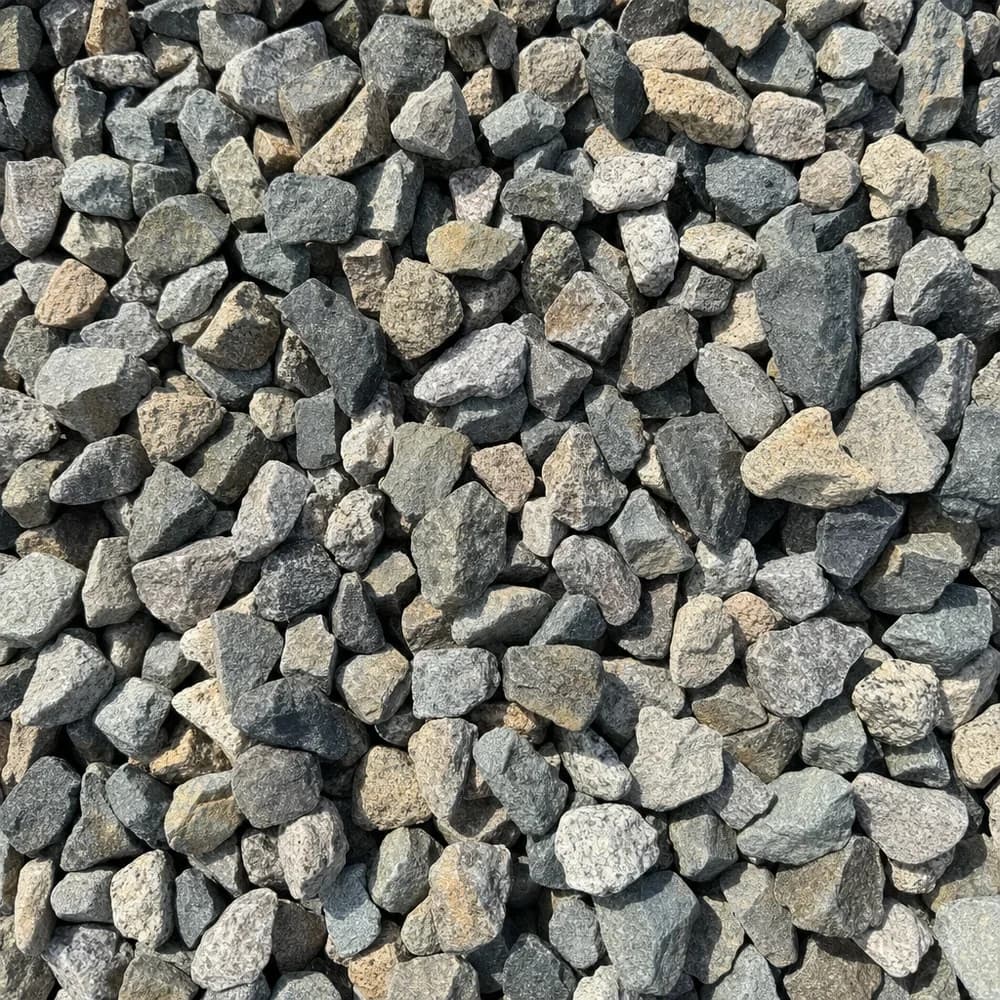
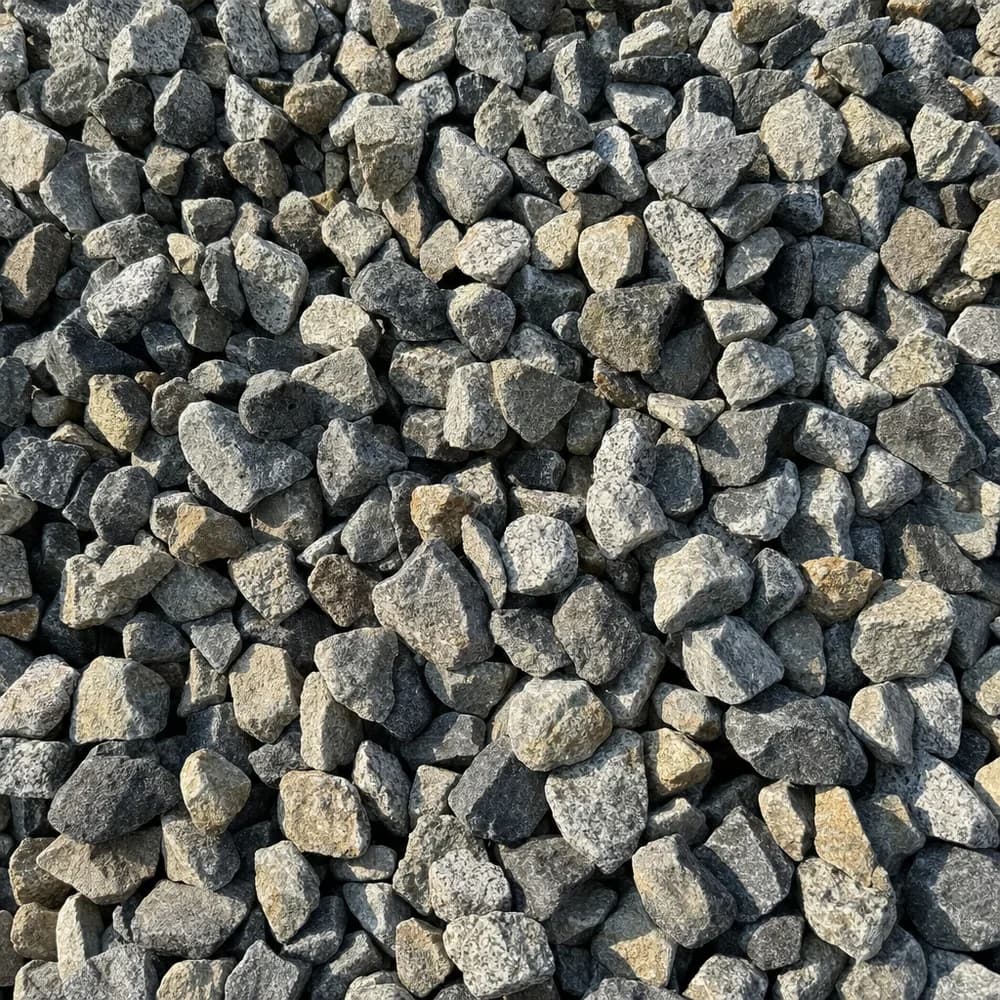
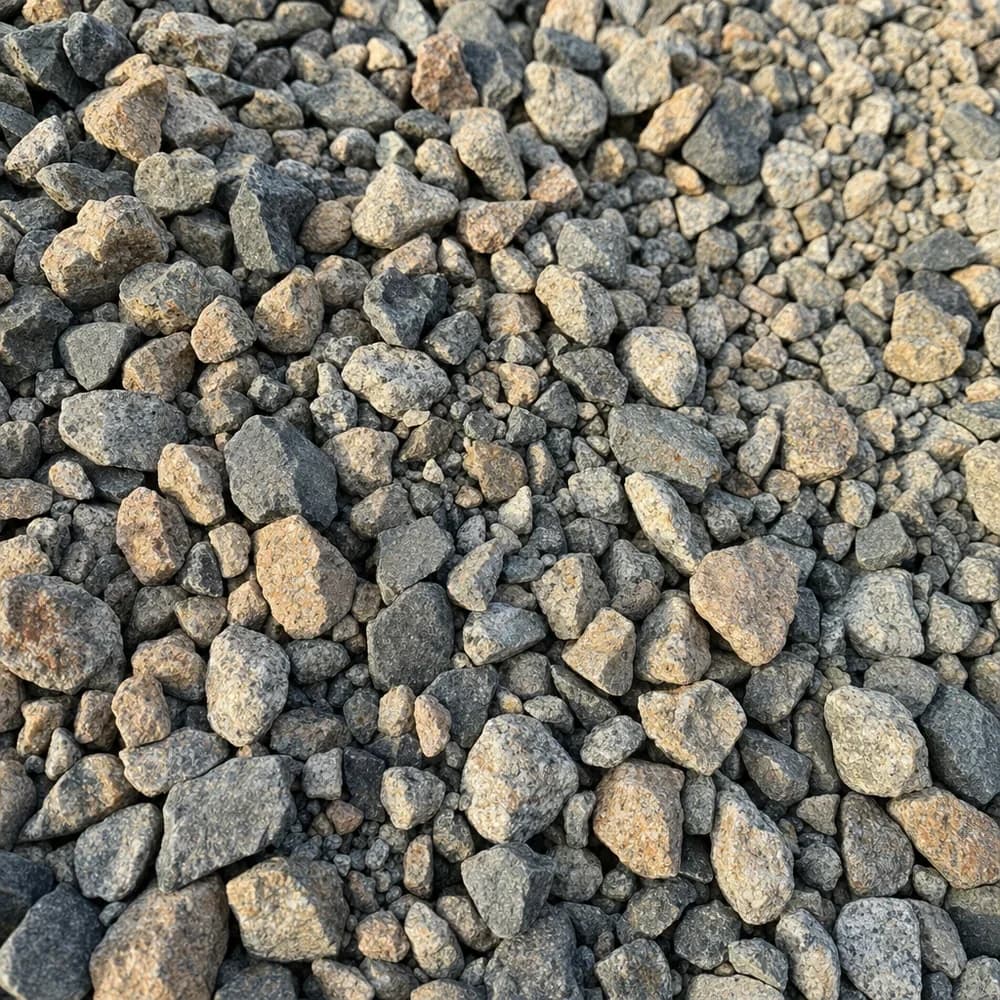
Take a scoop off a fresh pile and you get the measure of 3/8" crushed stone in about five seconds. Gray chips, roughly the size of a pencil eraser, every one of them with broken faces and sharp corners. Squeeze a handful and it grinds rather than slides. Open your hand and a film of rock dust stays on your palm, which is the part nobody mentions until the load lands on a hot, dry Front Range afternoon.
What the pile tells you before you spread any of it
Three things worth noticing while the driver is still tarping up.
The faces are the reason to buy it. Angular chips key into each other under a tamper and stay keyed, which is what separates this from anything rounded. A surface built from it holds a rake line and holds a footprint.
The dust is temporary and worth planning for. The first week after a dry delivery is the dusty one; a hose over the spread layer settles it, and after that the fines have worked down between the chips where they belong.
The size sits in a useful gap. It is finer than a drainage stone and coarser than a screening, which is exactly why it ends up as a finish over something stronger rather than as a structure of its own.
Four small stones in the bin, and what 3/8" crushed stone does differently
- Pea Gravel is the same 3/8 inch, but rounded. It is kinder underfoot and it never locks, so it travels. Choose it for a play area, not for a surface anything drives on.
- Walkway Gravel is the product built around garden paths and side-yard routes. If the job is a path, start there.
- #8 Crushed Stone is washed clean of fines. Choose it where the layer has to pass water, not where it has to knit tight.
- Squeegee is 1/4 inch minus, almost all fines. It screeds dead flat for bedding and will not hold up as a wearing surface.
This one sits between the last two: enough stone to carry foot and light tire traffic, enough fines to settle into a coherent layer.
Topping a lane, bedding a conduit run, closing in a dog yard
The reliable uses fall into three groups.
As a finish over a compacted base. Spread 2 inches over a properly built course of Class 6 Road Base and you get a tidier driving and walking surface than the base alone, with the chips settling into the openings of the coarse layer below. This is a finish, never the thing that carries the load.
As bedding for utilities. Around pipe and conduit the small angular pieces pack in against an uneven form without leaving voids under it.
As ground cover with a defined edge. Beds, tree surrounds and dog yards where rounded stone would scatter. Fabric underneath, steel edging around the perimeter, and it stays where it was raked.
Why a construction entrance chews it up and tracks it onto the road
Picture a hypothetical build access, 12 feet wide and 40 feet long, where loaded trucks leave a site onto a county road. Stone this size is pressed into soft subgrade under an axle and picked back out by the tread, so within a month the entrance is mud and the road has a gray stripe down it. That job wants #4 Crushed Stone at 6 inches over fabric: 480 square feet, 480 x 6 / 12 = 240 cubic feet, 240 / 27 = 8.9 cubic yards, and at about 2,900 lb per cubic yard, roughly 12.9 tons.
In a dry creek bed, gray chips read as spilled material
Hydraulics aside, the look is wrong. A dry creek line is meant to imitate something water made, and water does not leave sharp gray chips behind. It leaves rounded stone, graded from cobble in the channel to smaller material at the edges. Use River Rock and Large River Rock for that feature, and keep the angular stone for surfaces people walk and drive on.
Two layers for a 16 by 18 gravel patio, in tons
A hypothetical sitting area off the back door, built the way it should be on clay. Figures use this site's published weights, 2,800 lb per cubic yard for 3/8 inch chips and 3,000 lb for road base, and the arithmetic has been checked twice.
Finish layer, 2 inches. 16 x 18 = 288 square feet. 288 x 2 / 12 = 48 cubic feet. 48 / 27 = 1.78 cubic yards. At 1.40 tons per cubic yard, 2.5 tons.
Compacted base, 4 inches. 288 x 4 / 12 = 96 cubic feet. 96 / 27 = 3.56 cubic yards. At 1.50 tons per cubic yard, 5.3 tons.
The base is more than twice the surface, which surprises most people, and skipping it is why patios like this end up as a rutted gray patch. Run your own dimensions through the stone calculator, which takes depth in inches and up to five areas at once.
Ordering the finish and the base in one go
Work out both layers before you order either. Colorado Rock Supply arranges delivery at checkout by ZIP code, and the truck needs clear access and a spot where it can tip, so plan two drop points if the base and the finish are coming on separate days. Set quantity and date on this page, and check the area first on the Colorado delivery locations page.
Quickly Calculate How Much You Need
Material: 3/8" Crushed Stone
How to Measure
Measure the length and width of your project area in feet
Decide on depth in inches (2" for landscaping, 4" for driveways)
Enter the values above and we'll calculate the tonnage you need
Need help figuring out the right amount? We can help!
Call or text us at (719) 781-8522 and we'll help you calculate the right quantity for your project.
Not sure how much you need? The Stone Calculator has depth guides, coverage charts and worked examples for this material.
Frequently Asked Questions About 3/8" Crushed Stone
3/8" Crushed Stone delivery across Colorado
- Denver
- Colorado Springs
- Aurora
- Fort Collins
- Thornton
- Arvada
- Westminster
- Greeley
- Pueblo
- Boulder
- Longmont
- Castle Rock