Crusher Run: Reading the Pile Before You Compact It
Colorado Crusher Run compacts into a firm base for driveways and patios where spring melt and freeze-thaw can disturb ground.
- Size: 3/4 inch minus
- Grading: Crushed stone blended with stone dust and fine particles
- Type: Angular crushed stone
From $392 for 1 ton, delivery included
Larger loads cost less per ton: 500 tons is $28,285 ($56.57 per ton). Pick any quantity below for a delivered price.
Free delivery included
Free delivery anywhere in Colorado
Pick a delivery date
Weekday delivery, earliest Oct 20
Get a Free Quote
Fill out the form and our sales team will get back to you within the hour.
Size and Grading
- Size
- 3/4 inch minus
- Grading
- Crushed stone blended with stone dust and fine particles
- Type
- Angular crushed stone
Run a hand into a fresh pile in May, when the clay underneath is still giving up its winter moisture, and crusher run tells you most of what it will do. It is damp, it is gray with dust on your fingers, and a squeezed handful holds together instead of falling apart. That is the whole point of the material, and it is why it ends up under so many patios and pads on ground that swells and shrinks with the seasons.
A damp fistful off the pile, before the plate ever runs
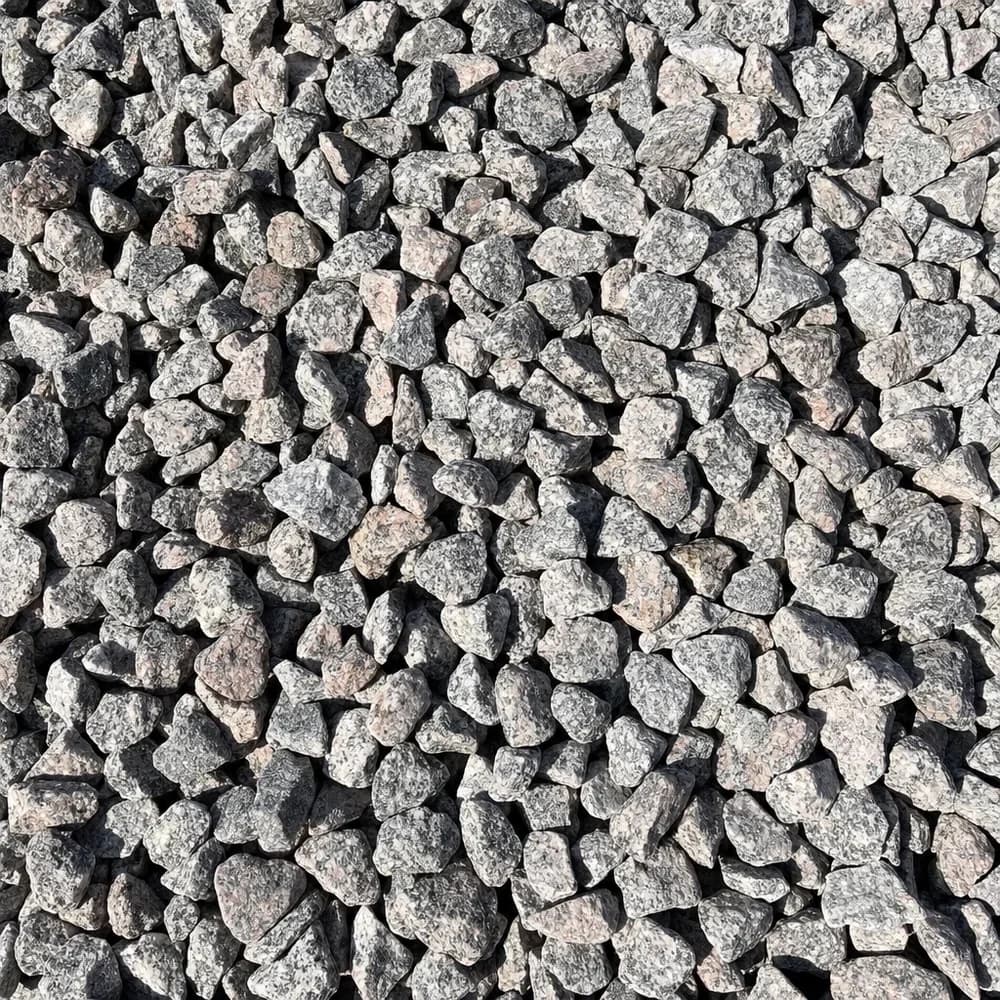
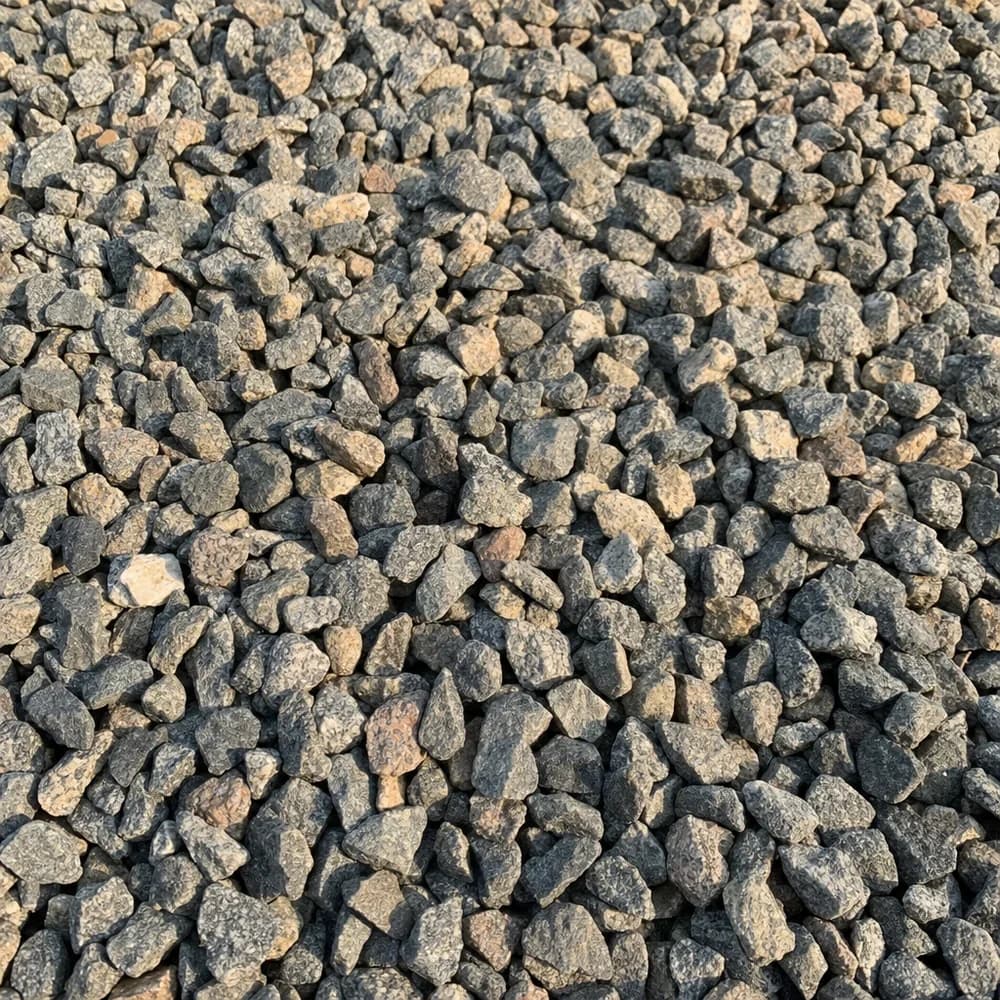
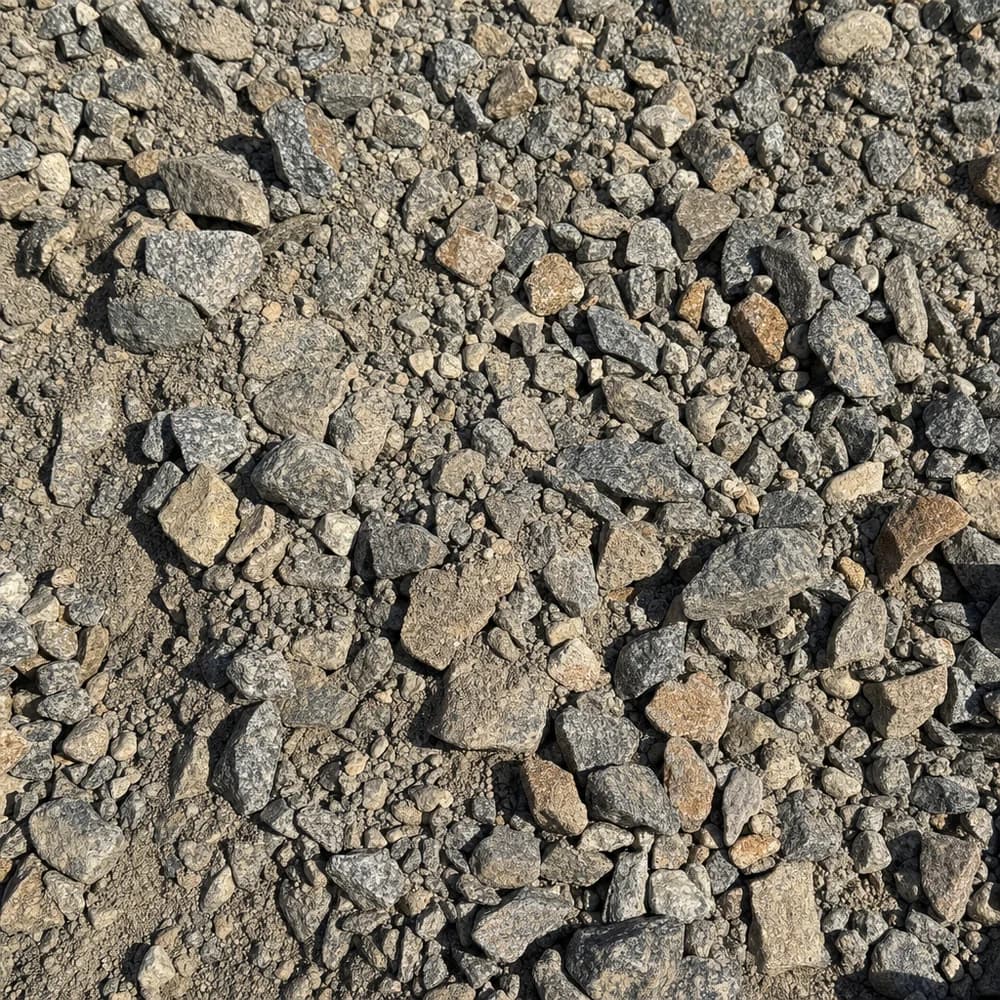
The spec is 3/4 inch minus: crushed stone blended with stone dust and fine particles, all of it angular. Nothing in the pile is rounded, and nothing about the sizing is uniform.
Look at what that mix does in your hand. The larger angular pieces catch on each other and refuse to roll. The dust and fine particles drop into the spaces between them. Add a little moisture and a plate compactor, and the fines lock around the stone to form a dense layer that behaves more like a slab than a pile of rock. Let it dry out completely first and it will not bind, which is why crews wet it lightly as they work.
The same fines that make it lock up are the reason water does not travel through it. That matters more here than it does on sandy ground, because Front Range clay already holds water against whatever sits on top of it.
Between mud season and the first hard freeze
Compaction is a moisture game, and the calendar decides how much moisture you get. From late spring through fall the ground is workable, the material takes water without turning to soup, and a plate or a roller has something firm to work against. That is the window.
Before that window, the subgrade is saturated from snowmelt and will pump under the compactor rather than compress. After it, frozen ground and snowpack will not compact at all. At altitude the state can run through several freeze-thaw cycles in a single week, so an autumn job that gets rained out is often better left until spring than pushed through on frozen clay.
Getting a clay subgrade ready while it is damp, not wet
- Strip the sod and the soft topsoil. Organic material keeps compressing for years and takes your finished level with it.
- Check for standing water. A low spot that ponds after a thunderstorm will still pond under a compacted layer.
- Shape the subgrade to the fall you want in the finished surface. Water should leave sideways.
- On soft or recently disturbed ground, lay geotextile fabric so the fines cannot pump down into the clay.
- Place in lifts of three to four inches, dampen each one, and compact in two directions.
Under a flagstone walk, and two jobs Crusher Run will spoil
A flagstone walk is where this material earns its keep. Set on bare soil, flagstone rocks underfoot within a season, because the clay beneath it moves. Set on a compacted lift with a bedding course over the top, it stays put. The bedding layer between the two is not crusher run: use Mason Sand or the finer screened material a Front Range mason calls squeegee, sold here as Crusher Fines.
Two jobs it will spoil:
Raised vegetable beds. Roots will not push through compacted fines, and the layer holds water against them at the bottom of the bed. Four beds at 4 by 10 feet filled 12 inches deep work out at 4 x 10 x 1 = 40 cubic feet each, 160 cubic feet across all four, or 160 / 27 = 5.9 cubic yards. That volume wants Garden Soil, not aggregate.
A finished play surface. Compacted 3/4 inch minus is hard, angular and dusty, which is the opposite of what a child lands on. Use it as the base underneath by all means, then put Pea Gravel or a soft washed sand over the top as the surface itself.
Tons for a 4 by 45 foot flagstone walk and a 20 by 30 play pad
Both examples are hypothetical. The tool on this page takes length and width in feet and depth in inches, converts to cubic yards, then multiplies by the material weight.
The walk, 4 inches of base. 4 x 45 = 180 sq ft. 180 x 4 / 12 = 60 cubic feet. 60 / 27 = 2.22 cubic yards. At 1.50 tons per cubic yard that is 3.3 tons, or 3.7 tons with the 10 percent the crusher run calculator adds by default for compaction and spillage.
The play pad base, 4 inches. 20 x 30 = 600 sq ft. 600 x 4 / 12 = 200 cubic feet. 200 / 27 = 7.41 cubic yards, so 11.1 tons, or about 12.2 tons with the 10 percent. Order 13 and keep the remainder for the low corner you find later.
The crusher run calculator runs the same arithmetic for circles and for up to five areas at once, which is easier than doing a curved path by hand.
Keeping water off the lift through its first winter
A compacted layer fails from the top down, and it fails because water got in. Keep a fall on the finished surface so meltwater runs off rather than soaking through. Watch the edges, because that is where runoff concentrates and where the first soft spot shows up. If a downspout or a slope is delivering water onto the area, deal with that before the second season rather than adding material.
When the depth is settled, choose a quantity and a delivery date on this page. Delivery is arranged at checkout by ZIP code, and the truck needs clear access to a firm dump spot, which in March can be the hardest part of the job to find. If you are weighing this against Class 6 Road Base for a drive, Colorado Rock Supply will talk the choice through by email from the contact page.
Quickly Calculate How Much You Need
Material: Crusher Run
How to Measure
Measure the length and width of your project area in feet
Decide on depth in inches (2" for landscaping, 4" for driveways)
Enter the values above and we'll calculate the tonnage you need
Need help figuring out the right amount? We can help!
Call or text us at (719) 781-8522 and we'll help you calculate the right quantity for your project.
Not sure how much you need? The Crusher Run Calculator has depth guides, coverage charts and worked examples for this material.
Frequently Asked Questions About Crusher Run
Crusher Run delivery across Colorado
- Denver
- Colorado Springs
- Aurora
- Fort Collins
- Thornton
- Arvada
- Westminster
- Greeley
- Pueblo
- Boulder
- Longmont
- Castle Rock