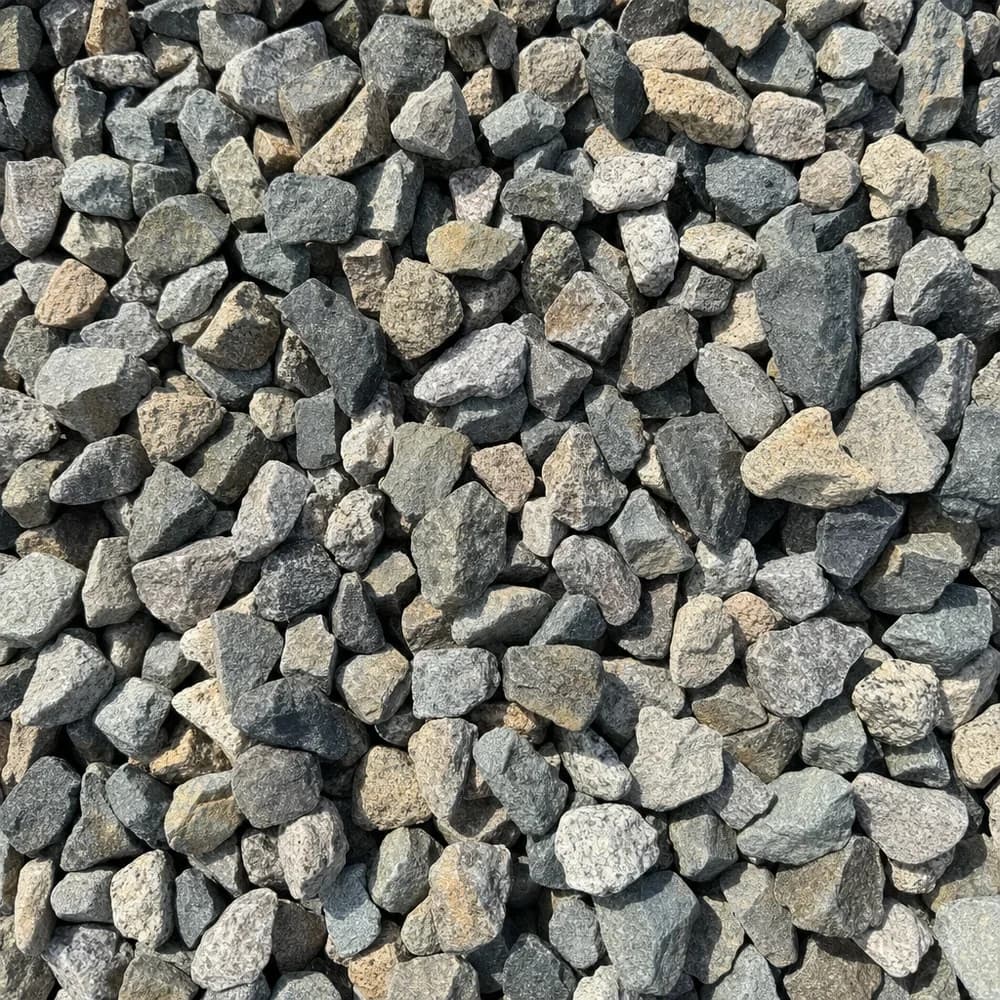
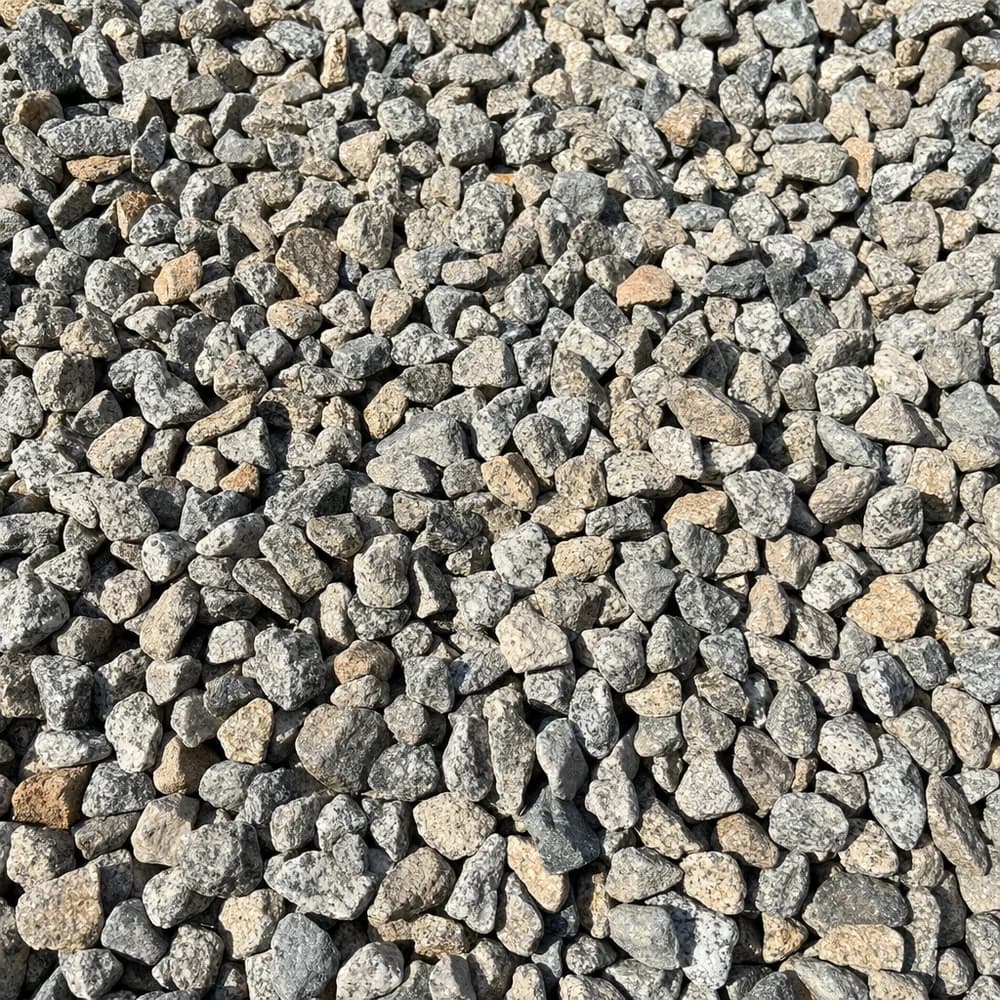
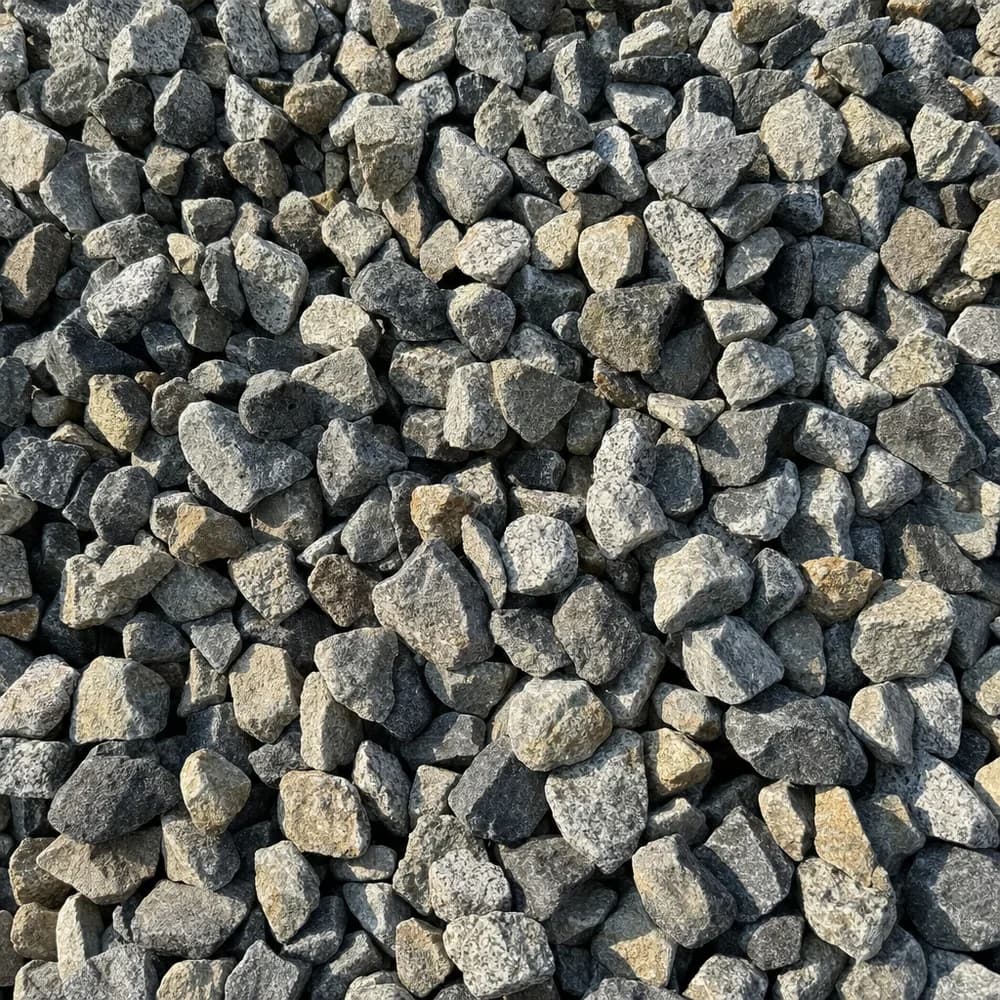
#89 Crushed Stone: A Bed That Locks Up, Not a Drainage Layer
#89 Crushed Stone suits Colorado paver joints, flagstone bedding, chip-seal work, and concrete mixes that need a compactable aggregate in tight areas.
- Size: About 3/8 inch down to fines
- Grading: #89, carries some fines
- Type: Angular crushed stone
From $433 for 1 ton, delivery included
Larger loads cost less per ton: 500 tons is $30,535 ($61.07 per ton). Pick any quantity below for a delivered price.
Free delivery included
Free delivery anywhere in Colorado
Pick a delivery date
Weekday delivery, earliest Oct 20
Get a Free Quote
Fill out the form and our sales team will get back to you within the hour.
Size and Grading
- Size
- About 3/8 inch down to fines
- Grading
- #89, carries some fines
- Type
- Angular crushed stone
The order this material most often gets wrong is a drainage one. Somebody has a damp strip along the foundation after the March melt, a neighbor says buy 89 stone, and a load of it goes into a trench where it packs shut inside two seasons. #89 Crushed Stone is an angular stone running from about 3/8 inch down to fines, and those fines are the whole point of it. They are what lets it firm up under a screed board, and they are also why water will not travel through it.
Sized 3/8 inch down to fines, and the fines are what you are buying
Three things off the spec, and one consequence.
- Size. About 3/8 inch down to fines, so it is a graded material rather than a single stone size.
- Grading. #89, carrying some fines.
- Type. Angular crushed stone, with faces that key against each other rather than roll.
Put those together and you get a material that compacts into a firm, even setting surface and holds that shape under pavers or flagstone. The same fines that give it that behavior close the voids, so treat it as a bedding and jointing product and nothing else. When a reader wants both drainage and firmness, that is two materials in two layers, not one compromise.
Where #89 crushed stone belongs on a Front Range job list
| The job | What it takes | Where #89 fits |
|---|---|---|
| Paver or flagstone joints | A fine angular stone swept in dry | This is the material. Sweep, then settle in with a plate or a rubber mallet. |
| Bedding under pavers and flagstone | An even inch that screeds flat and stays flat | This is the material, over a compacted base. |
| Concrete mixes | Small coarse aggregate | Used as the coarse fraction where a mix calls for smaller stone. |
| Turnaround or parking pad | A compacted structural base | Class 6 Road Base underneath. #89 only appears if the pad is paved. |
| French drain along a foundation | Washed stone with the fines taken out | Drain Rock or #57 Stone. Not this. |
| Low spot or yard regrade | Compactable earth, then a growing layer | Fill Dirt with Top Soil over it. |
What a Colorado winter does to a bed that was never compacted
Clay along the Front Range takes on water through a wet spring and gives it up through the dry months, and the ground rises and drops with it. Add freeze-thaw cycling that can run several times in a single week at altitude, and a paved surface is only as level as the layer it was set on.
That is an argument for compaction rather than for depth. An inch of bedding that has been screeded and then consolidated moves with the base under it and comes back level. Three inches of loose material does not, because every rise and fall in the clay resettles it a little differently and the surface tells you about it by the second spring. The base beneath, and the drainage that keeps water out of the base, are what the pavers really sit on.
Working with a material that is dusty until it is wet
The fines make this load dusty off the truck and pleasant to work once damp. A light misting before screeding keeps the dust down and helps the layer consolidate; soaking it does the opposite and turns a screeded bed into a rutted one. Sweep joints when everything is bone dry, because damp fines bridge across the top of a joint and leave a void underneath.
Base and bedding work goes best from late spring through fall here. Frozen ground will not compact, and a bedding course placed on it is a surface you will reset.
Half a ton for a flagstone landing, two and a bit for a paver pad
Two hypothetical jobs, worked at about 2,800 lb per cubic yard, which is 1.40 tons per cubic yard, and checked twice.
Flagstone landing, 8 by 10 ft, 1.5 inch bed. 80 square feet. 80 x 1.5 / 12 = 10 cubic feet. 10 / 27 = 0.37 cubic yards. At 1.40, about 0.5 tons.
Paver parking pad, 15 by 24 ft, 1.5 inch bed. 360 square feet. 360 x 1.5 / 12 = 45 cubic feet. 45 / 27 = 1.67 cubic yards, so 2.3 tons.
Both figures are bedding only. The compacted base under the parking pad is a separate order and a much larger one, so price the two layers together rather than discovering the second one after the first load has landed. The stone calculator holds up to five areas at once and adds 5 percent by default for the material that disappears into an uneven subgrade.
Choosing a date once the base is down and compacted
The sensible sequence is base first, bedding second, so the fine material is not sitting in a pile through a week of Front Range wind. Pick a quantity and a delivery date here once the base is in, and note that delivery is arranged at checkout by ZIP code and the truck needs clear access to somewhere it can tip. If you want a second opinion on the layer build before ordering, send the dimensions and the surface you are setting through the quote and contact page.
Quickly Calculate How Much You Need
Material: #89 Crushed Stone
How to Measure
Measure the length and width of your project area in feet
Decide on depth in inches (2" for landscaping, 4" for driveways)
Enter the values above and we'll calculate the tonnage you need
Need help figuring out the right amount? We can help!
Call or text us at (719) 781-8522 and we'll help you calculate the right quantity for your project.
Not sure how much you need? The Stone Calculator has depth guides, coverage charts and worked examples for this material.
Frequently Asked Questions About #89 Crushed Stone
#89 Crushed Stone delivery across Colorado
- Denver
- Colorado Springs
- Aurora
- Fort Collins
- Thornton
- Arvada
- Westminster
- Greeley
- Pueblo
- Boulder
- Longmont
- Castle Rock