Gravel Driveway Cost in 2026: Price per Foot, per Ton and What a 100 ft Driveway Really Costs
Quick answer: Expect to pay $3 to $6 per square foot installed for a gravel driveway in Colorado, or roughly $30 to $70 per linear foot for a 10 to 12 foot wide drive. Material and delivery alone run $1.50 to $3 per square foot, with grading, base compaction and labor making up the rest. A 100 foot driveway (1,000 square feet at 10 feet wide) typically lands between $3,000 and $6,000 all in, depending on base depth and how far the truck has to travel.
Those numbers move a lot based on how deep the base needs to be and whether a contractor grades and compacts it or you do it yourself. Run your driveway's length and width through the gravel calculator to get a tonnage estimate before you start calling around for quotes.
What Determines Gravel Driveway Cost in Colorado?
Base depth, driveway width and delivery distance drive gravel driveway cost more than the surface stone you pick. Colorado's frost line runs 36 inches deep, and while a driveway isn't a footing, that same freeze-thaw cycle heaves a base that's too shallow or built from the wrong aggregate. Most Front Range driveways use a compacted Class 6 Road Base, and our guide to Class 6 Road Base in Colorado covers why that spec outperforms plain fill under heavy clay.
Width matters just as much as length. A 10 foot wide drive works for most single-car garages, but a 12 foot width for trucks, trailers or a two-car turnaround adds 20 percent more material and cost across the same distance. Curves, culverts and a longer haul from the yard to a rural or mountain lot all push the price up before a single ton gets spread.
Gravel Driveway Cost by Layer: Base, Gravel and Delivery
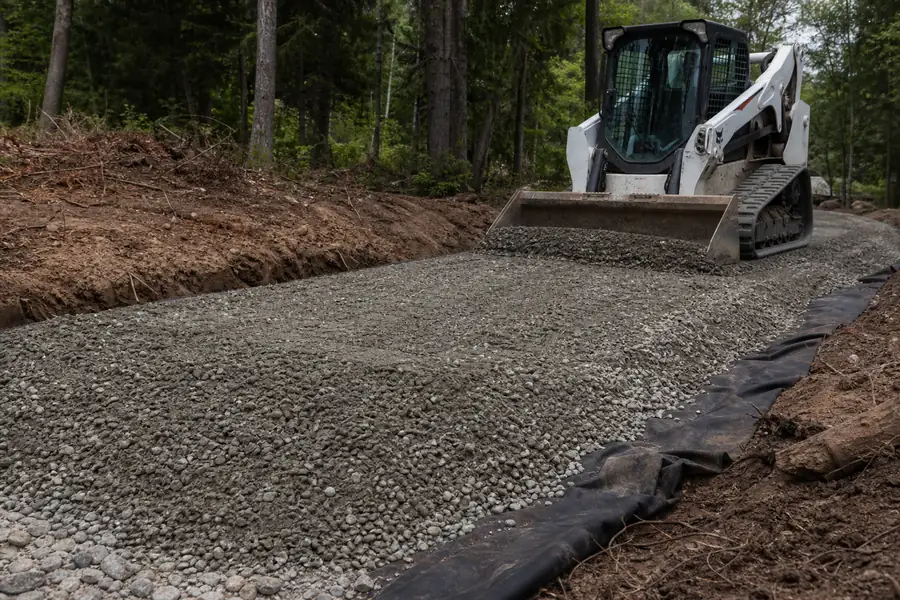
A gravel driveway is really two layers, not one, and pricing them separately is where the real cost breakdown happens. The base carries the weight and stops seasonal heaving; the surface layer is what your tires actually touch.
Road base runs 4 to 6 inches compacted on most lots, deeper on heavy clay or steep mountain driveways. Crusher run is a cheaper option some homeowners use as a combined base and surface layer on lower-traffic drives. For the top layer, driveway gravel is the standard drivable, low-dust surface, while 3/4 inch crushed stone is a more angular option that locks together tighter and migrates less on a slope.
| Layer | Typical Depth | Rough Cost per Ton (delivered) | Purpose |
|---|---|---|---|
| Road base | 4-6 in (up to 8 in on clay or mountain lots) | $35-$55 | Compacted foundation that resists spring heave |
| Crusher run | 2-4 in | $30-$50 | Budget base or combined base and surface layer |
| Driveway gravel | 2 in | $45-$75 | Drivable, low-dust top surface |
| 3/4 inch crushed stone | 2 in | $50-$80 | Angular stone that locks tighter and migrates less |
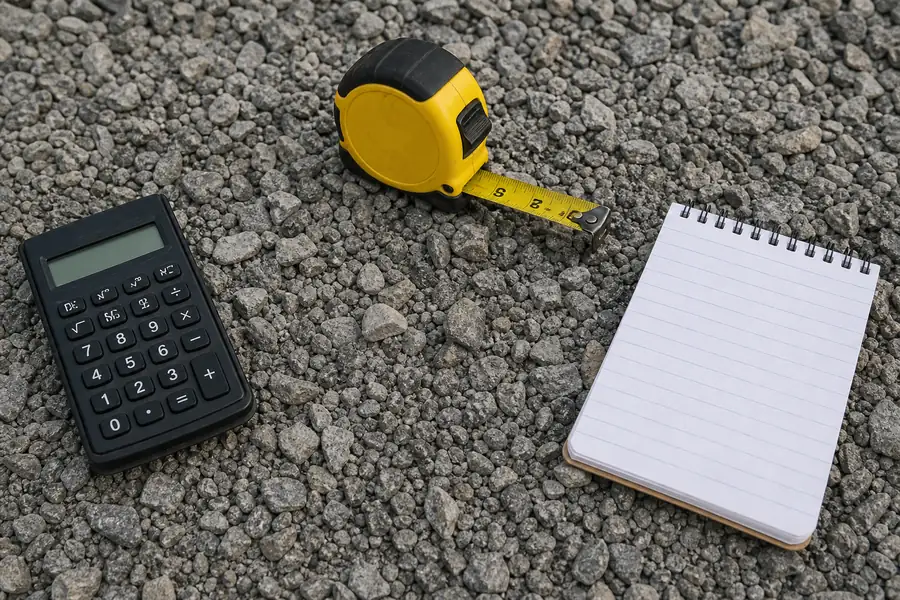
Cost to Gravel a 50, 100 and 200 Foot Driveway
A 50 foot driveway at 10 feet wide typically costs $1,500 to $3,000 installed; a 100 foot driveway runs $3,000 to $6,000; a 200 foot driveway runs $6,000 to $12,000. Those figures assume a standard 4 to 6 inch base and a 2 inch gravel surface, delivered within a normal Front Range service radius.
| Driveway Length | Area (10 ft wide) | Base + Gravel Needed | Material Cost | Installed Cost Range |
|---|---|---|---|---|
| 50 ft | 500 sq ft | ~15 tons base, ~5 tons gravel | $750-$1,200 | $1,500-$3,000 |
| 100 ft | 1,000 sq ft | ~30 tons base, ~10 tons gravel | $1,500-$2,400 | $3,000-$6,000 |
| 200 ft | 2,000 sq ft | ~60 tons base, ~20 tons gravel | $3,000-$4,800 | $6,000-$12,000 |
The gap between material cost and installed cost is grading, compaction passes and labor. A driveway with a steep grade, a culvert crossing or a tight turning radius sits at the higher end of every range in the table.
DIY vs Contractor: Which Costs Less for a Gravel Driveway?
Doing the work yourself typically cuts total cost by 30 to 40 percent, mostly by skipping labor and equipment markup. Material alone runs $1.50 to $3 per square foot, plus a plate compactor rental at $150 to $300 per day. The tradeoff is getting the base compacted evenly in lifts, something a contractor's equipment does faster and more consistently than a homeowner working solo.
- DIY makes sense when: the drive is short, flat and under 500 square feet, and you can rent a compactor for a weekend.
- Hiring a contractor makes sense when: the lot has slope, clay, a culvert or a base deeper than 6 inches.
- Either way: order base and surface material separately so you know exactly how many tons went where.
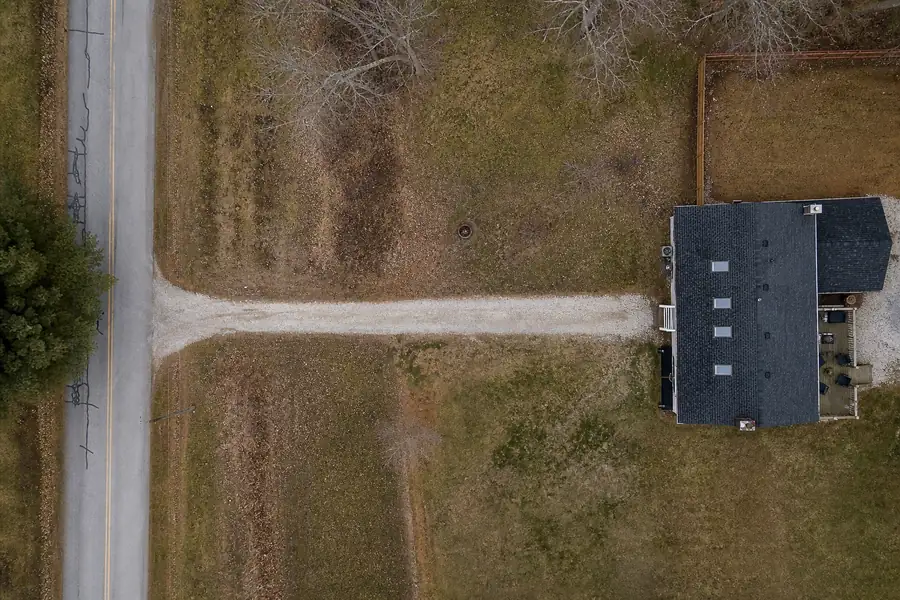
Colorado Factors That Change Gravel Driveway Cost
Mountain access and frost depth are the two biggest local factors that push gravel driveway cost above a typical Front Range estimate. Deliveries west of the Front Range are grade and weather limited, and I-70 corridor jobs above 8,000 feet can lose weeks to winter closures, so ordering before the first hard freeze avoids a spring price bump from rush scheduling.
Heavy clay soils over decomposed granite also mean mountain and foothills driveways often need a deeper base, 6 to 8 inches instead of the standard 4, to survive spring melt without heaving. That extra depth adds 30 to 50 percent more base tonnage on the same footprint, which shows up directly in the material cost line, not the labor line.
FAQs
How much does a gravel driveway cost per square foot in Colorado?
Most gravel driveways installed in Colorado run $3 to $6 per square foot, covering base material, surface gravel, delivery, grading and compaction. Material alone, without labor, typically runs $1.50 to $3 per square foot.
How much gravel do I need for a 100 foot driveway?
A 100 foot driveway at 10 feet wide (1,000 square feet) generally needs about 30 tons of compacted base and 10 tons of surface gravel, assuming a 4 to 6 inch base and a 2 inch top layer. Wider drives or deeper bases require proportionally more.
Is it cheaper to install a gravel driveway myself?
Yes, doing the base compaction and gravel spreading yourself typically cuts total cost by 30 to 40 percent compared to hiring a contractor, mainly by avoiding labor and equipment markup. You still need to rent a plate compactor and grade the base correctly to avoid soft spots.
How deep should the base be for a Colorado driveway?
A standard residential driveway needs 4 to 6 inches of compacted base on stable ground, but heavy clay soils or mountain lots often need 6 to 8 inches to resist spring frost heave. Skipping a proper base is the most common reason a Colorado gravel driveway fails within a couple of seasons.
Does a gravel driveway cost more in the mountains?
Yes, mountain driveways usually cost more because of longer delivery distances, grade-limited access, and deeper base requirements on clay soils. Scheduling delivery before the first hard freeze also matters, since winter closures along the I-70 corridor can delay projects above 8,000 feet.