#4 Crushed Stone: The Open Layer Under a Drive, Not the Drive
For a mountain driveway dealing with spring melt, #4 Crushed Stone gives Colorado projects an open-draining layer under traveled areas.
- Size: About 3/4 inch to 1-1/2 inches
- Grading: #4
- Type: Angular crushed stone
From $433 for 1 ton, delivery included
Larger loads cost less per ton: 500 tons is $30,535 ($61.07 per ton). Pick any quantity below for a delivered price.
Free delivery included
Free delivery anywhere in Colorado
Pick a delivery date
Weekday delivery, earliest Oct 20
Get a Free Quote
Fill out the form and our sales team will get back to you within the hour.
Size and Grading
- Size
- About 3/4 inch to 1-1/2 inches
- Grading
- #4
- Type
- Angular crushed stone
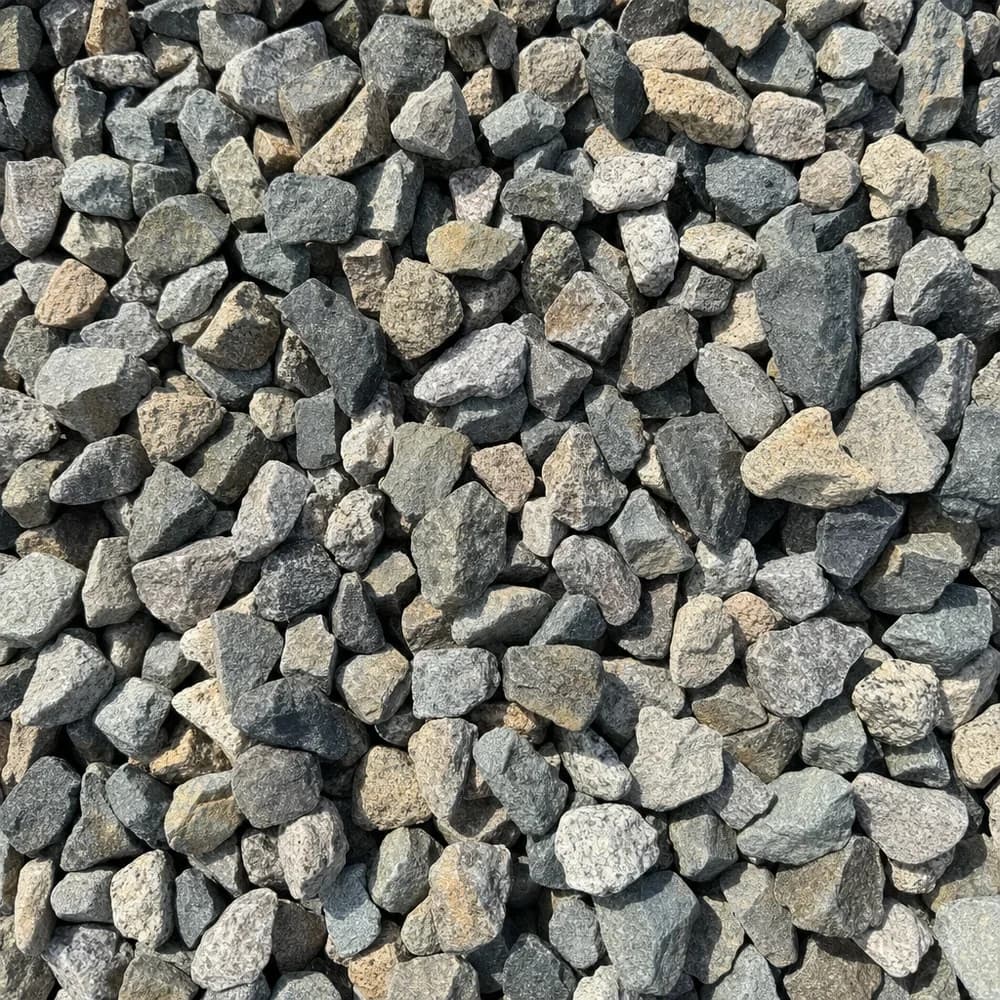
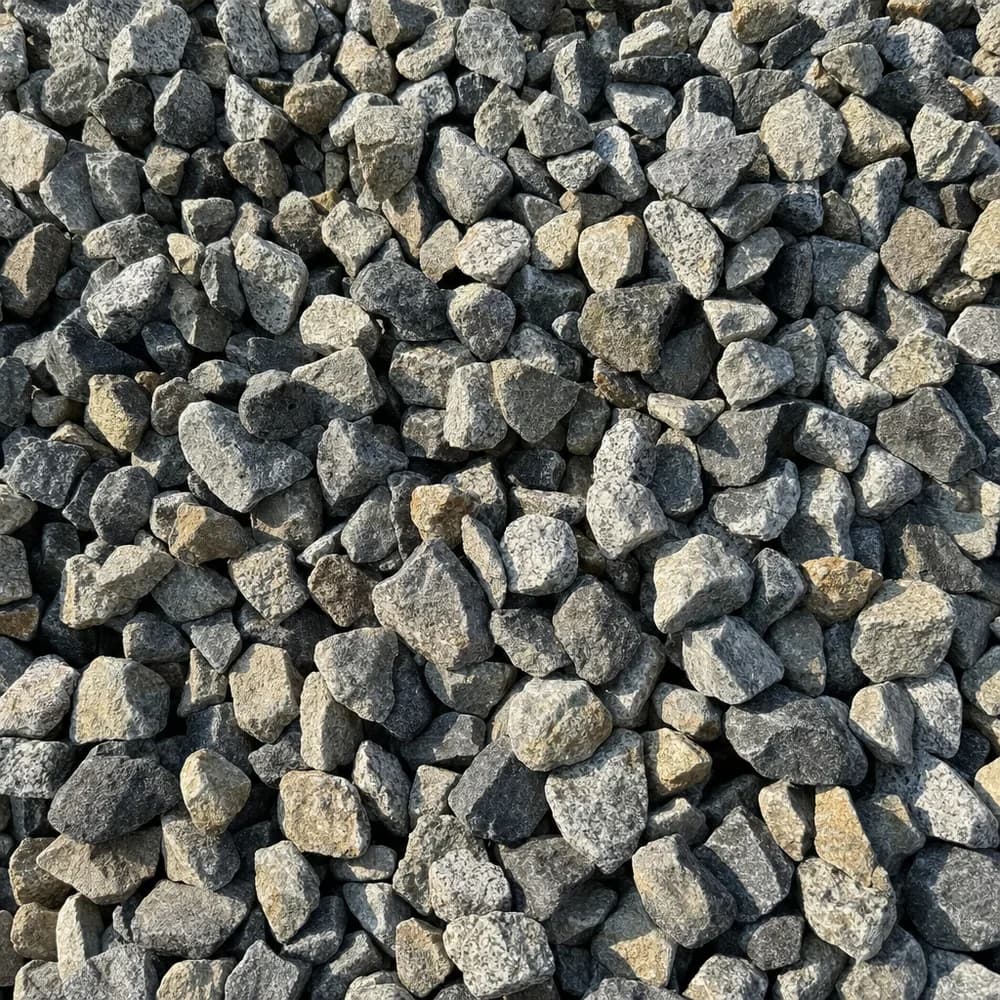
On a mountain lane where snowmelt keeps working through the ground for weeks after the surface has dried, the stone that fixes it is bigger than most people expect and rougher than anything they would want to walk on. #4 crushed stone is 3/4 to 1-1/2 inch angular rock with nothing small in it, and it goes in at the bottom of a build to keep water moving out from under the layers that carry traffic.
Is this the same stone as #57, or is it ballast under another name?
No to both, and the differences are worth twenty minutes before you order.
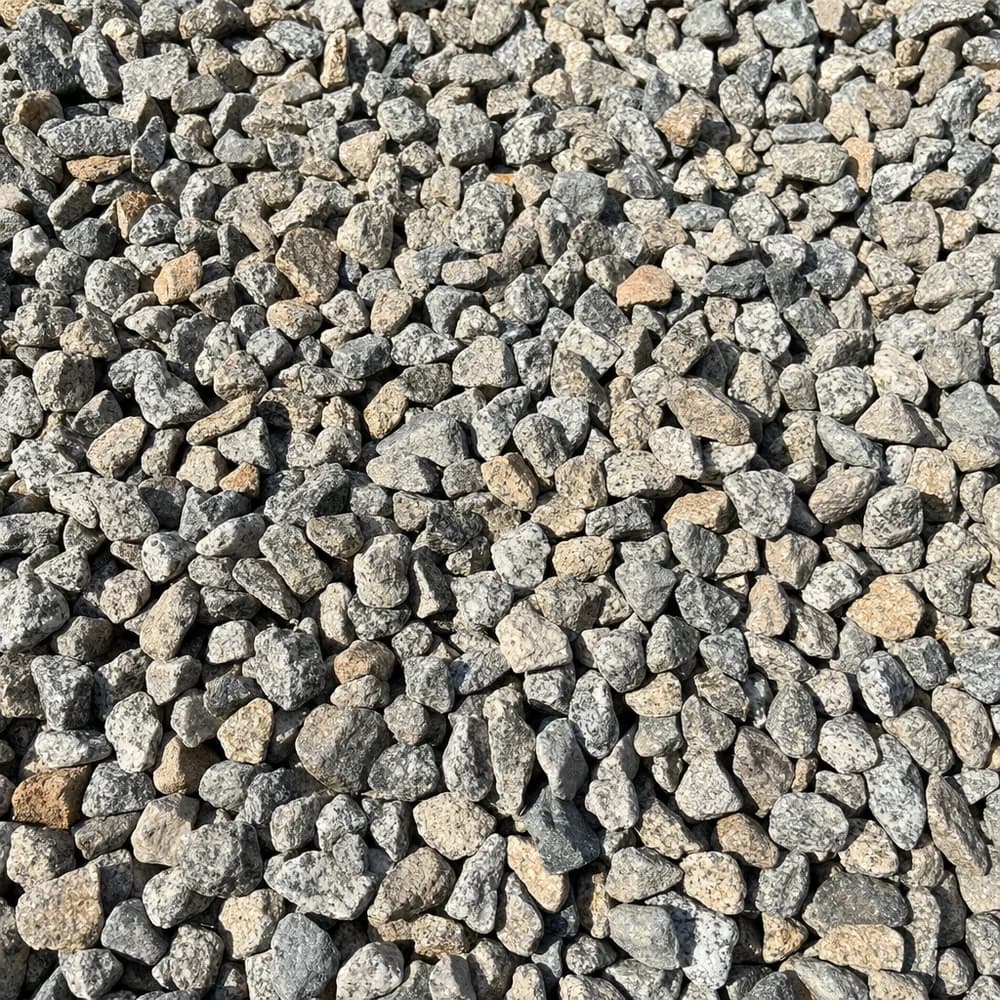
#57 Stone runs 3/16 inch to 1 inch. It is the standard French drain and concrete aggregate size, it moves plenty of water, and a person can spread it with a shovel without hating the job. Step up to #4 when the volume of water, or the softness of the ground, is beyond what the smaller stone will handle.
Railroad Ballast runs roughly 1 inch to 2.5 inches and is graded to interlock under heavy load while draining freely. It overlaps this grade at the bottom of its range but carries larger pieces, and its job is bearing weight on access routes and equipment pads rather than sitting as a drainage course under a residential build.
#4 sits between them: large enough that voids stay open under a pumping clay subgrade, small enough to place in a driveway cut without a machine standing over it the whole time.
Where does a 3/4 to 1-1/2 inch stone sit in a Colorado driveway build?
At the bottom, with something finer above it. The angular form leaves wide open spaces between pieces, so water moves through instead of collecting beneath a traveled surface, and the stones lock against one another well enough to stay put under vehicle weight even while the ground under them is wet through the thaw.
On Front Range clay and on decomposed granite up in the corridor, the layering that works looks like this:
- Strip the sod and soft topsoil, then look at what is exposed. Saturated clay pumps rather than compacts.
- Geotextile fabric over the subgrade, wherever the ground is soft or freshly cut.
- #4 crushed stone as the open drainage lift, keyed down into the cut.
- Fabric again if you want a clean separation, then Class 6 Road Base compacted in lifts.
- A wearing course of Driveway Gravel on top.
Frost goes roughly 30 to 36 inches down through much of the state, deeper than any drive build reaches, so the point of the open layer is not to get below the frost. It is to make sure there is no trapped water down there to freeze and lift in the first place.
Can a single-car drive run on #4 crushed stone by itself?
It can be driven on, but it will not behave like a driveway. With no fines in the mix there is nothing to bind the pieces into a dense layer, so the surface stays open and coarse. Tires sink into it slightly, it is unpleasant to walk on and impossible to shovel cleanly, and a plow blade catches the high stones and drags them into the yard.
It is also the wrong thing to spread thinly over an existing drive to fix a soft patch. A soft patch is a water problem. Cut it out, work out where the water is coming from, and rebuild the layers.
How deep does it go under a pole barn pad on expansive clay?
Depth is a judgment about what is underneath rather than what is on top. Expansive clay moves with moisture, heaviest along the Front Range, and the open layer exists to keep that moisture from concentrating.
Rough planning depths:
| Job | Depth of #4 crushed stone | What sits above |
|---|---|---|
| Sub-base under a single-car drive | 4 to 6 in | Compacted base, then a wearing course |
| Pole barn or equipment pad | 6 to 8 in | Compacted base, thicker where ground was cut and refilled |
| High-volume trench or drainage blanket | 12 in and up | Fabric, then backfill |
| Gabion basket fill | Full basket | Nothing |
| Construction entrance | 6 in | Nothing |
On a pad taking point loads from a tractor or a stacked container, the open layer goes in first and the compacted base goes on in lifts of three to four inches. One thick dump compacted once ends up firm on top and loose underneath.
Is it the right size to ring a fire pit?
Not as the surface. Pieces this size are awkward under a camp chair, they will not sit flat, and nobody enjoys standing on them in bare feet. Where a fire pit surround sits on ground that stays damp, use the stone as a drainage layer three inches deep and finish with compacted Crusher Fines or a graded gravel that will sit level.
Where the job is armoring a bank or a swale that scours after snowmelt rather than draining a flat area, the stone to reach for is RipRap, which is heavier again and is meant to stay where the water hits it.
How many tons for a 10 by 14 pad and 90 feet of lane sub-base?
Three hypothetical jobs, run through the formula this page uses: length times width in feet, times depth in inches divided by 12, divided by 27 for cubic yards, then times the weight. This site publishes about 2,900 lb per cubic yard for #4 stone and ballast, which is roughly 1.45 tons per cubic yard.
Pole barn pad, 10 by 14 ft at 6 inches. 10 x 14 = 140 sq ft. 140 x 6 / 12 = 70 cubic feet. 70 / 27 = 2.59 cubic yards. 2.59 x 1.45 = 3.8 tons.
Single-car drive sub-base, 90 ft by 10 ft at 4 inches. 900 sq ft. 900 x 4 / 12 = 300 cubic feet. 300 / 27 = 11.11 cubic yards. 11.11 x 1.45 = 16.1 tons.
Drainage ring under a fire pit surround, 12 ft outer circle with a 4 ft pit in the middle, at 3 inches. The ring is about 113 sq ft minus 13 sq ft, so roughly 100 sq ft. 100 x 3 / 12 = 25 cubic feet. 25 / 27 = 0.93 cubic yards. 0.93 x 1.45 = 1.4 tons.
Remember that these are the bottom layer only. Work out the base and surface courses separately, and use the stone calculator for lanes measured in sections or areas that are not rectangles.
What goes on top, and ordering both layers in one go
An open-graded layer is never the finish. Work out the sub-base tonnage here, then the compacted base and the surface course, and put them on the same delivery date so the lower lift is not sitting exposed through a week of weather. Delivery is arranged at checkout by ZIP code, and the truck needs clear access to a firm spot where a heavy load can be tipped. Set your quantity and date on this page once the cut is measured, and check the delivery page if the approach to the site is narrow.
Quickly Calculate How Much You Need
Material: #4 Crushed Stone
How to Measure
Measure the length and width of your project area in feet
Decide on depth in inches (2" for landscaping, 4" for driveways)
Enter the values above and we'll calculate the tonnage you need
Need help figuring out the right amount? We can help!
Call or text us at (719) 781-8522 and we'll help you calculate the right quantity for your project.
Not sure how much you need? The Stone Calculator has depth guides, coverage charts and worked examples for this material.
Frequently Asked Questions About #4 Crushed Stone
#4 Crushed Stone delivery across Colorado
- Denver
- Colorado Springs
- Aurora
- Fort Collins
- Thornton
- Arvada
- Westminster
- Greeley
- Pueblo
- Boulder
- Longmont
- Castle Rock