Stone Calculator for Graded Drainage Stone and Drip Strips
Enter your project dimensions
Walk the outbuilding line after a melt and the ground has already done the measuring for you. There is a groove under the eaves where roof water lands, clay splashed a foot up the siding, and a soft trough that refills every time a sunny afternoon turns into a hard freeze overnight. That groove is where this job starts. The stone calculator on this page turns what you tape out there into cubic yards, tons and cubic feet, and everything below follows one hypothetical shed strip from the first measurement through to the last rake.
The groove under the eaves is the measurement you start from
Stand at a corner and look along the wall. The wash line shows you two things at once: how far out the water throws, and how far up the clay is traveling. A strip about two feet wide covers most eaves on a shed or a detached garage, and three inches of stone is enough to break the fall of the water without burying the bottom course of siding.
Depth is worth more thought than width here. Frost in much of this state reaches somewhere around thirty to thirty-six inches, and the surface can cycle through freeze and thaw several times in a single week at altitude. A thin scatter of stone over bare clay works loose in a season. Three inches over pinned fabric stays where you raked it.
Four rectangles, not one ring: taping a strip around a shed
The tool takes rectangles, circles, or up to five areas added together. A strip that wraps a building is a ring, and a ring is not a shape you can type in, so break it into rectangles and watch the corners.
For a shed twelve feet by sixteen with a two-foot strip all round, the two long sides are sixteen feet by two. The two end strips run the full outside width, which is twelve feet plus two feet of strip at each corner, so those are sixteen by two as well. Four identical entries, which is a coincidence of these particular dimensions rather than a rule, and 128 square feet in total. Check it the other way if you like: the outside rectangle is twenty by sixteen, or 320 square feet, less the 192 square feet the shed itself sits on.
Choosing between clean stone, chips and screenings for this strip
Pick the grade before you pick the tonnage, because the tool applies the weight of whatever is selected.
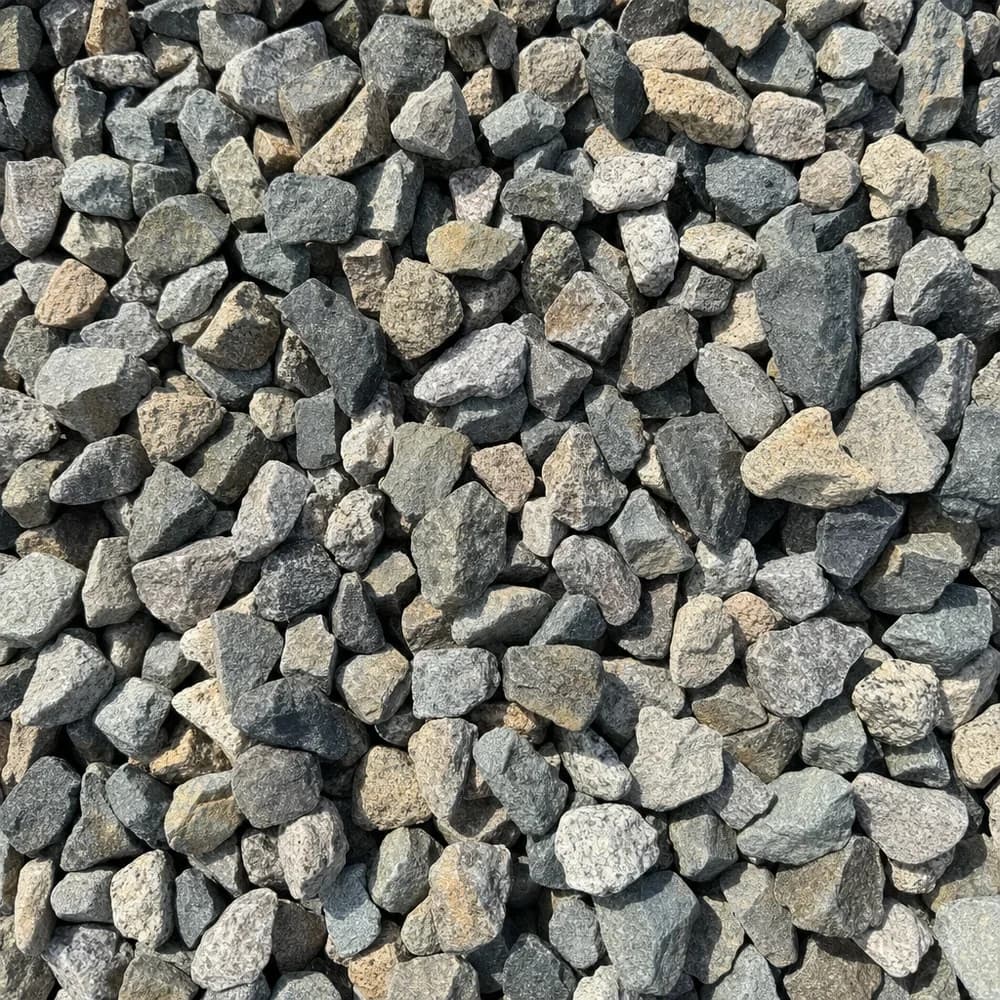
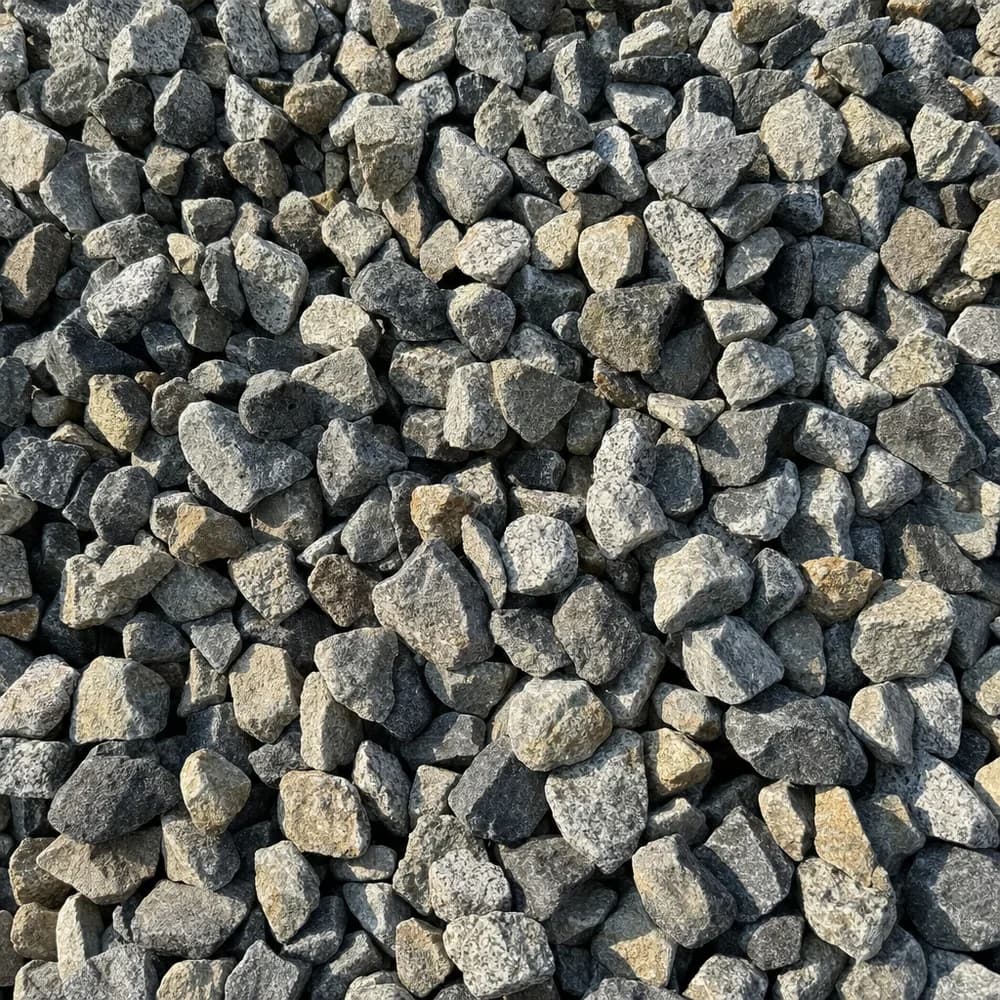
The washed, open grades are the ones that belong under a roof line. 3/4" Crushed Stone and #57 Stone are the usual choices, both published on this site at roughly 2,800 lb to the cubic yard, which the tool reads as 1.40 tons per yard. #67 Stone is a little finer and sits at the same weight, useful where the strip is narrow and you want it to look tidier. The 3/8 inch chips and the #8 and #89 grades share that figure too.
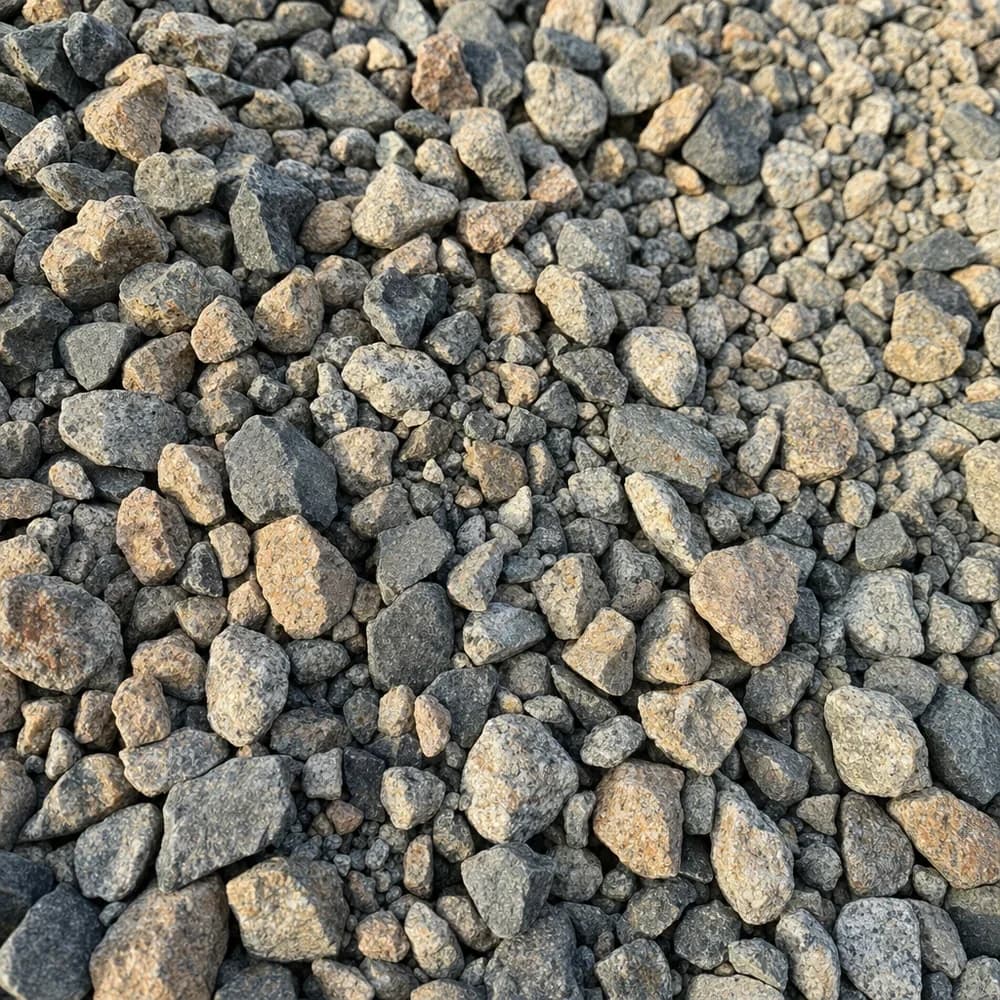
Two heavier materials sit on the same menu and are wrong for this job. Crusher Fines, the catalog name for stone screenings, run about 2,900 lb per yard, or 1.45 tons, and they are meant to tighten and hold together underfoot on a path, which is the opposite of what a drip strip needs. #4 Crushed Stone and railroad ballast share that 2,900 lb figure and are sized for entrances and equipment standing, not for a two-foot border.
Where the stone calculator takes over from the gravel one
Two tools on this site will both give you a sensible answer for a rectangle of rock, and they are not interchangeable at the point of ordering.
Use the gravel calculator when the material is sold by what it does: driveway gravel, walkway gravel, the loose surfacing you spread and drive on. Use this one when the material is sold by a number or a size, which is the case for anything you are matching to a plan, a permit or an inspector's note. For a clean 3/4 inch grade the arithmetic lands in the same place either way, since both weigh in at 1.40 tons per yard. The product page you finish on is different, and that is what the delivery ticket says.
Compacted base under a lane or a pad goes to the road base calculator instead, and bank armor goes to the rip rap calculator. Both carry their own weights.
The shed strip in the stone calculator, from shape to tons
A hypothetical run of the same 128 square feet at three inches of 3/4 inch stone.
- Choose Rectangle, then use Add another area three times. Five is the ceiling.
- Enter each strip in feet: sixteen by two, four times.
- Enter the depth in inches: 3. The box accepts anything from 0.25 up to 24.
- Select the material so the right weight is applied.
- Add 5% extra for compaction & spillage starts ticked. It is optional, so untick it if you do not want the margin.
- Press calculate, and read all three outputs.
The arithmetic behind it: 128 square feet at three inches is 128 multiplied by 3 and divided by 12, or 32 cubic feet. Divide by 27 and you have 1.19 cubic yards. Multiply by 1.40 and you have 1.66 tons. With the five percent ticked, 1.25 cubic yards and 1.74 tons.
Order something near 1.75 tons and you will have a wheelbarrow or two spare, which is the right amount to be holding when you reach the last corner.
Spreading three inches over fabric, and the five percent that covers the spill
Lay non-woven fabric before any stone goes down and pin it, because clay finds its way into the voids of a clean grade from underneath long before weeds find it from above. Once the voids fill, the strip stops draining and starts holding water against the wall through the winter.
Rake the stone to a consistent depth and grade it slightly away from the building. Then check the depth with a screwdriver rather than by eye, since a strip that reads three inches at the corners is usually thinner in the middle where you started.
The five percent option exists for the material that ends up on the lawn, in the wheelbarrow tire track, and packed down under your boots as you work along the wall. It does not cover a strip you measured at two feet and then built at thirty inches.
Tons on the invoice, yards in the wheelbarrow
Three figures come back and they describe the same pile.
Cubic feet is the raw volume, and it is the number to use if you are cross-checking the maths on paper. Cubic yards is the one to picture: twenty-seven cubic feet, a heap about three feet each way before it slumps, and the unit that tells you whether a job is a wheelbarrow afternoon or a machine afternoon. Tons is the unit graded stone is sold in, so it is the figure you carry to the product page.
They only disagree when the weight changes. The same 1.19 cubic yards is 1.66 tons of clean 3/4 inch stone and 1.72 tons of screenings, because screenings pack more material into the same space.
Take your tonnage to the product page for the grade you settled on, set a quantity and a date there, and check the drop spot before you confirm. Delivery is arranged at checkout against your ZIP code, and the truck needs firm, clear ground to tip on. If the spec on your plan is written in a way you cannot match to a product name, send it through the contact page before you order rather than after.
Common questions
The strip around my garage is already stoned and has just gone thin. What do I measure?
Measure the layer you are adding, not the one already there. Push a screwdriver down to the fabric in three or four places, work out how far short of your target depth it sits, and enter that difference as the depth. A strip that reads an inch and a half against a three-inch target needs an inch and a half entered, which is half the tonnage of starting from bare ground.
What actually goes wrong if I come up short by a quarter ton?
The last stretch gets spread thin to make it reach, and that stretch is where the fabric shows through by spring. Thin stone also travels: it works out of the strip through a winter of freeze and thaw and ends up in the grass, where a mower finds it. Rounding up to the next quarter ton costs less than a second small delivery and far less than doing the corner twice.
How close is the estimate to what I will actually use?
The arithmetic is exact for the shape you type in. The variation comes from the ground under it, which is rarely flat, and from the depth you achieve against the depth you intended. On a strip like the example, expect the real figure to land within about five percent of the calculation if you have measured the width honestly.
Which product page do I go to once I have a tonnage?
For a drip strip or a drainage layer, 3/4" Crushed Stone or #57 Stone. For a finer finish in a narrow border, #67 Stone. For a construction entrance or ground that carries equipment, #4 Crushed Stone. Crusher Fines only if you want the surface to tighten rather than drain.
Where should the load go on a lot with a shed out the back?
On firm, level ground the wheelbarrow can reach without crossing a soft lawn or a downhill run. Under two tons is a short haul, so a spot near the gate is usually better than a spot near the shed if reaching the shed means a wet corner. Ground that carried a truck in September will not always carry one during snowmelt, so walk the route before you book the date.
Related calculators
Spec'd it? We stock it.
Twelve graded stone products, priced per ton, free delivery across Colorado.