Pea Gravel: Rounded 3/8 Inch Stone and Where It Stays Put
Also sold as 3/8" Natural Pea Gravel
Also known as: squeegee
Colorado spring melt calls for a surface that lets water pass through. Pea Gravel suits paths, patios, play areas, and drainage work with a comfortable rounded feel.
- Size: Approximately 3/8 inch
- Type: Small, smooth, naturally rounded stones
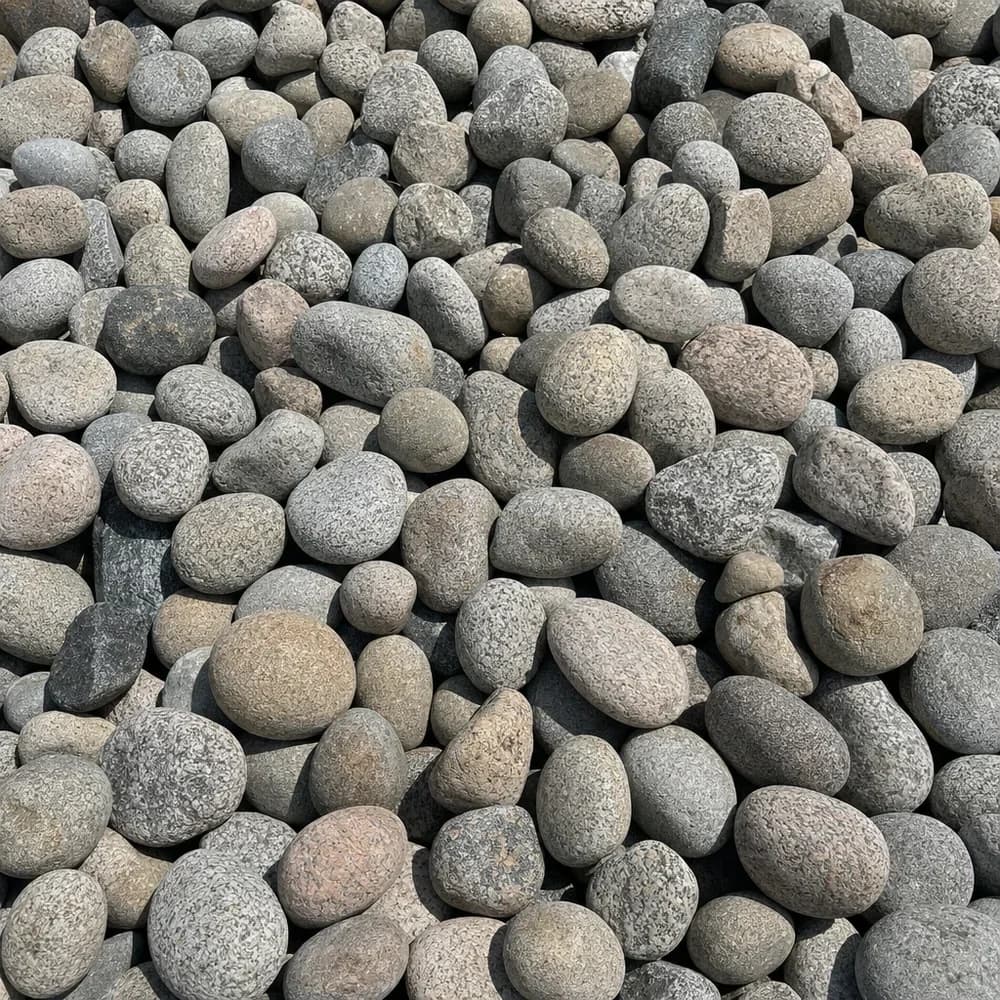
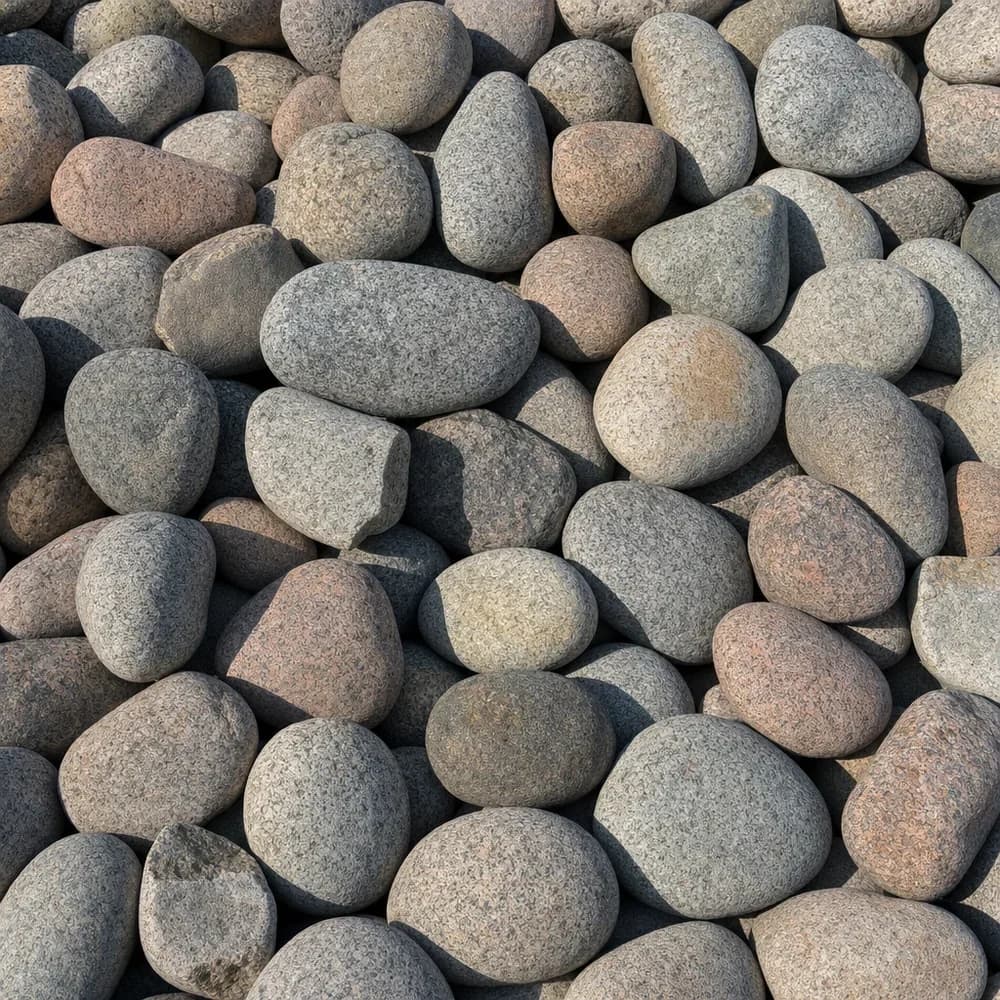
- Color: Tans, creams, grays, browns and occasional reds
From $665 for 1 ton, delivery included
Larger loads cost less per ton: 500 tons is $47,610 ($95.22 per ton). Pick any quantity below for a delivered price.
Free delivery included
Free delivery anywhere in Colorado
Pick a delivery date
Weekday delivery, earliest Oct 20
Get a Free Quote
Fill out the form and our sales team will get back to you within the hour.
Size and Grading
- Size
- Approximately 3/8 inch
- Type
- Small, smooth, naturally rounded stones
- Color
- Tans, creams, grays, browns and occasional reds
Put a hand into a pile of pea gravel and the first thing you notice is that nothing in it is sharp. Every piece has been worn smooth, they run off the palm like dried beans, and the colors change as you turn them over. That rounding is why people choose it for the parts of a Colorado yard they actually sit in, and it is also the reason it will not stay where you put it unless you build an edge.
A handful off the pile: 3/8 inch, rounded, no two the same color
The published specification is short. The size is approximately 3/8 inch. The stones are small, smooth and naturally rounded rather than crushed. The color runs across tans, creams, grays and browns with the occasional red in the mix, and because that color is the stone itself it does not fade out or rinse off the way a dyed product does.
Two practical consequences follow from the shape:
- Water passes straight through it rather than sitting on the surface, because rounded stones of a consistent size leave open space between them.
- It rolls. Rounded stone has no faces to key against, so it never locks together the way an angular crushed stone does. That is what makes it comfortable underfoot and what makes it migrate.
Everything else on this page comes from those two lines.
Where rounded stone suits the job, and where the rounding works against it
| Job | Verdict | Why |
|---|---|---|
| Patio or seating area | Good | Comfortable underfoot, drains after a storm |
| Garden path through beds | Good with edging | Needs a restraint on both sides or it spreads |
| Play area surface | Common choice | Rounded rather than angular; check local play surfacing guidance for depth |
| Foundation strip or downspout run | Good | Passes water away from the wall, tidy finish |
| Ground cover where turf will not take | Good | Handles altitude sun and dry spells that kill grass |
| Turnaround or parking pad | Poor | Rolls under tires, ends up in the lawn |
| Deep drainage trench | Poor | Rounded and small; an angular washed stone drains better |
| Raising a low spot | Wrong material | It is a finish, not fill |
A foundation drain line wants stone that locks, not stone that rolls
A shallow strip of pea gravel along the base of a wall, catching what comes off a downspout, is a good use of the material. It looks finished, it stops splash marks up the siding, and it lets water move away rather than pooling against the foundation.
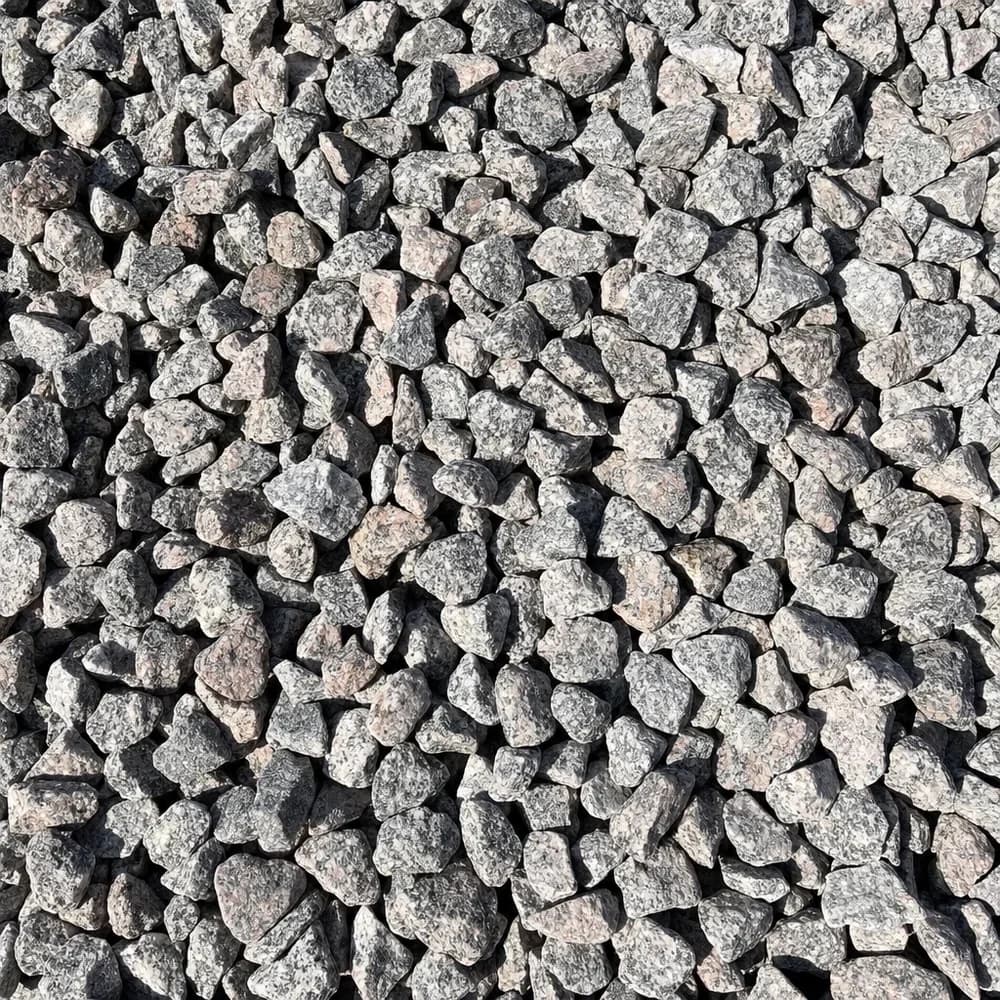
A proper French drain, with perforated pipe and a trench a foot or more deep, is a different job. Down there you want an angular washed stone whose pieces hold their position and leave larger, more consistent voids, which is why #57 Stone is the usual specification. Rounded 3/8 inch material packs closer together and silts up faster in Front Range clay.
The rule worth remembering: rounded stone at the surface where people see it, angular stone in the trench where they do not.
Why a turnaround scatters it, and what to lay instead
This is the request that produces the most regret. A turnaround or parking pad finished in pea gravel looks good for about a month. Then tires start spinning it, the stone piles at the edges and thins in the wheel tracks, and every mowing pass throws some of it back out of the lawn.
A surface that takes vehicles wants angular material that interlocks under compaction, over a compacted base. That is Driveway Gravel on Class 6 Road Base. If the look of rounded stone is what you are after, keep it to the borders beside the pad rather than the pad itself.
Regrading a low spot: this is the finish, never the fill
Where a corner of the yard holds water after snowmelt, the instinct is to tip stone into it. That fixes the look and not the problem, because the low spot is a grade problem and stone does not change a grade in any useful way.
Raise the ground with Fill Dirt compacted in lifts, set a fall that takes water somewhere sensible, and then finish the surface however you like, which may well be pea gravel over fabric. Doing it in that order costs one extra product and saves doing it twice.
Freeze-thaw, monsoon runoff and the edge that keeps it home
Colorado gives this material two specific problems.
Freeze-thaw. Several cycles can pass in a single week at altitude. Ground under a gravel surface swells and shrinks with moisture, and a loose stone layer follows it, which is why a pea gravel patio wants a compacted base under it rather than bare clay. Two to three inches of loose stone over a prepared base is the usual finish depth; deeper than that and walking through it feels like wading.
Monsoon runoff. Short, intense summer storms move loose rounded stone downhill quickly. On any slope, terrace the run or step it, and always put a physical edge on the low side. Steel, stone, timber and brick all hold it. Nothing at all does not.
Landscape fabric underneath is worth the trouble on clay. It slows the stone working down into the soil and keeps most weeds out, though wind-blown dust will build a seedbed on top of any gravel surface eventually, so expect to weed it whatever you do.
Tons for a 38 foot foundation strip and a 20 foot turnaround
Three hypothetical jobs, using the formula on this page: length times width in feet, times depth in inches divided by 12, divided by 27 for cubic yards, then times the weight. This site publishes about 2,800 lb per cubic yard for 3/8 inch pea gravel, which is roughly 1.40 tons per cubic yard.
Foundation strip, 38 ft long and 2 ft wide at 3 inches. 38 x 2 = 76 sq ft. 76 x 3 / 12 = 19 cubic feet. 19 / 27 = 0.70 cubic yards. 0.70 x 1.40 = about 1 ton.
Border ring around a 20 ft turnaround, taken as the full circle at 2 inches for comparison. A 20 ft circle is about 314 sq ft. 314 x 2 / 12 = 52.3 cubic feet. 52.3 / 27 = 1.94 cubic yards. 1.94 x 1.40 = 2.7 tons. Worth knowing as a number, and worth spending on an angular surface instead if vehicles will actually park on it.
Finishing a regraded low spot, 12 by 15 ft at 4 inches. 180 sq ft. 180 x 4 / 12 = 60 cubic feet. 60 / 27 = 2.22 cubic yards. 2.22 x 1.40 = 3.1 tons, over fill dirt that has already been compacted to grade.
The pea gravel calculator takes circles as well as rectangles and adds up to five areas in one pass, which is easier than splitting a curved bed by hand.
What to have ready when a load of loose stone arrives
Loose rounded stone is the least forgiving product to have tipped in the wrong place, because it spreads on impact and it keeps rolling. Pick a flat, firm drop spot, put a tarp down if the pile is landing on a drive, and have the fabric and edging already in before the load turns up rather than after.
Delivery is arranged at checkout by ZIP code, and the truck needs clear access to somewhere it can tip without the pile running into a bed or down a slope. Choose your tonnage and a date on this page once the edging is set, and check the delivery information if the only access is around the side of the house.
Quickly Calculate How Much You Need
Material: Pea Gravel
How to Measure
Measure the length and width of your project area in feet
Decide on depth in inches (2" for landscaping, 4" for driveways)
Enter the values above and we'll calculate the tonnage you need
Need help figuring out the right amount? We can help!
Call or text us at (719) 781-8522 and we'll help you calculate the right quantity for your project.
Not sure how much you need? The Pea Gravel Calculator has depth guides, coverage charts and worked examples for this material.
Frequently Asked Questions About Pea Gravel
Pea Gravel delivery across Colorado
- Denver
- Colorado Springs
- Aurora
- Fort Collins
- Thornton
- Arvada
- Westminster
- Greeley
- Pueblo
- Boulder
- Longmont
- Castle Rock