River Rock: Covering Ground That Will Not Hold a Lawn
River Rock brings smooth, rounded earth tones to Colorado xeriscape beds, dry creek features, and ground where runoff needs a clear path.
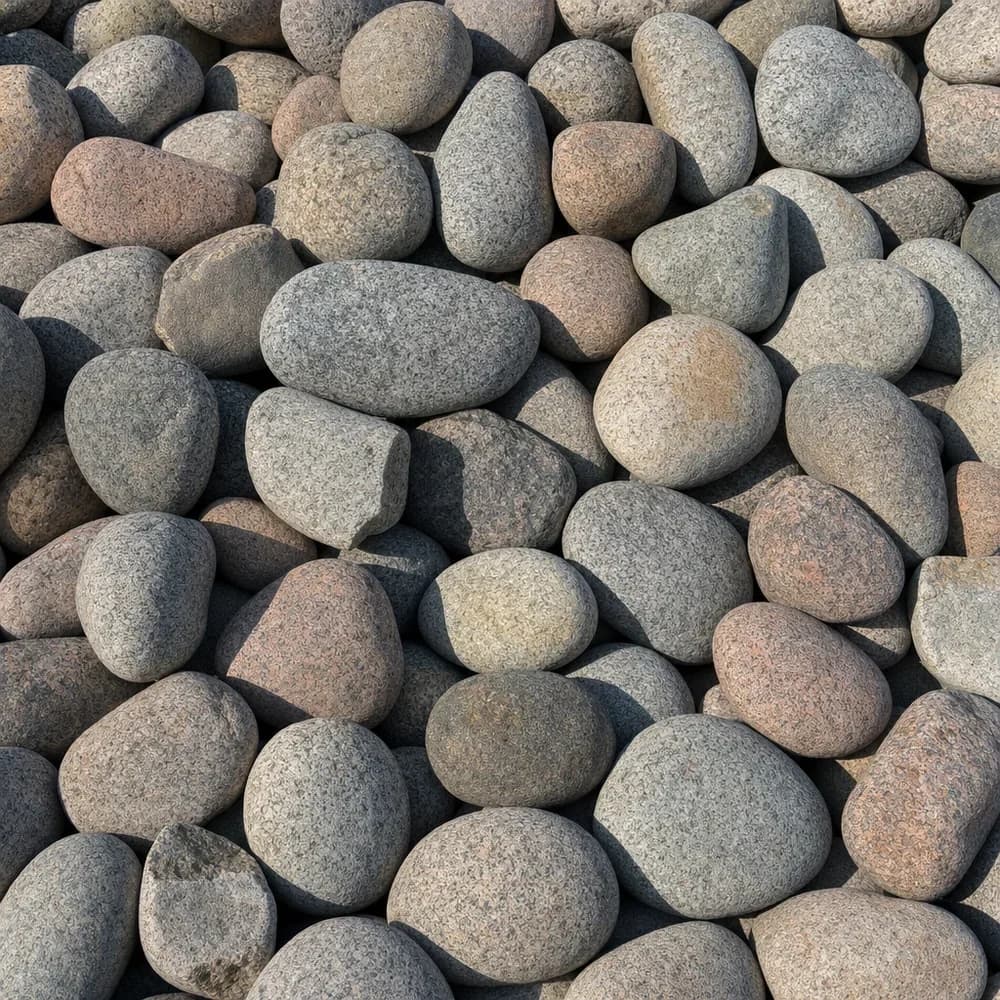
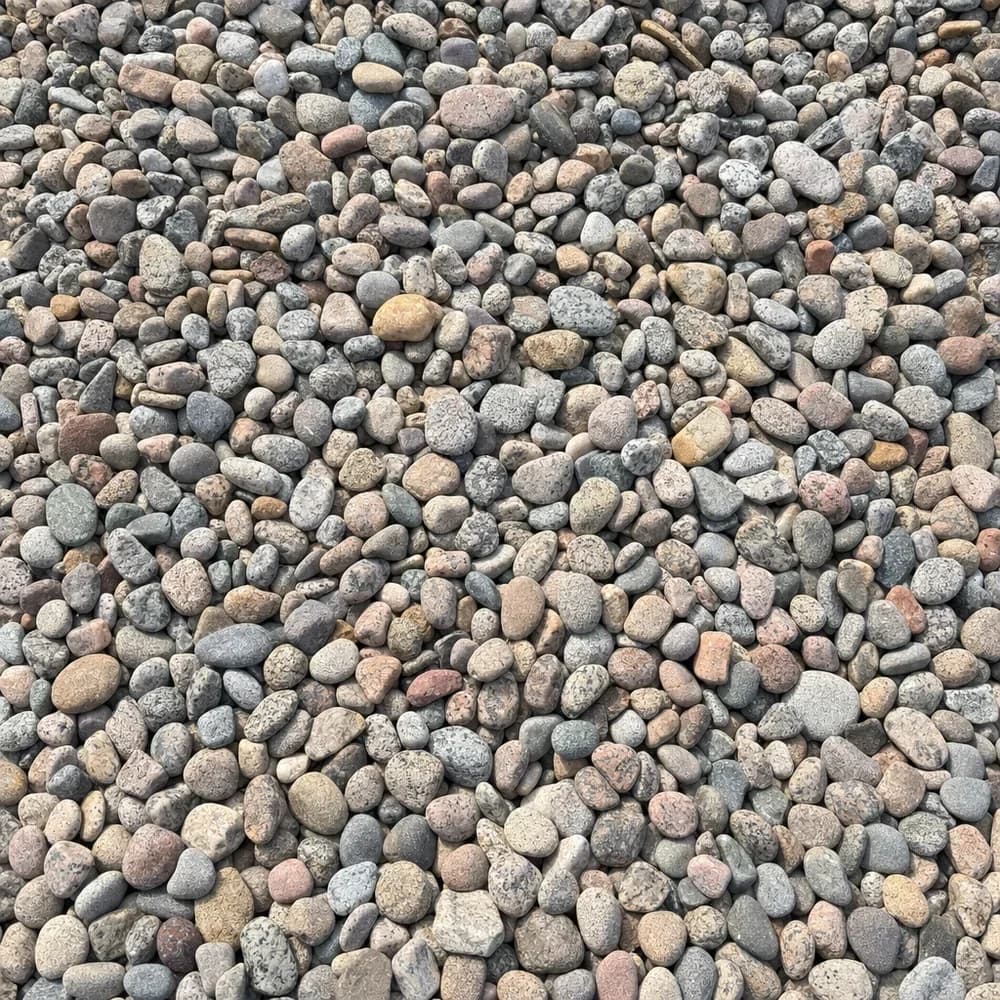
- Size: 1 inch to 3 inches
- Type: Smooth, naturally rounded stones
- Color: Tans, grays, browns and occasional reds
From $802 for 1 ton, delivery included
Larger loads cost less per ton: 500 tons is $65,515 ($131.03 per ton). Pick any quantity below for a delivered price.
Free delivery included
Free delivery anywhere in Colorado
Pick a delivery date
Weekday delivery, earliest Oct 20
Get a Free Quote
Fill out the form and our sales team will get back to you within the hour.
Size and Grading
- Size
- 1 inch to 3 inches
- Type
- Smooth, naturally rounded stones
- Color
- Tans, grays, browns and occasional reds
The strip between the drive and the fence is usually the first piece of a Front Range yard to give up. It sits on the same shallow, alkaline clay as everything else, it takes reflected heat off the concrete, and at altitude the August sun finishes what the watering restrictions started. River Rock is what most people put there once they have stopped trying to grow something in it, and the reason it works is that it is heavy enough to stay put and open enough to let a summer storm through.
The lawn strip that never survives a Colorado August
The job this stone gets bought for most around here is a conversion. Turf or wood mulch comes out, fabric and stone go in, and the piece of ground stops needing water it was never going to get.
Mulch is the usual predecessor, and it has two problems in this climate. Wind moves it, and runoff from a summer thunderstorm floats it into the lawn and onto the sidewalk. Rounded 1 to 3 inch stone does neither. It also comes in the tans, grays, browns and occasional reds of natural river material, so a bed of it reads as part of the landscape rather than as a layer of product.
The same load covers three related jobs: foundation strips where water needs to get away from the house, a defined dry creek line where runoff already travels, and decorative beds around trees and shrubs.
How rounded stone behaves over clay that swells and shrinks
Clay moves. It takes on water in a wet spring and gives it up through a dry summer, and the ground rises and falls with it. A bed of loose stone handles that better than almost any hard surface, because there is nothing rigid to crack: the pieces simply resettle.
What clay does cause is the other failure mode. Because it sheds water rather than absorbing it, runoff travels across the surface and concentrates at the low corner of a bed, and over a couple of seasons it will move stone with it if there is nothing to stop it. Fixing that is a question of edges and depth rather than of stone size.
Rounded faces are also the reason this material does not belong underfoot in a working area. Stone that resettles under a boot is fine in a bed and unpleasant on a path, and under tires it simply rolls out of the way.
Fabric, edging and the depth that keeps River Rock at home
- Grade first. Shape the bed so water leaves where you want it to before any stone goes down. Stone does not fix a low spot, it hides one.
- Put fabric under it. Not for weed control alone, but to keep the stone from working down into clay and disappearing over a few seasons.
- Edge the perimeter. Steel or a hard edge standing proud of the finished stone is what separates a bed that looks the same in five years from one that has migrated into the lawn.
- Go 2 to 3 inches deep over fabric. Shallower and the fabric shows through. Deeper and you are paying for stone nobody sees.
- Keep the stone level below the edging and below any paving, so runoff crosses the hard surface rather than pushing stone over it.
Where pea gravel fits better, and where only cobble will do
Two neighbors in the catalogue, chosen by size rather than by look.
Pea Gravel is the smaller option at 3/8 inch. It is more comfortable underfoot, which makes it the better pick for a play area or a spot people walk through, and it fills a narrow bed more evenly. The trade is that small rounded stone travels more easily in runoff and is harder to keep out of a lawn mower.
Large River Rock, the cobble, is the other direction. Where a dry creek line actually carries water in a storm, or a swale needs the flow slowed rather than merely channeled, 1 to 3 inch stone will be moved and cobble will not. Where water is concentrated and fast, such as below a culvert, neither is enough and the job wants RipRap.
Beside a hot tub pad: what carries the weight and what only looks good
A hot tub is one of the heaviest things most people put in a back yard, and the temptation is to set it on a deep bed of rounded stone because water needs to drain away from it. Rounded stone will not carry that load without settling unevenly, which is the one thing a filled tub cannot tolerate.
Split the job. The pad itself is a compacted layer of Class 6 Road Base built to the depth the tub needs, and River Rock is the skirt around it, which keeps mud off the sides, drains splash-out, and stops grass having to be trimmed against the shell.
Yardage for a 22-foot dog run and two foundation beds
Both hypothetical, worked the way the tool on this page works, at 1.35 tons per cubic yard for 1 to 3 inch stone.
Side-yard dog run, 5 by 22 ft at 3 inches. 110 sq ft. 110 x 3 / 12 = 27.5 cubic feet. 27.5 / 27 = 1.02 cubic yards. At 1.35, that is 1.4 tons.
Two foundation beds, 3 ft wide by 30 ft and by 24 ft, at 3 inches. 90 + 72 = 162 sq ft. 162 x 3 / 12 = 40.5 cubic feet. 40.5 / 27 = 1.5 cubic yards, or 2 tons.
A failing lawn strip of 40 by 12 feet converted at the same depth comes to 480 sq ft, 120 cubic feet, 4.44 cubic yards and 6 tons. Curved beds are easier handled by the river rock calculator, which takes circles and up to five areas at once.
Once the tonnage is settled, choose a quantity and a delivery date here. Delivery is arranged at checkout by ZIP code, so confirm the area on the Colorado locations page first, and put bed questions to Colorado Rock Supply through the contact form.
Quickly Calculate How Much You Need
Material: River Rock
How to Measure
Measure the length and width of your project area in feet
Decide on depth in inches (2" for landscaping, 4" for driveways)
Enter the values above and we'll calculate the tonnage you need
Need help figuring out the right amount? We can help!
Call or text us at (719) 781-8522 and we'll help you calculate the right quantity for your project.
Not sure how much you need? The River Rock Calculator has depth guides, coverage charts and worked examples for this material.
Frequently Asked Questions About River Rock
River Rock delivery across Colorado
- Denver
- Colorado Springs
- Aurora
- Fort Collins
- Thornton
- Arvada
- Westminster
- Greeley
- Pueblo
- Boulder
- Longmont
- Castle Rock