Railroad Ballast: Heavy Stone, and the Short Season to Place It
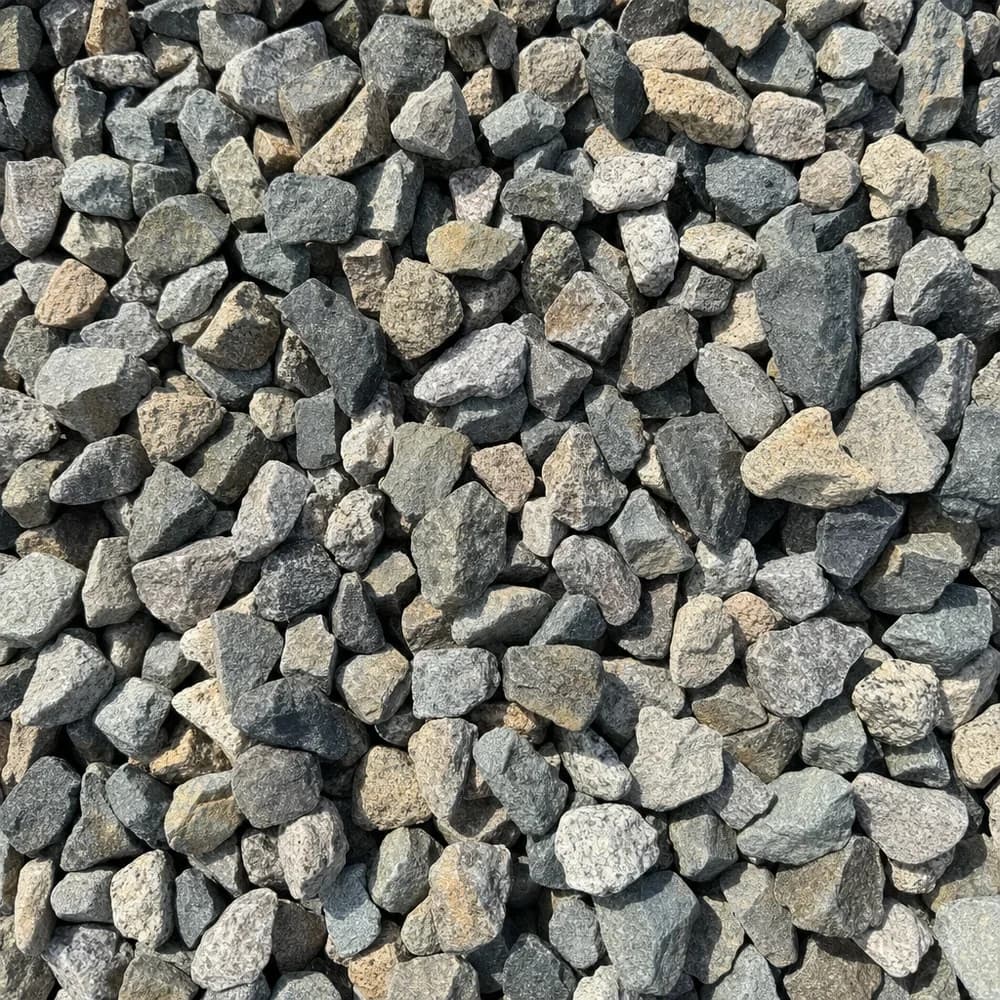
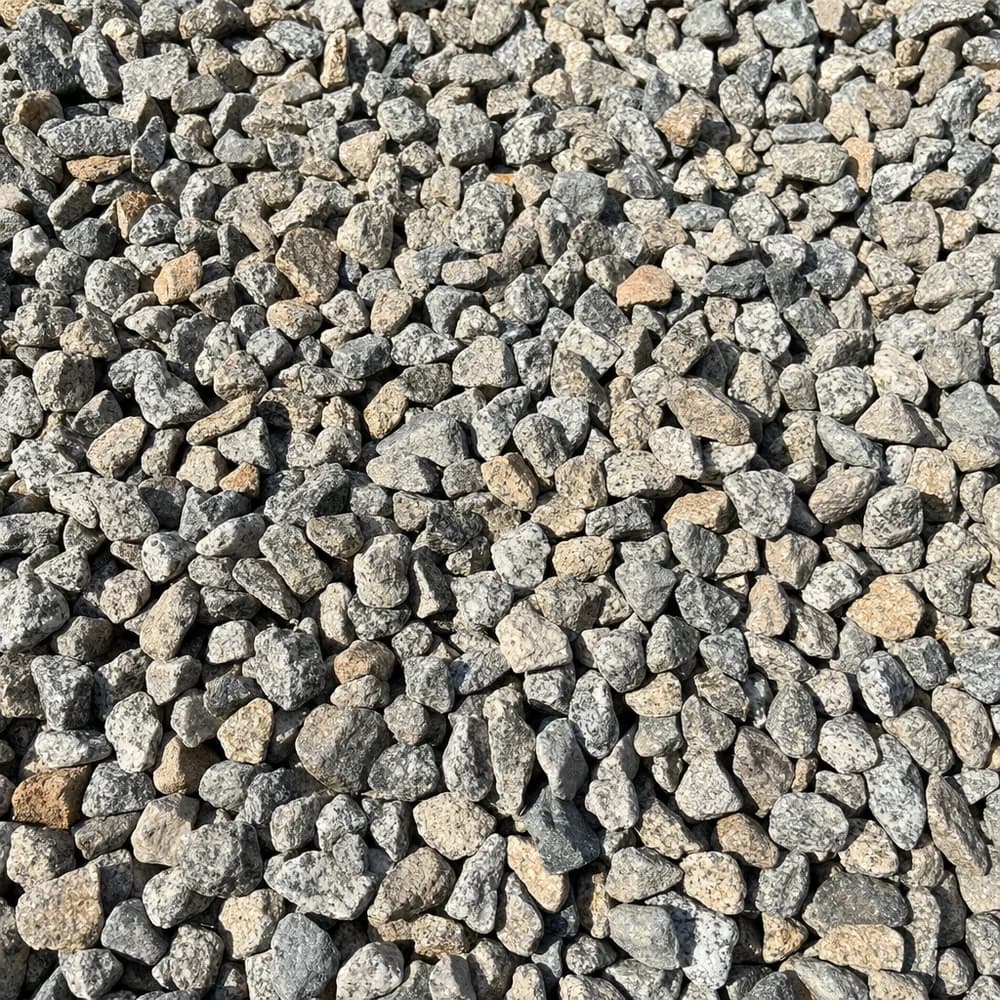
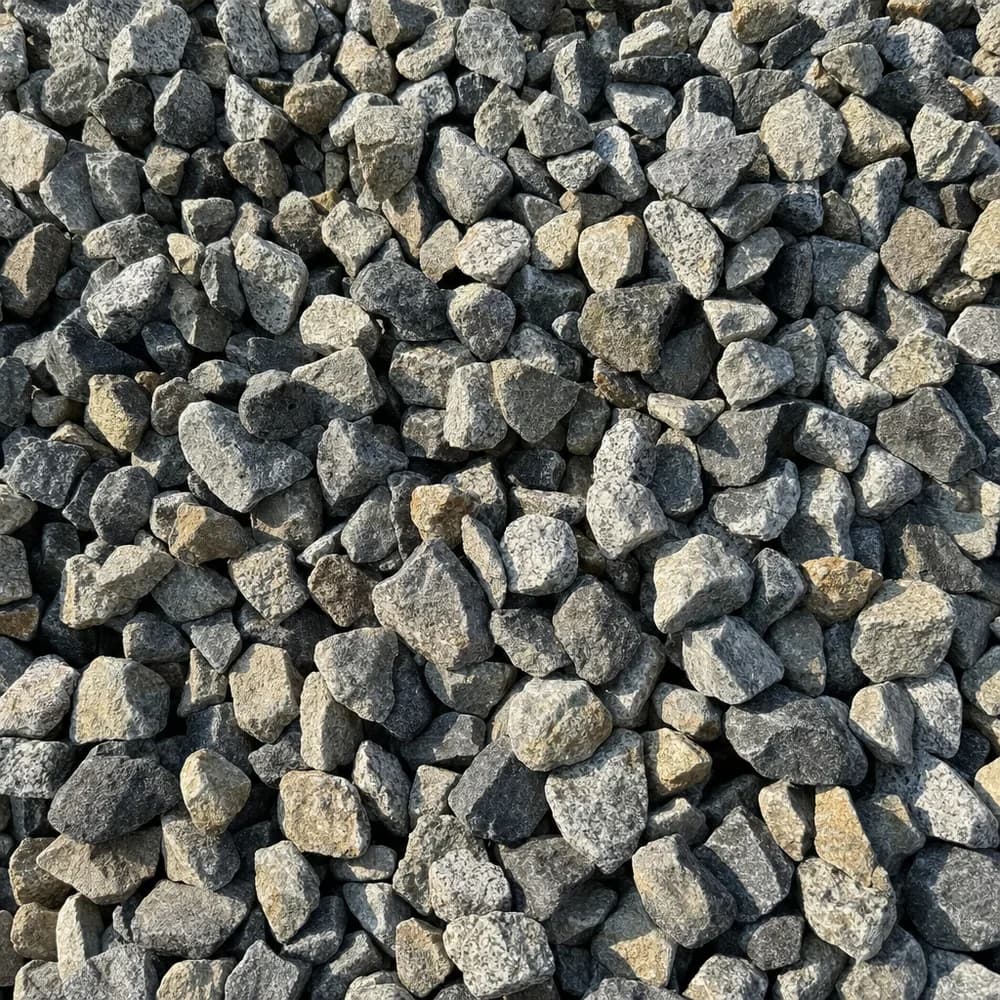
Railroad Ballast gives Colorado heavy equipment pads and access routes an angular, open stone layer that carries load while letting meltwater move through.
- Size: Roughly 1 inch to 2.5 inches
- Grading: Graded to interlock under load while draining freely
- Type: Large angular crushed stone
From $433 for 1 ton, delivery included
Larger loads cost less per ton: 500 tons is $30,535 ($61.07 per ton). Pick any quantity below for a delivered price.
Free delivery included
Free delivery anywhere in Colorado
Pick a delivery date
Weekday delivery, earliest Oct 20
Get a Free Quote
Fill out the form and our sales team will get back to you within the hour.
Size and Grading
- Size
- Roughly 1 inch to 2.5 inches
- Grading
- Graded to interlock under load while draining freely
- Type
- Large angular crushed stone
Railroad ballast goes in when the ground will carry the truck that brings it, which on most Colorado properties is a narrower stretch of the calendar than people plan for. The subgrade under a heavy layer has to be worked, and there is no working saturated clay in April or frozen ground in November. Get the timing wrong and the layer sits on something that moves under it all winter.
Why this ends up being a midsummer job on most Colorado properties
Base and drainage work runs best from late spring through fall, and this material is at the far end of that. A heavy open stone is placed to solve a load problem or a water problem, usually both, and both are judged by how the subgrade behaves when you stand on it.
Through April and much of May, ground that has been holding snowmelt pumps rather than compacts. Push a loaded machine across it and you churn the very layer you are about to build on. Up at altitude the other end of the window closes early, and freeze-thaw cycling can run several times in a single week once nights start dropping.
That leaves a working stretch from roughly the time the ground dries out to the first hard freeze, which is when you want the excavation open, the stone on site and the machine booked.
Getting a soft subgrade ready while the melt is still draining out of it
The preparation is the job. The stone is just what you put in the hole afterwards.
- Strip sod and soft topsoil to ground that holds a boot print rather than sinking under it. Organic material keeps compressing for years.
- Look at what is exposed. Clay that shines wet will not take a compactor. Give it a week of dry weather or cut deeper to something that will.
- Deal with water arriving from uphill before you bury the problem. A slope feeding runoff into a pad keeps feeding it after the stone is down.
- Lay geotextile across the whole footprint. On expansive clay this is not optional, because soft ground migrates up into the voids and a layer that cannot drain stops carrying load.
- Place the ballast, key it down with the bucket or a heavy roller, and check the grade as you go rather than at the end.
Access routes, hard standing, and the wet stretch under a flagstone walk
The size is roughly 1 inch to 2.5 inches, graded to interlock under load while still draining freely, and the type is large angular crushed stone. Sharp faces lock against one another under weight; the gaps between them stay open enough that meltwater keeps moving rather than collecting.
That combination suits three kinds of work here:
- Hard standing for equipment, containers or a trailer on ground that stays damp. The stone carries the point load and the water leaves rather than sitting under it through the thaw.
- Access routes that take repeated heavy traffic, where a compactable base alone would rut out on soft ground.
- The soggy stretch under a walk or path. Where a flagstone walkway has to cross a low spot that never dries, a deep open lift of ballast under the build gives the water a route out. The flagstone itself still sits on a compacted base with a screeded bed of Crusher Fines over it, because nothing this coarse will ever hold a stone flat.
It is not a finish and it is not a compactable base. Where the surface has to tighten up under traffic, Class 6 Road Base goes over the top of it.
Two jobs it should never see: a raised vegetable bed and a playground
Both come up, and both are worth refusing.
Raised vegetable beds. A course of heavy stone at the bottom of a bed does not improve drainage, it takes away rooting depth and it makes the bed harder to move later. Fill the box with Garden Soil and break the ground underneath instead.
A playground surface. Stone at this size has sharp faces, does not sit flat and is uncomfortable under a knee, let alone a fall. Rounded Pea Gravel is the material people actually use around play equipment. Check what your local play surfacing guidance asks for before committing to any loose material.
Tons for 26 feet of boggy walkway sub-base and a 16 by 20 hard standing
Two hypothetical jobs, using the formula the tool on this page runs: length times width in feet, times depth in inches divided by 12, divided by 27 for cubic yards, then times the weight. This site publishes about 2,900 lb per cubic yard for #4 stone and ballast, which is roughly 1.45 tons per cubic yard.
Open sub-base under a flagstone walk crossing a wet stretch, 26 ft by 4 ft at 8 inches. 26 x 4 = 104 sq ft. 104 x 8 / 12 = 69.3 cubic feet. 69.3 / 27 = 2.57 cubic yards. 2.57 x 1.45 = 3.7 tons.
Hard standing for a trailer, 16 by 20 ft at 8 inches. 320 sq ft. 320 x 8 / 12 = 213.3 cubic feet. 213.3 / 27 = 7.90 cubic yards. 7.90 x 1.45 = 11.5 tons.
Both figures are the ballast lift alone. Order the base course above separately, and use the stone calculator for routes you have to measure in sections or areas that are not rectangles.
What a railroad ballast layer needs after its first winter
Less than you would think, and the checks are quick.
Walk the edges first. An open stone layer loses material at its edges before it loses anything in the middle, particularly where a machine has been turning. Top the edges back up rather than spreading a thin skim over the whole area, which only puts loose stone where tires can move it.
Then look at where water leaves. If silt has washed in and the surface is starting to hold puddles rather than take water, the layer is closing from the top and wants raking over or, in a bad case, lifting and replacing at the inlet end. Where runoff is cutting into the edge rather than crossing it, the fix is upstream of the pad, not more stone.
Booking a heavy load into a short season
Measure after the excavation is cut, because the depth you actually end up at is rarely the depth you planned. Delivery is arranged at checkout by ZIP code, and the truck needs clear access to a firm spot to tip, which on a wet site can mean staging the pile away from the work and moving it in with a bucket. Set your tonnage and a date on this page while the machine is still booked, and check the delivery page if the route in is soft or narrow.
Quickly Calculate How Much You Need
Material: Railroad Ballast
How to Measure
Measure the length and width of your project area in feet
Decide on depth in inches (2" for landscaping, 4" for driveways)
Enter the values above and we'll calculate the tonnage you need
Need help figuring out the right amount? We can help!
Call or text us at (719) 781-8522 and we'll help you calculate the right quantity for your project.
Not sure how much you need? The Stone Calculator has depth guides, coverage charts and worked examples for this material.
Frequently Asked Questions About Railroad Ballast
Railroad Ballast delivery across Colorado
- Denver
- Colorado Springs
- Aurora
- Fort Collins
- Thornton
- Arvada
- Westminster
- Greeley
- Pueblo
- Boulder
- Longmont
- Castle Rock