How to Build a Gravel Driveway: Layers, Depth, Base Prep and Compaction (Step by Step)
Quick answer: A durable gravel driveway needs geotextile fabric over the compacted subgrade, 4 to 6 inches of compacted Class 6 Road Base, a 2 to 3 inch middle layer of crusher run or 4 inch crushed stone, and a 2 inch surface layer of 3/4 inch crushed stone or 57 stone, crowned about 1/4 inch per foot toward each edge.
Skip a layer or shortchange the compaction, and Front Range clay will heave that surface by the second spring thaw. This walkthrough covers every layer of a gravel driveway from excavation to crown, with the depths, materials, and compaction steps that hold up through Colorado's freeze-thaw cycles.
Layout and Excavation: Setting the Footprint for a Gravel Driveway
Excavating a gravel driveway correctly means removing 8 to 12 inches of topsoil and organic material across the full width and length, not just scraping the path where tires will run. Stake the centerline and edges first, then run string lines to set a consistent width, typically 10 to 12 feet for a single-lane driveway and 16 to 20 feet if two vehicles need to pass.
Cut the subgrade with a slight cross slope, about 2 percent, so water moves off the excavation instead of pooling in it. Compact the exposed subgrade with a plate compactor before anything else goes down.
A soft, uncompacted subgrade undermines every layer stacked on top of it, no matter how well those layers are built.
Geotextile Fabric: The Layer That Keeps Colorado Clay From Ruining Your Base
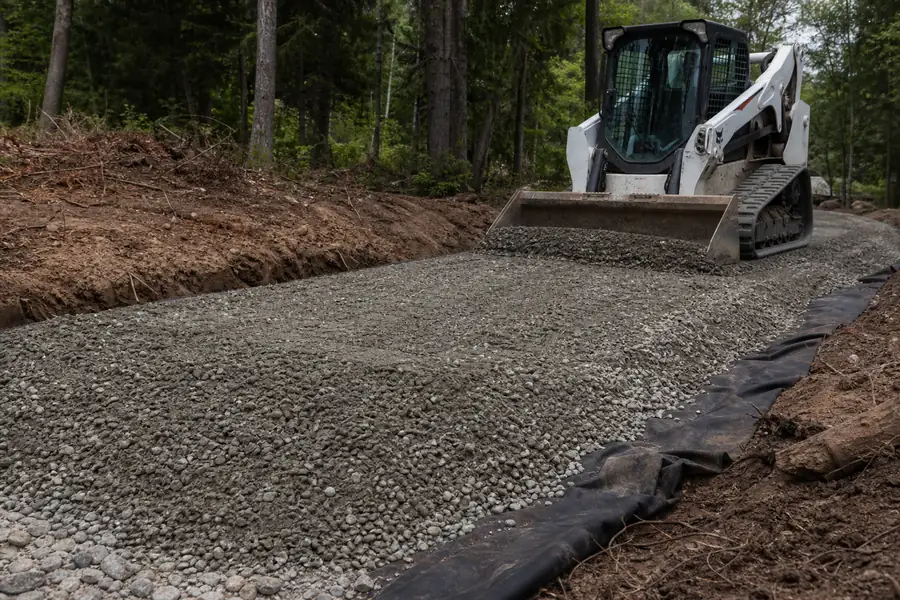
Geotextile fabric is a woven synthetic layer that separates the compacted base from the clay subgrade underneath it, and it belongs on the materials list, not the optional pile. Without it, Front Range clay works its way up into the rock over a season or two, and the base loses its load-bearing strength as the two materials mix together.
Roll the fabric across the full excavated width, overlap seams by at least 12 inches, and run it up the sides of the excavation before backfilling.
Base Layer: How Deep to Build Class 6 Road Base
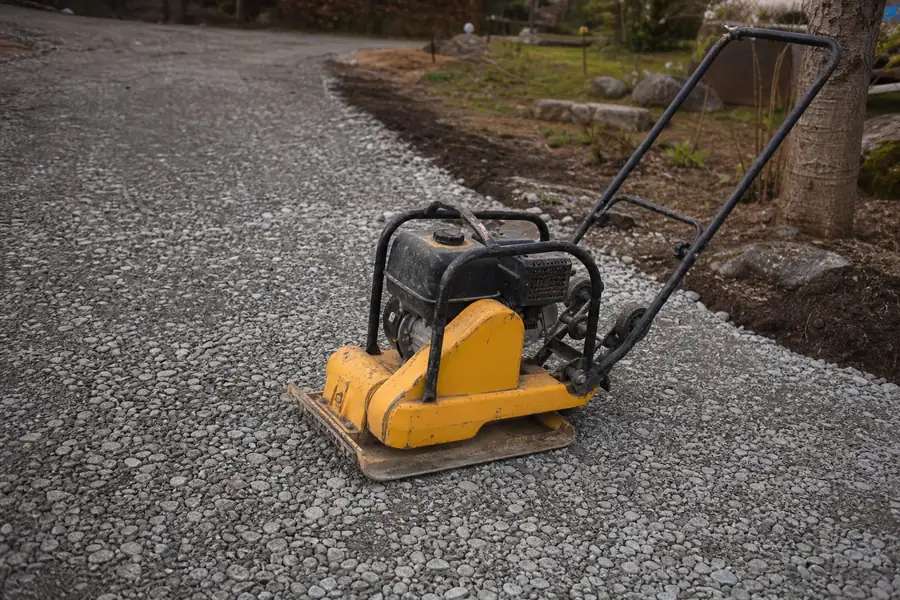
The base layer of a gravel driveway needs 4 to 6 inches of compacted Class 6 Road Base for a standard passenger driveway, and 6 to 8 inches under regular truck, trailer, or RV traffic. Class 6 Road Base is a graded mix of crushed rock and fines that locks together tighter than clean crushed stone, which is exactly why it carries weight instead of shifting under it.
For the spec details behind this material and why it's the standard base on Colorado projects, see our guide to Class 6 Road Base in Colorado. Spread it in lifts no thicker than 4 inches and compact each lift before adding the next; running a compactor once over an 8 inch pile leaves the bottom half loose.
Middle Layer: Crusher Run and 4 Inch Crushed Stone for Stability
The middle layer locks the base together and fills the voids left by larger rock, typically 2 to 3 inches of crusher run or 4 inch crushed stone compacted in place. Crusher run is crushed stone that still carries its rock dust and fines, which is what lets it pack down hard instead of staying loose like clean gravel.
Skip this layer on a driveway that will see regular vehicle weight and the surface stone has nothing solid to sit on, so it migrates and ruts within a season.
Surface Layer: 3/4 Inch Crushed Stone or 57 Stone on Top
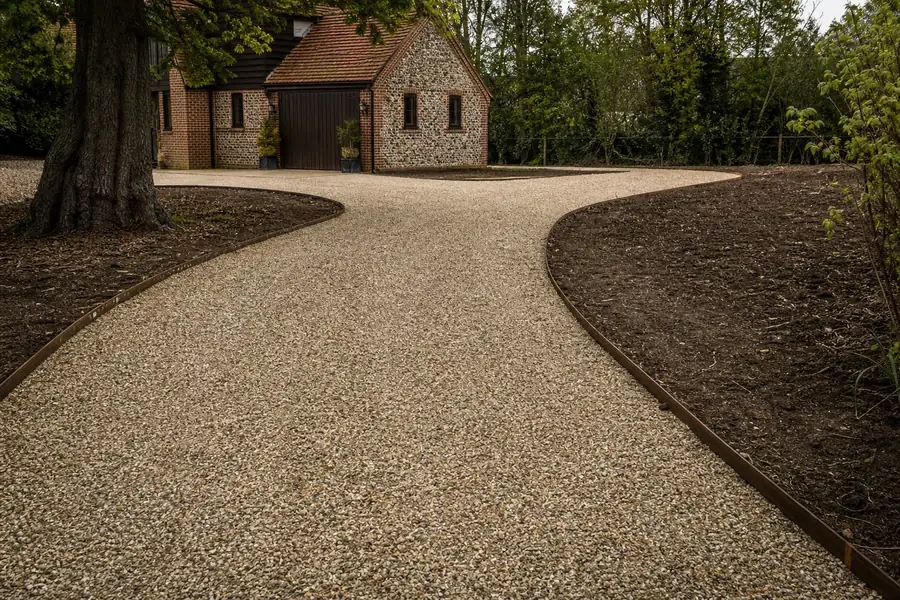
The surface layer is about 2 inches of 3/4 inch crushed stone or 57 stone, raked level and cross graded so rain sheds to the sides instead of pooling in the tire tracks. 3/4 inch crushed stone is angular, quarried rock that interlocks and stays put under tires, which makes it the better pick for driveways with any grade.
57 stone is rounder, washed rock that drains fast but shifts more underfoot on a slope, so it suits flatter driveways better than steep ones. Either way, this is the layer that gets topped off every year or two as traffic works stone toward the edges.
Crowning and Compacting Each Layer
A gravel driveway needs a crown, a slight center-high slope of roughly 1/4 inch per foot toward each edge, so rain and snowmelt run off the surface instead of channeling a rut down the middle. Shape the crown as you place the surface layer, then compact it in that shape rather than flattening it afterward.
Compact each layer separately with a plate compactor or vibratory roller, not just the finished surface. A driveway that only gets compacted once at the end looks fine the first summer and then develops soft spots and ruts by the second spring.
Materials List: Tons Per 100 Feet of Driveway by Layer
Tonnage depends on the driveway's actual width and length, but here's what each layer runs for a 100 foot long, 10 foot wide driveway (1,000 square feet).
| Layer | Material | Typical Depth | Tons per 100 ft (10 ft wide) |
|---|---|---|---|
| Base | Class 6 Road Base | 4-6 in | 17-26 tons |
| Middle | Crusher Run or 4 Inch Crushed Stone | 2-3 in | 9-13 tons |
| Surface | 3/4 Inch Crushed Stone or 57 Stone | 2 in | 8-9 tons |
These are planning estimates. For exact tonnage on your driveway's actual dimensions and depths, run the numbers through our road base calculator.
Frost Depth and Clay: Building a Gravel Driveway in Colorado
Colorado's frost depth runs about 36 inches, and while a gravel driveway doesn't need footings that deep, the same freeze-thaw cycle that heaves a footing will heave a driveway base that isn't drained and compacted right. Front Range soils are heavy clay sitting over decomposed granite, and that clay expands when it takes on water and freezes, pushing everything above it upward and sideways.
Geotextile fabric and a properly compacted base are what keep that movement from reaching the surface stone. On mountain and I-70 corridor jobs above 8,000 feet, schedule delivery and base work before the first hard freeze: winter closures and frozen ground can push a driveway project into spring whether you planned for it or not.
FAQs
How deep should a gravel driveway base be?
Most gravel driveways need 4 to 6 inches of compacted Class 6 Road Base under a passenger vehicle load, and 6 to 8 inches where trucks, trailers, or RVs cross regularly. Add a 2 to 3 inch middle layer and a 2 inch surface layer on top of that base for a driveway that holds up over multiple seasons.
What type of gravel is best for a driveway surface?
3/4 inch crushed stone is the better surface material for most Colorado driveways because its angular shape locks together and resists shifting on a grade. 57 stone works fine on flat driveways where drainage matters more than traction, but it migrates more once the ground has any slope to it.
Do I need geotextile fabric under a gravel driveway?
Yes, on any driveway built over clay subgrade, which describes most of the Front Range. Geotextile fabric keeps the base rock separated from the clay so the base holds its compaction instead of gradually mixing with the soil underneath it.
How much gravel does a driveway need?
Tonnage depends on the driveway's width, length, and the depth of each layer, and it typically runs somewhere between 30 and 45 tons total per 100 feet of a 10 foot wide driveway across all three layers. Use a road base calculator to get an exact figure for your driveway's dimensions before you order.
How often does a gravel driveway need new stone added?
Most gravel driveways need a fresh layer of surface stone every 1 to 3 years, depending on traffic and snowplowing. Plan on topping off the surface layer rather than rebuilding the base, since the base and middle layers typically last far longer when they were compacted correctly the first time.