Driveway Gravel: The Surface Course, Not the Layer Underneath
Driveway Gravel gives Colorado driveways a firm crushed-stone surface that packs tightly for regular traffic and lets water move through.
- Size: 3/4 inch
- Grading: Graded mix of stone sizes
- Type: Crushed stone
From $399 for 1 ton, delivery included
Larger loads cost less per ton: 500 tons is $29,195 ($58.39 per ton). Pick any quantity below for a delivered price.
Free delivery included
Free delivery anywhere in Colorado
Pick a delivery date
Weekday delivery, earliest Oct 20
Get a Free Quote
Fill out the form and our sales team will get back to you within the hour.
Size and Grading
- Size
- 3/4 inch
- Grading
- Graded mix of stone sizes
- Type
- Crushed stone
Two gray piles can land on the same Front Range acreage and look near enough identical from the cab of a pickup. One is Class 6 road base and belongs at the bottom. The other is driveway gravel, a 3/4 inch graded crushed stone, and it belongs at the top where tires actually touch. Confusing the two is the usual reason a rebuilt lane is rutted again by the second spring, because the layer that carries weight and the layer that wears are not the same layer and never have been.
Two piles, two jobs: where Class 6 stops and driveway gravel starts
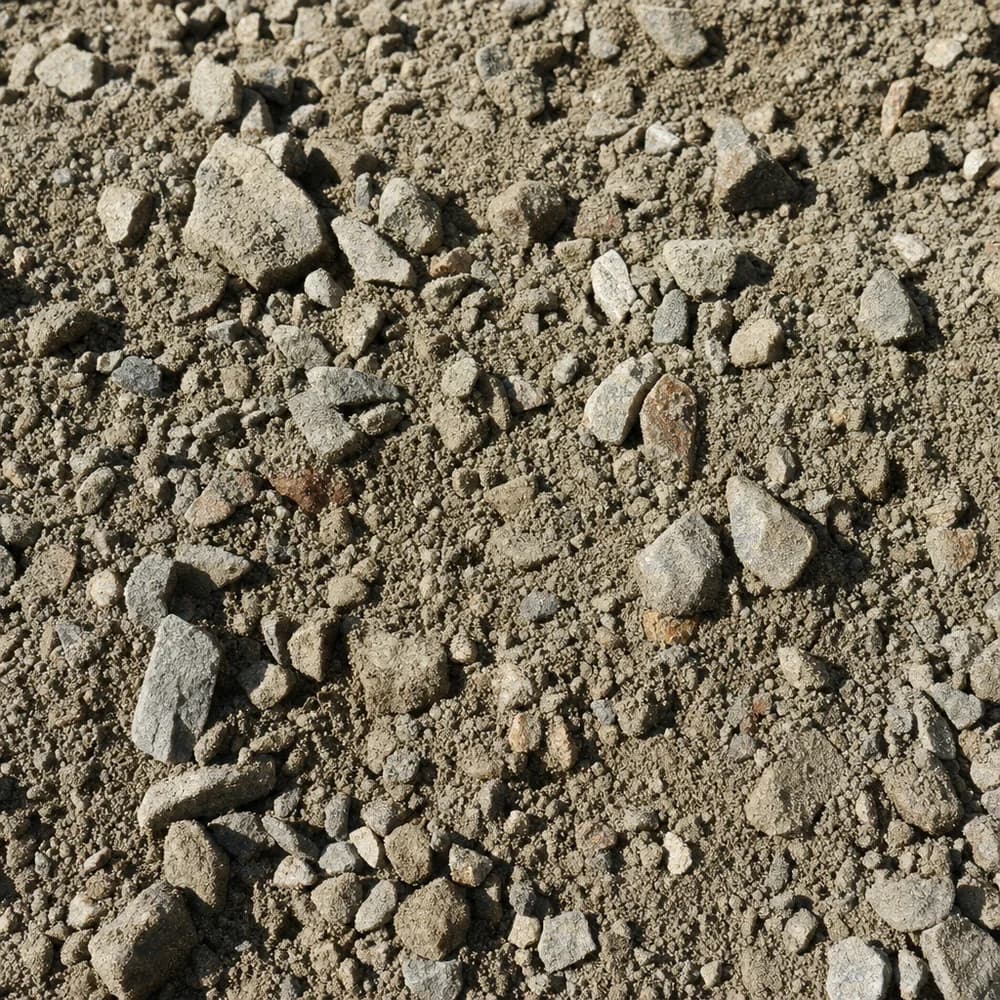
Colorado specifies aggregate base by CDOT class number, and Class 6 is what sits under most drives, parking pads and shed floors here. It carries binding fines, it locks up under a plate compactor, and it sheds water off the top rather than passing it through.
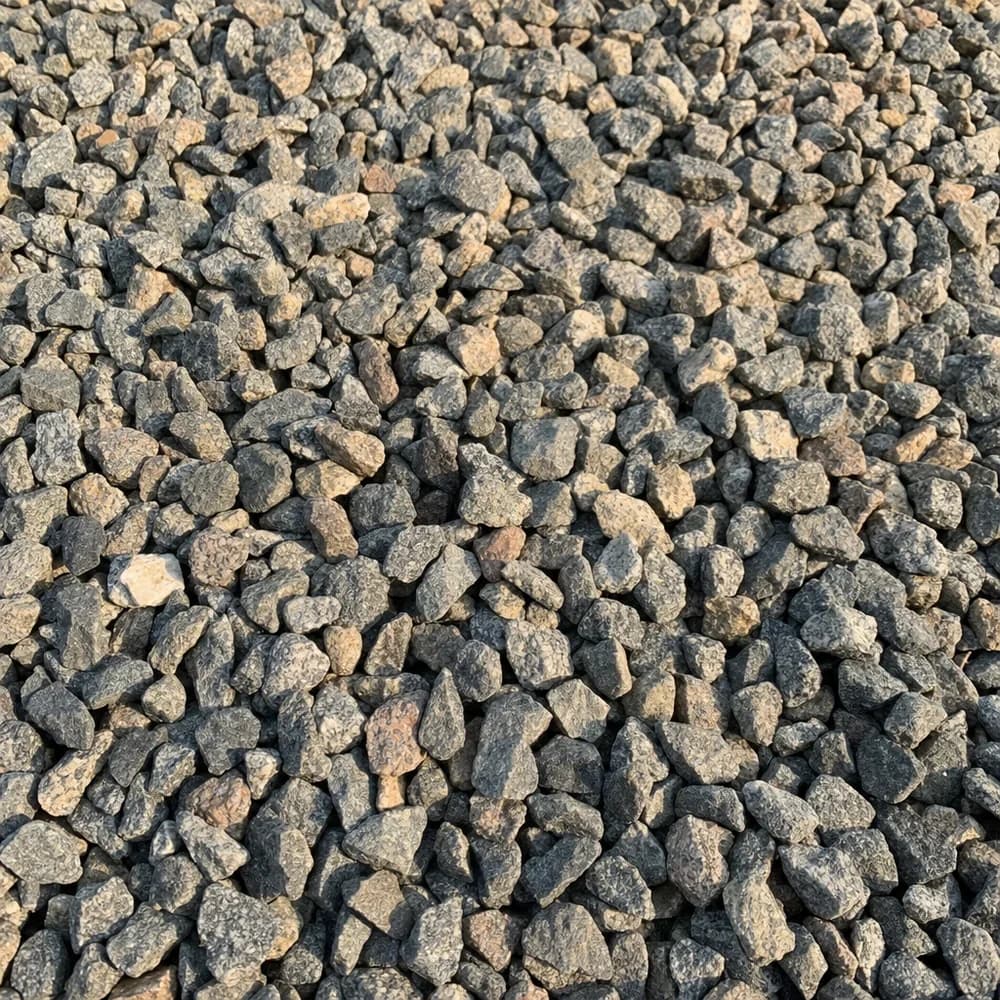
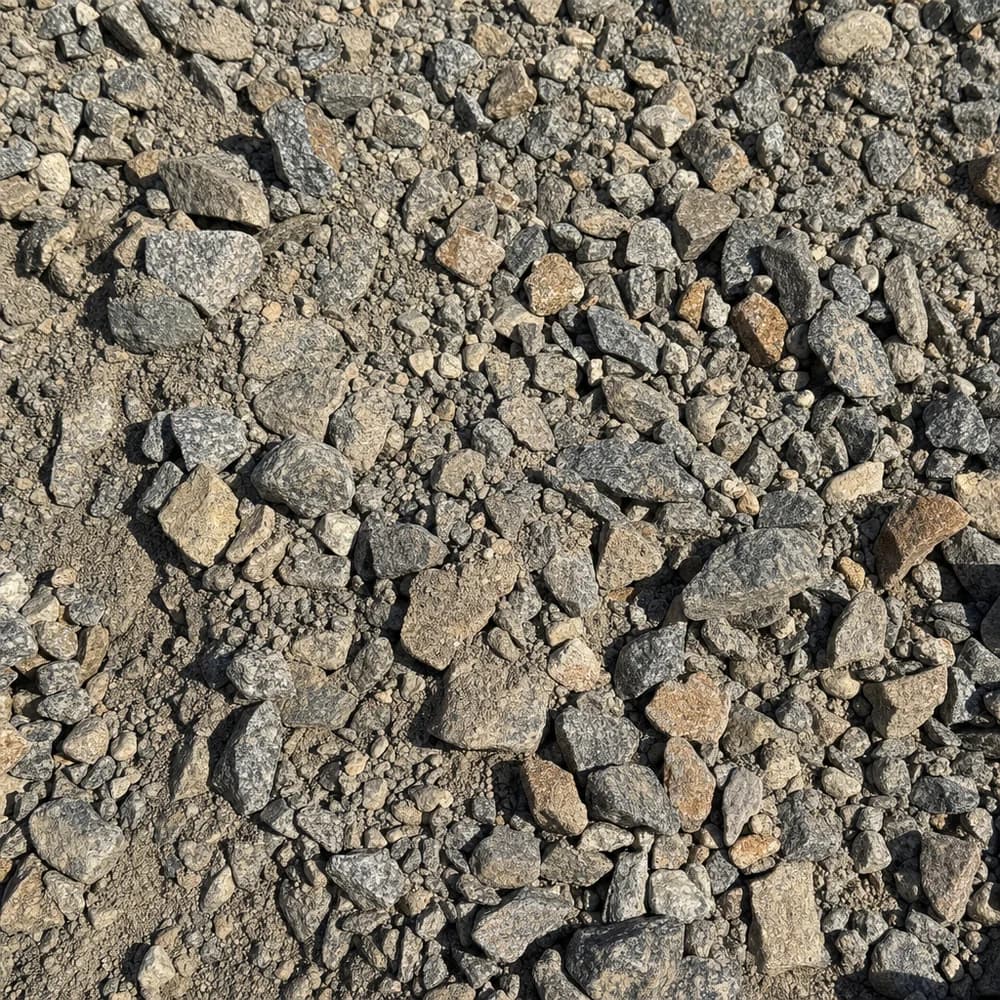
Driveway gravel is the wearing course over that. The size is 3/4 inch, the grading is a mix of stone sizes rather than one clean size, and the type is crushed stone, so the faces are angular and the pieces key into one another under traffic instead of rolling away the way a washed landscape rock does.
Two things follow from that:
- It does not replace the base. Spread it on bare clay and the clay works up into it within a season.
- It is not a clean drainage stone either. Water moves through the surface rather than standing on it, but a trench built to carry water wants a washed rock with no fines in it at all.
What a graded 3/4 inch mix does over ground that swells and shrinks
Expansive clay is the condition that governs everything here, heaviest along the Front Range. It takes on water, swells, dries out, shrinks, and does that under whatever you have built on top of it. Frost reaches roughly 30 to 36 inches through much of the state, which is deeper than any realistic drive build, so the aim is never to out-dig the frost. The aim is to keep water out of the layers and give the stone enough thickness to stay interlocked while the ground moves under it.
The mixed grading is what earns its keep. The larger pieces take the tire load, the smaller sizes wedge into the gaps between them, and the surface behaves as one mass rather than as loose stones. That is also why it holds traction through a wet March better than a rounded gravel of the same size.
Spreading thin, wetting, and putting a crown on it before the snow
Depth on a resurface is usually less than people expect. Two to three inches of fresh driveway gravel over a sound compacted base is a full surface course. Where the base is already there and only the top has worn, one to two inches spread and rolled is enough, and going deeper just gives the tires more loose material to push around.
The sequence that works:
- Cut the ruts out rather than filling them. Soft material under a patch stays soft.
- Check the crown. A drive wants the center an inch or so higher per foot of half-width so meltwater runs off the sides instead of down the wheel tracks.
- Spread in one pass if you can, with a box blade, a drag or a rake, working from the crown outward.
- Dampen it. Dry stone rides over itself and will not knit.
- Roll it or drive it in slowly, then top up the low spots once rather than chasing them.
Late spring through fall is the working window. Frozen ground and snowpack make compaction unreliable, and at altitude several freeze-thaw cycles can pass in a single week.
The two materials people swap it for, and what changes
Crusher Fines pack down far smoother and make a pleasant path or patio surface, but 1/4 inch minus under car tires turns to dust in dry spells and slick paste in wet ones. That is a walking surface, not a driving one.
#57 Stone is washed, angular and free of fines, so it drains where nothing else will. Under tires it migrates, throws stone onto the lawn, and gets carried off by a shovel every winter. Use it in the trench beside the drive, not on it.
There is also Class 6 Road Base itself, which some people run right to the surface. It works, but it is dustier in July and it sheds water rather than letting any through, so it wants a more careful crown.
A part load left over, and the new lawn it should not touch
When a drive job finishes with two tons still on the tarp, the next suggestion is usually the bare patch where a new lawn is going in. Do not. Crushed rock in a seedbed gives grass roots nothing to hold and turns every future aeration into a fight.
Put the leftover where stone belongs: widen the apron at the road, build up a parking strip, or top-dress the worst stretch of the lane. For the lawn ground, Top Soil is the layer that actually grows anything.
Tons for a 12 by 40 dog run and an apron around a hot tub pad
Two hypothetical jobs, run through the same formula the calculator on this page uses: length times width in feet, times depth in inches divided by 12, divided by 27 for cubic yards, then times the material weight. This site's published figure for driveway gravel is about 2,800 lb per cubic yard, roughly 1.40 tons per yard.
Side-yard dog run, 12 by 40 ft at 3 inches. 12 x 40 = 480 sq ft. 480 x 3 / 12 = 120 cubic feet. 120 / 27 = 4.44 cubic yards. 4.44 x 1.40 = 6.2 tons, or about 6.5 tons with the 5 percent the gravel calculator adds by default.
Apron around a hot tub pad, 14 by 16 ft with an 8 by 8 pad inside it, at 4 inches. 224 sq ft total, minus 64 sq ft of pad, leaves 160 sq ft. 160 x 4 / 12 = 53.3 cubic feet. 53.3 / 27 = 1.98 cubic yards. 1.98 x 1.40 = 2.8 tons.
For a lane that bends, or an area you have to measure in pieces, the gravel calculator takes up to five areas at once and returns cubic yards, tons and cubic feet together.
Setting a quantity and a date once the grade is fixed
Measure after you have cut the ruts out, not before, or the number will be short. Delivery is arranged at checkout by ZIP code, and the truck needs clear access to a firm spot where a load can be tipped without blocking the lane you are about to grade. Flag the drop point before the day, pick your tonnage and a date on this page, and check the delivery details if access at your end is tight.
Quickly Calculate How Much You Need
Material: Driveway Gravel
How to Measure
Measure the length and width of your project area in feet
Decide on depth in inches (2" for landscaping, 4" for driveways)
Enter the values above and we'll calculate the tonnage you need
Need help figuring out the right amount? We can help!
Call or text us at (719) 781-8522 and we'll help you calculate the right quantity for your project.
Not sure how much you need? The Gravel Calculator has depth guides, coverage charts and worked examples for this material.
Frequently Asked Questions About Driveway Gravel
Driveway Gravel delivery across Colorado
- Denver
- Colorado Springs
- Aurora
- Fort Collins
- Thornton
- Arvada
- Westminster
- Greeley
- Pueblo
- Boulder
- Longmont
- Castle Rock