Best Gravel for a Driveway in Colorado: What Survives Freeze-Thaw, Clay and Snowplows
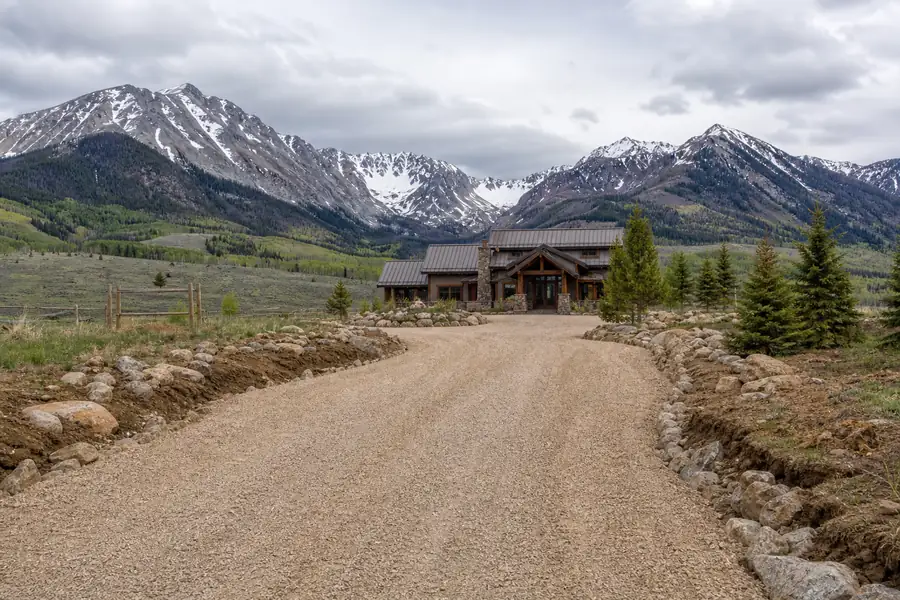
Quick answer: The best gravel for a driveway in Colorado is a two-layer system: 4 to 6 inches of compacted Class 6 Road Base under a 2 inch surface of 3/4 inch crushed stone or crusher fines. The base spreads the load and drains Front Range clay; the surface layer locks tight enough to survive snowplow blades and spring melt without scattering.
Skip either layer and Colorado's freeze-thaw cycle finds the weak spot fast. A driveway with one loose layer of decorative rock over native clay ruts by the first spring thaw and needs regrading every few months.
Why a Colorado driveway needs two layers of gravel, not one
A single layer of gravel dumped over native soil fails in Colorado because the ground underneath moves. Front Range soils are heavy clay over decomposed granite, and clay swells when wet and shrinks when it dries. Add a 36 inch frost depth and a spring melt that saturates everything at once, and a driveway with no engineered base heaves, cracks and pumps mud to the surface.
The fix contractors use across Colorado is a compacted base course, usually Class 6 Road Base, spread 4 to 6 inches deep and mechanically compacted before any surface stone goes down. The base layer carries vehicle weight and moves water away from the surface instead of letting it pool against the clay below.
How deep should the gravel base be for Colorado's frost depth?
Most Colorado driveways need 4 to 6 inches of compacted road base, with 6 to 8 inches on steep mountain grades or lots with heavy clay. Colorado's 36 inch frost depth governs footings and foundations, not driveway base, because a driveway isn't carrying structural dead load through winter the way a footing is.
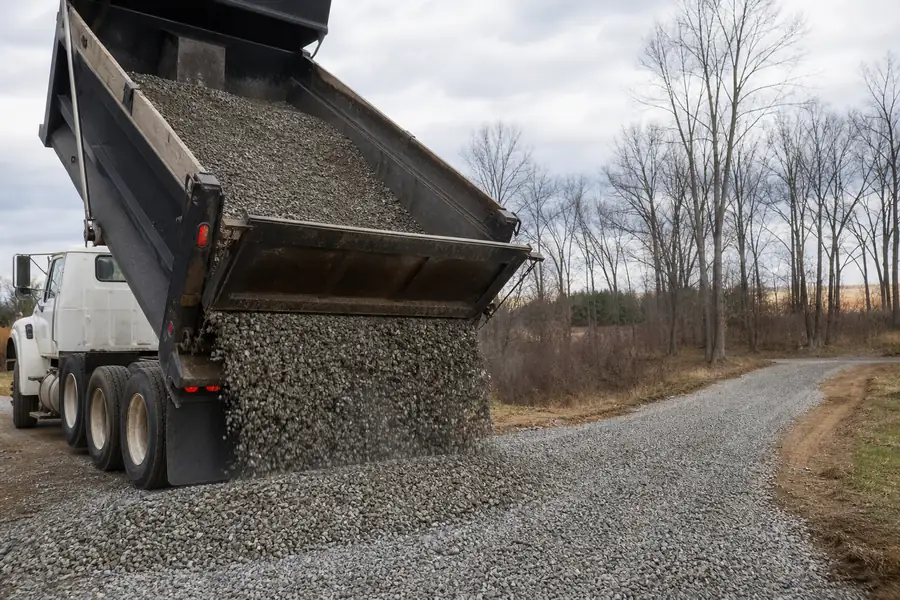
What the frost line does affect is how much the ground under the driveway shifts each freeze-thaw cycle. A thicker, well compacted road base resists that movement better than a thin one, which is why steep driveways along the I-70 corridor and anything above 8,000 feet usually get the deeper end of that range. Order it before the first hard freeze; winter closures in the high country can push a delivery back weeks.
Best surface gravel options for a Colorado driveway
The best surface gravel for a Colorado driveway locks together under weight instead of rolling loose under tires and plow blades. Driveway gravel blends work as a budget option on flatter lots that get regraded once a year. 3/4 inch crushed stone holds up best on steep grades and under heavy trucks, while crusher fines pack down into a smoother, low-dust surface that's easier to shovel. On driveways with heavy runoff, some contractors add a course of #57 Stone for extra drainage, though it won't compact as tight as the smaller crushed stone.
| Surface Material | Compacts & Locks | Snowplow Durability | Best For |
|---|---|---|---|
| Driveway Gravel | Good | Good | Flat lots, budget driveways |
| 3/4 inch Crushed Stone | Excellent | Excellent | Steep grades, heavy trucks |
| Crusher Fines | Excellent | Good | Smooth surface, low dust |
| #57 Stone | Fair | Good | High-runoff, drainage-heavy sites |
| Pea Gravel | Poor | Poor | Not recommended for driveways |
| River Rock | Poor | Poor | Not recommended for driveways |
Why pea gravel and river rock fail on a driveway
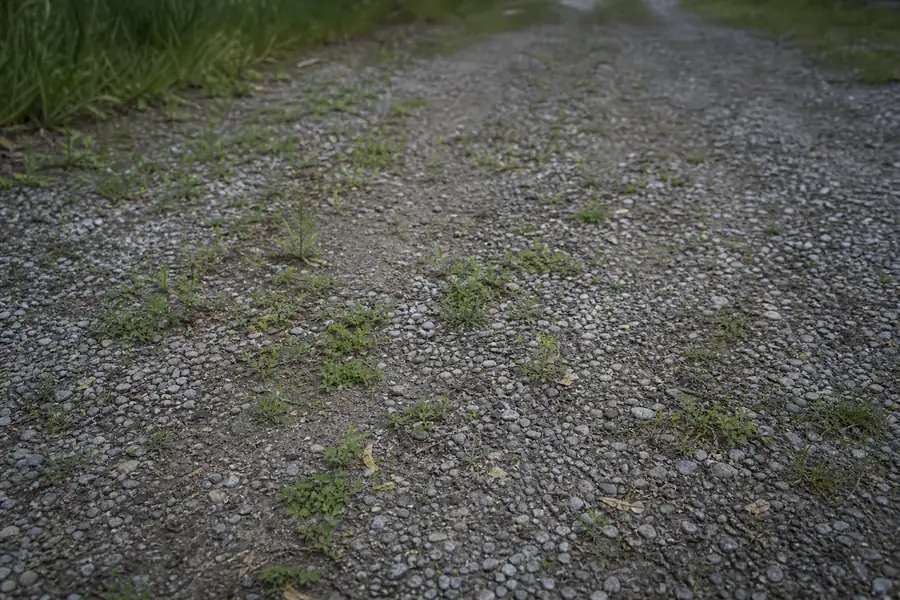
Pea gravel and river rock are the two worst surface choices for a Colorado driveway because their round shape never locks together the way angular crushed stone does. Tires push the rounded stones sideways instead of compacting them, so ruts form within weeks and the loose rock migrates downhill on any grade.
Snowplows make it worse. A blade set to clear a hard, compacted surface scoops up loose pea gravel and river rock right along with the snow, so you end up buying replacement stone every spring. Both materials still have a place on the property, just not under tires: they're a good match for xeriscape beds and dry creek borders where nothing ever has to bear weight.
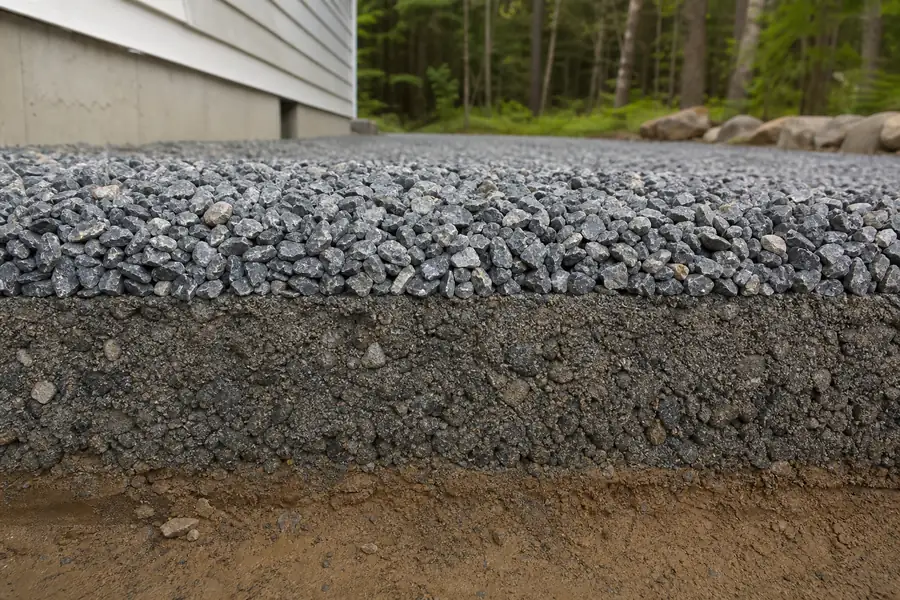
How the driveway gravel layers go together
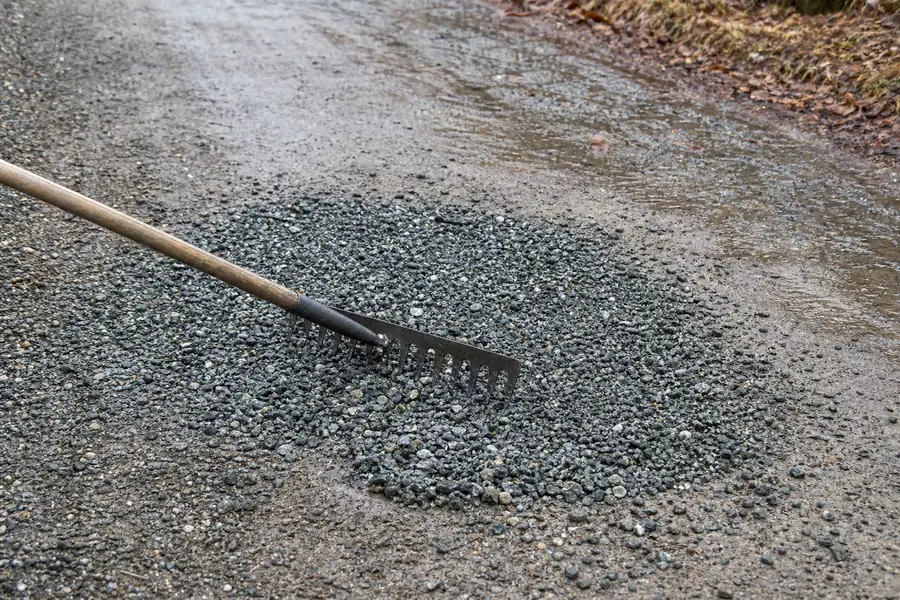
Building it right means compacting each layer before adding the next, not just stacking loose stone. Start by grading the native soil to a slight crown or cross-slope so water sheds to the sides instead of pooling in the middle. Spread and compact the Class 6 Road Base in 2 to 3 inch lifts until you hit target depth, running a plate compactor or roller over each lift.
Once the base is compacted, add 2 inches of surface stone and compact that layer separately. On a steep driveway, edging or a shallow trench along the sides keeps the surface stone from creeping downhill after a few seasons of plowing and runoff.
FAQs
Can I use pea gravel for a driveway in Colorado?
Pea gravel isn't a good driveway surface in Colorado because its round shape won't compact or lock together, so it ruts under tires and scatters when a snowplow clears it. It works fine for walkways with light foot traffic or decorative beds, just not anywhere vehicles drive regularly.
How thick should the gravel base be under a driveway?
Most Colorado driveways need 4 to 6 inches of compacted Class 6 Road Base, increasing to 6 to 8 inches on steep grades or lots with heavy clay soil. The surface layer of crushed stone or crusher fines sits on top at about 2 inches deep.
Does a gravel driveway need to be regraded every year?
A properly built two-layer gravel driveway with a compacted base needs only light touch-up grading each spring, usually just filling low spots where plowing or runoff moved surface stone. A driveway without a compacted base tends to need full regrading every year because the surface stone has nothing solid to sit on.
What's the cheapest gravel that still holds up in Colorado?
Driveway gravel blends typically cost less per ton than 3/4 inch crushed stone and still hold up on flatter lots with light traffic. For steep grades or daily heavy vehicle use, spending a bit more on angular crushed stone usually costs less over time than replacing a cheaper surface that scatters.
Do I need landscape fabric under a gravel driveway?
A woven geotextile fabric between the native clay and the Class 6 Road Base helps keep the two from mixing over time, which keeps the base compacting evenly instead of settling in patches. It's not a substitute for base depth, but it's a low-cost addition that extends how long the base holds up.