Fill Dirt: Raising Grade on Colorado Ground That Moves
Fill Dirt gives Colorado projects workable material for raising grades, backfilling excavations, and preparing ground before construction or landscaping.
- Size: Screened to remove large rocks, roots and debris
- Grading: Minimal organic matter
From $256 for 1 ton, delivery included
Larger loads cost less per ton: 2000 tons is $82,840 ($41.42 per ton). Pick any quantity below for a delivered price.
Free delivery included
Free delivery anywhere in Colorado
Pick a delivery date
Weekday delivery, earliest Oct 20
Get a Free Quote
Fill out the form and our sales team will get back to you within the hour.
Size and Grading
- Size
- Screened to remove large rocks, roots and debris
- Grading
- Minimal organic matter
Most acreage here sits on one of two things: expansive clay that swells in a wet spring and shrinks back through a dry summer, or decomposed granite that drains freely and washes just as freely off a slope. Neither gives you a flat, stable place to build a pad without help. Fill dirt is the material that gets you to the grade you want, and almost everything that goes wrong with it comes down to placing too much at once on ground that was not ready.
Is fill dirt what the low corner needs, or is it topsoil?
Three products, three different jobs, and the order matters.
Fill dirt is structure. It is screened to leave out large rocks, roots and debris and carries minimal organic matter, which is exactly why it is used under things: there is nothing in it to decay and leave a settled hollow two years later. On a plan it may be called structural backfill.
Top Soil is the growing layer that goes on top once the grade is right. Garden Soil is the blended material for what goes inside a raised bed. If grass or plants are the end of the job, you are buying two materials, not one: the fill that makes the shape and the soil that grows the lawn.
What does screened, low-organic fill look like when the pile lands?
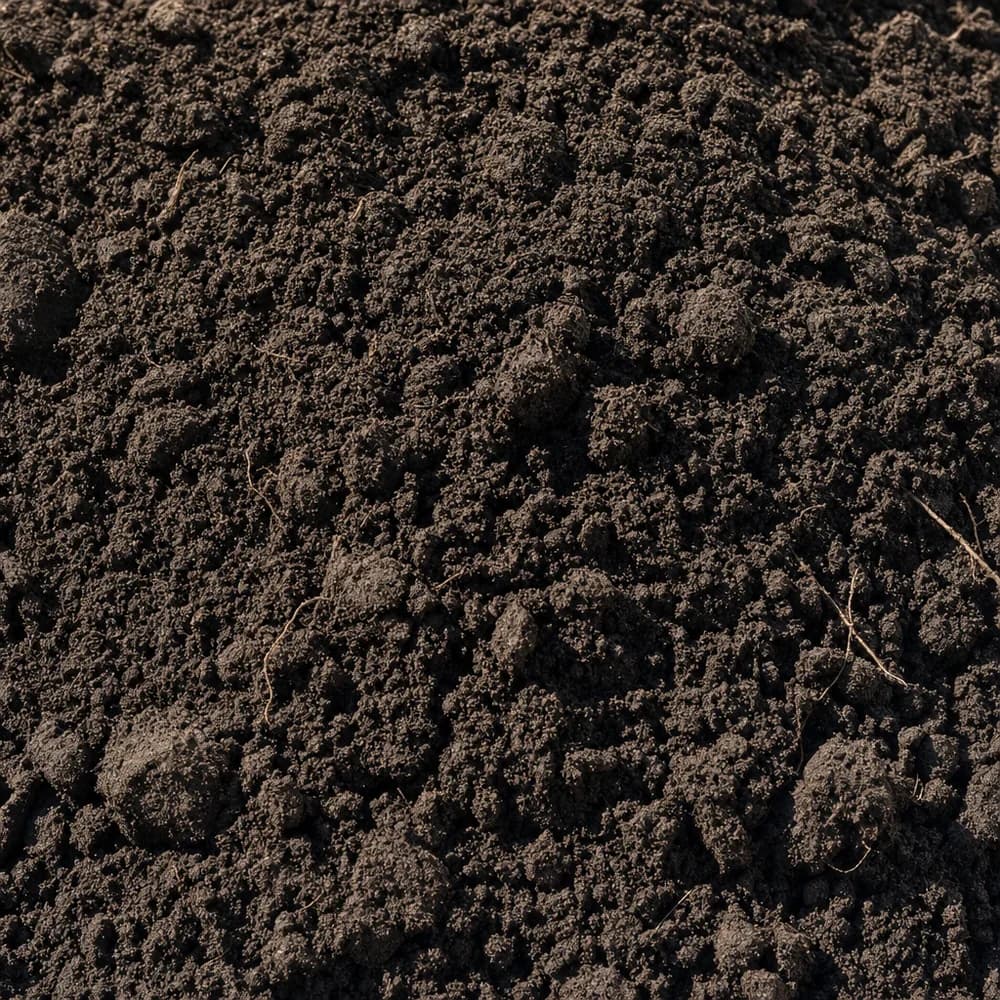
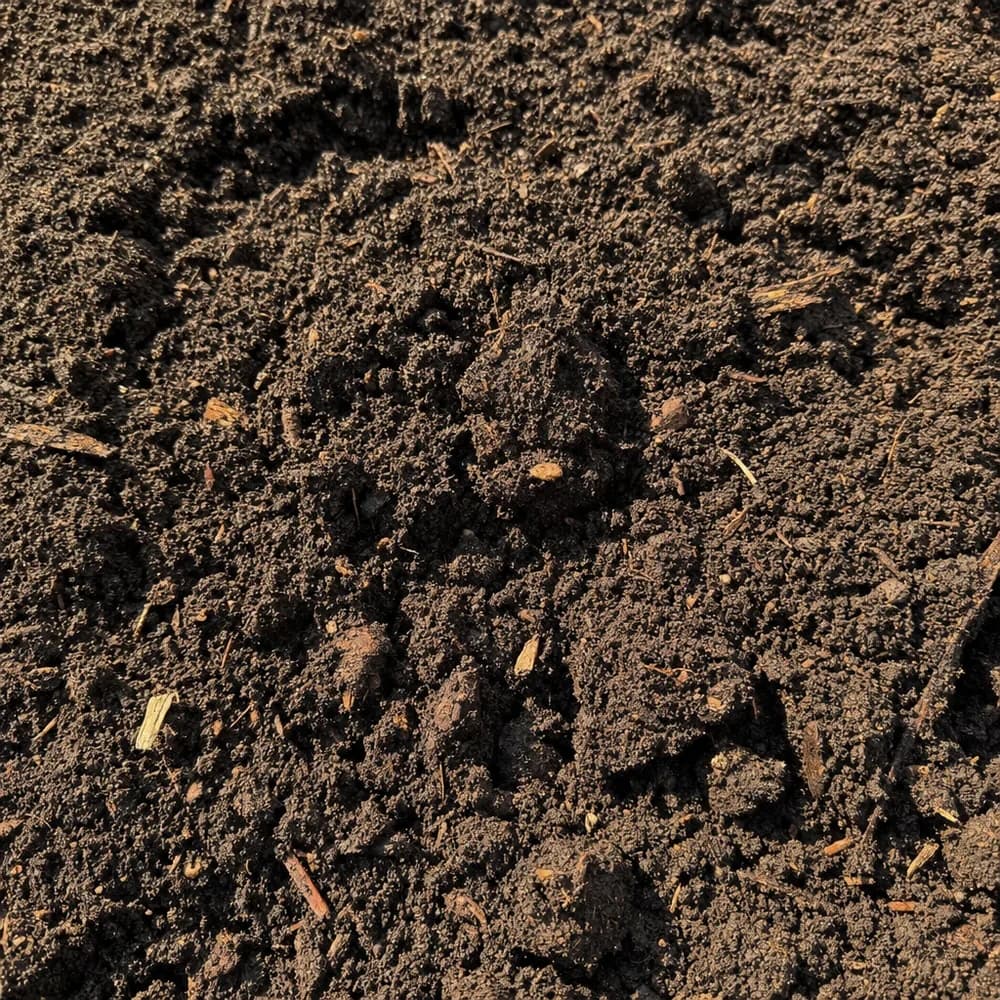
Mineral soil, mid-brown to tan depending on where it was won, damp enough to hold a shape in a fist and crumble when you open your hand. No sod, no root balls, no fist-sized rock. It is heavier than it looks: about 2,400 lb per cubic yard dry, and up to 3,000 lb per cubic yard when it is wet, which is the difference between 1.2 and 1.5 tons for the same hole in the ground.
That water content is worth planning around. Fill placed and rolled while it is damp compacts well. Fill placed sodden pumps under the plate and never firms up, and a wet pile through a summer thunderstorm week is a wheelbarrow job nobody enjoys.
How deep can it go in one pass over clay?
In lifts of about 6 to 8 inches, compacted before the next lift goes on. That is the single rule that separates a pad that holds from a pad that sinks in the corner.
Dumping 2 feet of fill in one go gives you a firm crust over loose material, and the bottom half settles under load for the next two seasons. It also matters where the fill meets the existing ground: scarify or rough up a hard clay surface before the first lift so the two layers key together rather than sitting as a plane that water can travel along.
What actually compacts a lift, and how many passes?
Anything that will carry weight has to be compacted lift by lift, and the tool decides how many passes it takes. A vibratory plate compactor handles residential lifts; a walk-behind roller is better once the area gets past a few hundred square feet. Damp is the operative condition, and each pass should overlap the last.
For a low corner in a lawn that will only ever grow grass, hand tamping and letting a winter settle it is usually enough, then topping up the dip that appears in spring.
Will it hold a pole barn pad with a tractor parked on it?
The fill brings you to grade. It does not carry the load. Above the compacted fill you want a compacted course of Class 6 Road Base built to the depth the structure needs, and under both you want the subgrade prepared rather than simply covered.
The same split applies to a single-car gravel driveway across a low spot: fill to make the line, base to carry the vehicle, and a surface course on top of that. Skipping the middle layer is the usual reason a new drive develops two ruts by the second spring.
Can I shape a fire pit surround with it and leave it at that?
You can shape it with fill and you should not leave it exposed. Bare mineral soil around a seating area washes in a storm and blows in a dry windy spell, and it turns to slick clay underfoot after rain. Grade the area with fill, compact it, then finish it: Crusher Fines for a firm walkable surface, or Pea Gravel for a softer look. A hypothetical 12 foot circle is 3.14 x 6 x 6 = 113 square feet, and leveling it with an average of 3 inches of fill is 113 x 3 / 12 = 28 cubic feet, or 28 / 27 = 1.05 cubic yards. Call it 1.3 tons.
How many tons under a 24 by 30 pad and a drive approach?
Two hypothetical jobs at this site's published 2,400 lb per cubic yard for dry fill, which is 1.20 tons per cubic yard. Checked twice.
Pole barn pad, 24 by 30 ft, raised 8 inches. 720 square feet. 720 x 8 / 12 = 480 cubic feet. 480 / 27 = 17.8 cubic yards. At 1.20, that is 21.3 tons. If the material arrives wet, the same volume is closer to 26.7 tons, so order by volume and let the tonnage follow.
Drive approach across a low spot, 10 by 40 ft, averaging 4 inches. 400 square feet. 400 x 4 / 12 = 133 cubic feet. 133 / 27 = 4.94 cubic yards, or 5.9 tons.
Both figures are the volume of the hole, not the volume of the pile. Fill loses height as it is compacted, so keep the 10 percent the dirt calculator adds by default and expect to top up after the first pass rather than after the first winter.
When should the load land, and where can the truck put it?
Earthwork wants the window between mud season and the first hard freeze, and it wants the site ready before the truck comes, because a pile of fill is a poor thing to move twice. Delivery is arranged at checkout by ZIP code and the truck needs clear access to a spot where it can tip, which on acreage usually means somewhere a loaded truck can turn without leaving tracks across the lawn. Set your yardage and a date on this page, or put the site question to Colorado Rock Supply through the contact page.
Quickly Calculate How Much You Need
Material: Fill Dirt
How to Measure
Measure the length and width of your project area in feet
Decide on depth in inches (2" for landscaping, 4" for driveways)
Enter the values above and we'll calculate the tonnage you need
Need help figuring out the right amount? We can help!
Call or text us at (719) 781-8522 and we'll help you calculate the right quantity for your project.
Not sure how much you need? The Dirt Calculator has depth guides, coverage charts and worked examples for this material.