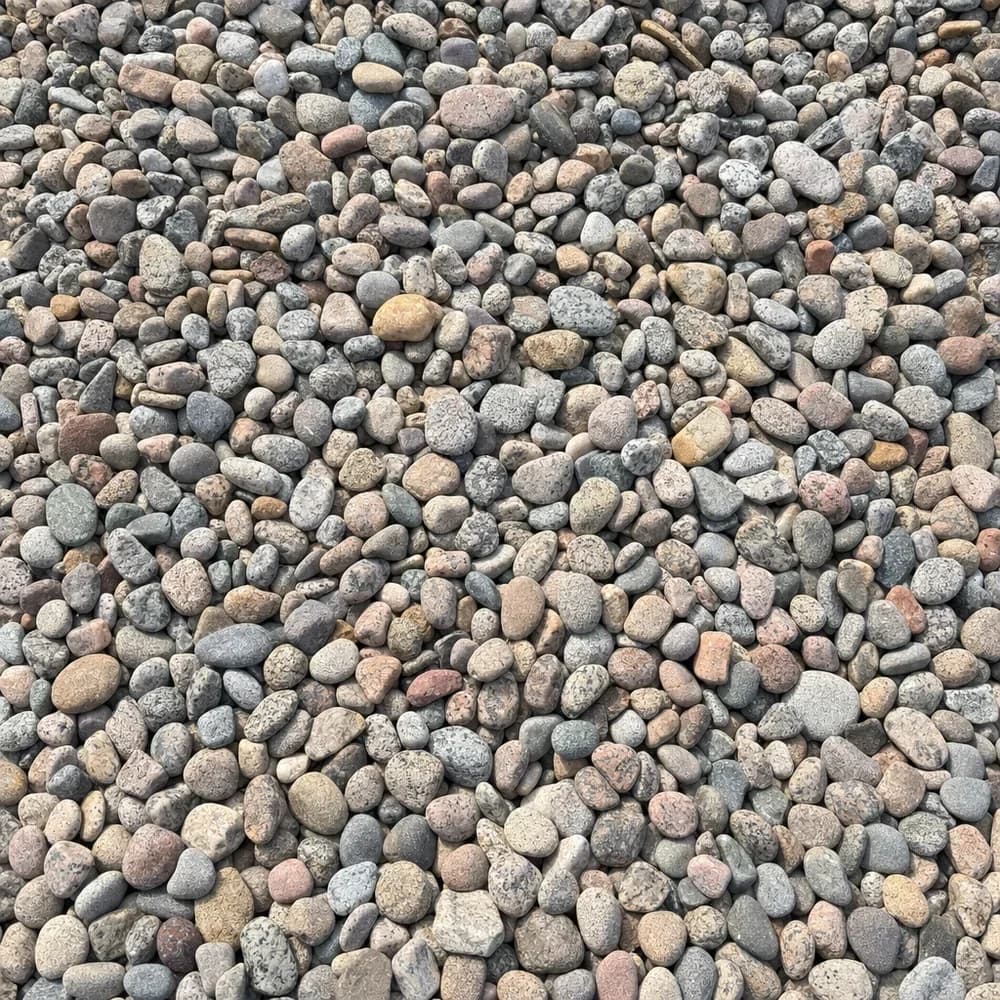
Pea Gravel Calculator for Xeric Beds, Paths and Play Areas
Enter your project dimensions
Rounded stone has no edge of its own. Everything else on a xeric layout stays where it is put, but pea gravel finds the low side of a bed, the gap under a fence, and the first two feet of lawn past the border. So the pea gravel calculator can only be as good as the area you describe to it, and on this ground the area is the part that moves. A border that was flush last autumn is proud of the gravel by spring after a winter of heave, or buried by it.
Where a pea gravel estimate goes wrong, and it is not the arithmetic
Three things push the real figure away from the calculated one, and all three are about the edge rather than the middle.
An unedged bed keeps taking material. Stone walks outward under foot traffic, the surface thins in the middle, and the fix always looks like another half ton. Set steel, aluminum, timber or paver edging an inch above the finished gravel and the same order lasts years.
Slope is the second. Above about five percent, snowmelt and foot traffic move rounded stone downhill regardless of depth. Either lay a honeycomb stabilizing grid under it or use an angular crushed stone that interlocks instead.
The third is the depth window, which is narrower than people expect. Under 2 inches the ground shows through within a season. Over 3 inches and feet sink in, which is uncomfortable to walk on and worse to push a wheelbarrow across. Almost every walking surface belongs in that inch of range, and getting it wrong changes the order by half again.
Twenty-eight hundred pounds a yard for stone that feels light
Pea gravel is 3/8 inch and rounded, and it feels soft underfoot, which leads people to assume it is light. It is not. This site publishes it at approximately 2,800 lb per cubic yard, or 1.40 tons, which is the same figure as crushed driveway gravel and #57 stone. Rounded pieces nest together and leave less air space than the loose look suggests.
Volume is what the depth decides. Here is the same square area at four depths:
| Depth | Cubic yards per 100 sq ft | Tons per 100 sq ft |
|---|---|---|
| 2 inches | 0.62 | 0.86 |
| 3 inches | 0.93 | 1.30 |
| 10 inches | 3.09 | 4.32 |
| 12 inches | 3.70 | 5.19 |
The gap between the top two rows and the bottom two is the difference between a walking surface and a playground fall zone. Nothing else about the material changes.
A 16 by 9 dog run through the pea gravel calculator
Hypothetical example. A fenced run 16 by 9 ft alongside a garage, going in at 3 inches so paws have something soft and the whole thing can be hosed off.
- Choose Rectangle. Circle and Multiple areas, up to five, are the other two shapes.
- Length 16, Width 9, in feet. That is 144 sq ft.
- Depth 3, in inches. The field takes 0.25 to 24.
- Select the material so the 1.40 figure is applied.
- Tick Add 5% extra for compaction & spillage.
- Calculate.
- 144 x 3 ÷ 12 = 36 cubic feet
- 36 ÷ 27 = 1.33 cubic yards
- 1.33 x 1.40 = 1.87 tons
- With the 5% ticked: 1.40 cubic yards and 1.96 tons
Order 2 tons. Results come back as cubic yards, tons and cubic feet at once, and Email my quote will send them to you rather than making you write them down.
Now the same tool on a swing set. A fall zone 14 by 14 ft at 10 inches is 196 sq ft x 10 ÷ 12 = 163.3 cubic feet, which is 6.05 cubic yards, or 8.47 tons. About a third larger in area than the dog run, and four and a half times the tonnage, because the depth is the thing doing the work. Fall zones are specified at 9 to 12 inches of loose material, and the equipment manual is the authority on which. What the tonnage buys is landscape pea gravel, not certified playground surfacing, and the required depth, the fall-zone footprint and the maintained depth all come from the equipment manufacturer's instructions rather than from here.
Depths by job: path, fire pit surround, dog run, fall zone
- Garden path or walking surface. 2 to 3 inches over a firm, level subgrade.
- A seating or patio area. Lay 2 inches of compacted Crusher Fines first so chair legs have something to bear on, then 2 to 3 inches of pea gravel over the top. Two calculations, two materials. A path that will carry a loaded wheelbarrow wants Crusher Run as its base instead.
- Fire pit surround. 3 inches. The stone does not burn, and rain drains straight through it overnight instead of leaving you a muddy ring.
- Dog run. 2 to 3 inches. Rounded stone is easy on paws and rinses clean.
- Play area under equipment. 9 to 12 inches, checked against the manufacturer's fall-height requirement.
- Xeric beds and borders. 2 to 3 inches over fabric. In wind, a shallower layer scours around plant crowns.
Which tool to open: this one, the gravel tool or the stone tool
All three of these run at 1.40 tons per cubic yard, so switching between them changes nothing about the weight. What changes is the depth the job takes and the product page you land on at the end, and those are the two things that get orders wrong.
Use this one for Pea Gravel as a loose surface in a defined area. Use the gravel calculator for drives, turnarounds and anything that sits over a compacted base, since those run deeper and usually mean two layers. Use the stone calculator for graded washed stone by number, the sizes that go in drainage and under concrete. Decorative beds finished in larger rounded stone go through the river rock calculator, which applies a lighter figure of 1.35.
Keeping a couple of buckets back for the traffic line
Leave the 5% option ticked. Rounded stone rolls off a shovel, off a wheelbarrow, and off the edge of a tarp, and a fair bit of any order ends up somewhere other than the bed.
Then hold a little back on purpose. Every path develops a worn line down the middle within a couple of seasons, and two buckets of gravel kept in the shed fixes it in ten minutes without a delivery. Rake a walking surface level twice a year, spring and fall, and the wear never gets ahead of you.
When the numbers are settled, set quantity and a date on the Pea Gravel page. Delivery is arranged at checkout by ZIP code, and how delivery is arranged covers the clear access the truck needs to somewhere firm to tip.
Common questions
What happens if the order comes up short?
Usually a thin patch rather than a bare one, and thin is the depth that lets the subgrade show through and weeds start. Rounded stone also settles into whatever is under it for the first few weeks, so a surface measured tight on the day looks shallow a month later. Round up to the next quarter ton.
How accurate is the figure for a bed that is not a neat shape?
Exact for the shapes you enter, so it depends on how well you break the area up. Two rectangles and a circle will get a normal front yard within a wheelbarrow load. The bigger error is almost always the depth, not the outline, since half an inch across a large area is worth more than a corner you approximated.
Which product page do I order from once I have the tonnage?
Pea Gravel for the loose surface. If the job also needs a firm layer underneath, Crusher Fines for a seating area or Crusher Run under a path that will take a wheelbarrow, each calculated on its own before you order.
Where should the pile go for a path down the side of the house?
Somewhere firm and central to the run, because rounded stone spreads out under its own weight and a pile tipped on a slope keeps moving. Lay a tarp down first if it is landing on a drive you care about, which also makes the last few shovelfuls easier to collect. Check the truck can reach the spot before you order.
Why does the result show tons as well as cubic yards?
Pea gravel is handled by the ton, so that is the number you order against. Cubic yards are what the depth guidance and coverage figures are built on, and what tells you how big the pile will be. At 1.40 tons to the yard, a two ton order is about a yard and a half of stone to move.
Related calculators
Under two tons covers most patios.
3/8 inch natural pea gravel, priced by the ton, delivered free.