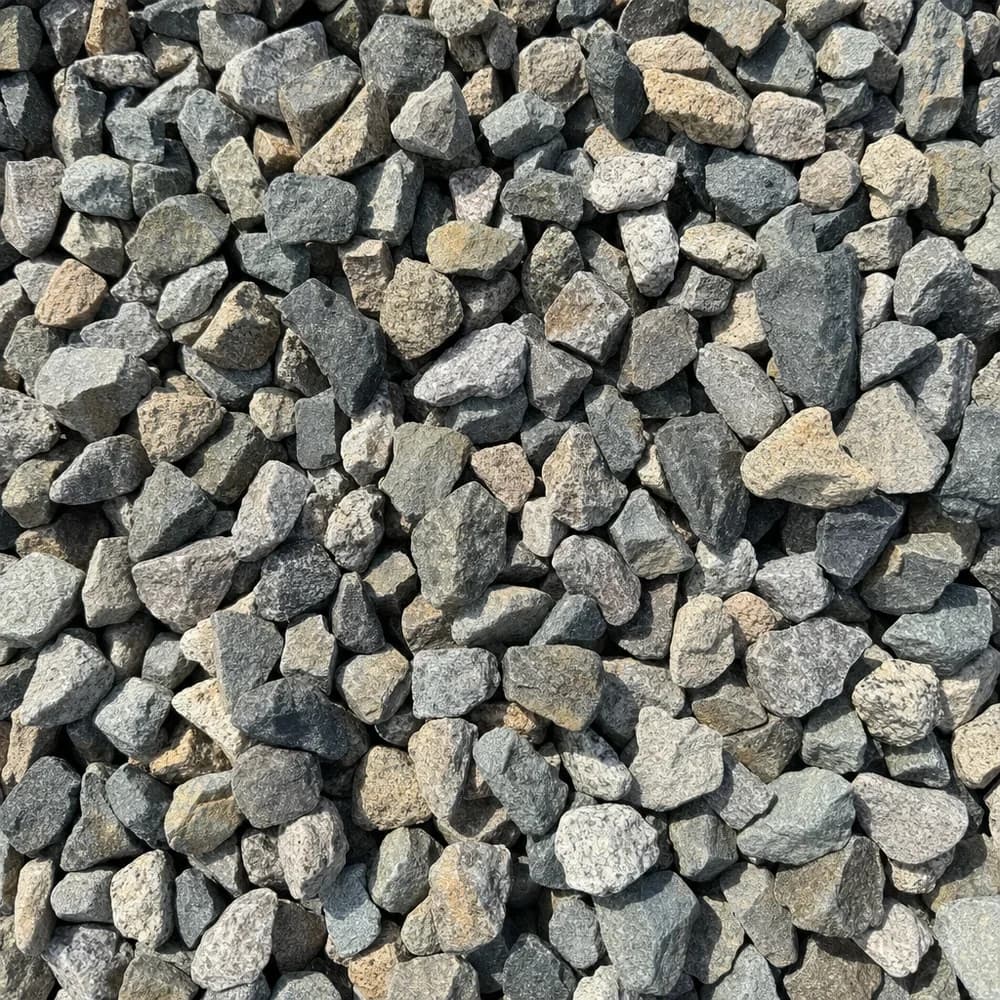
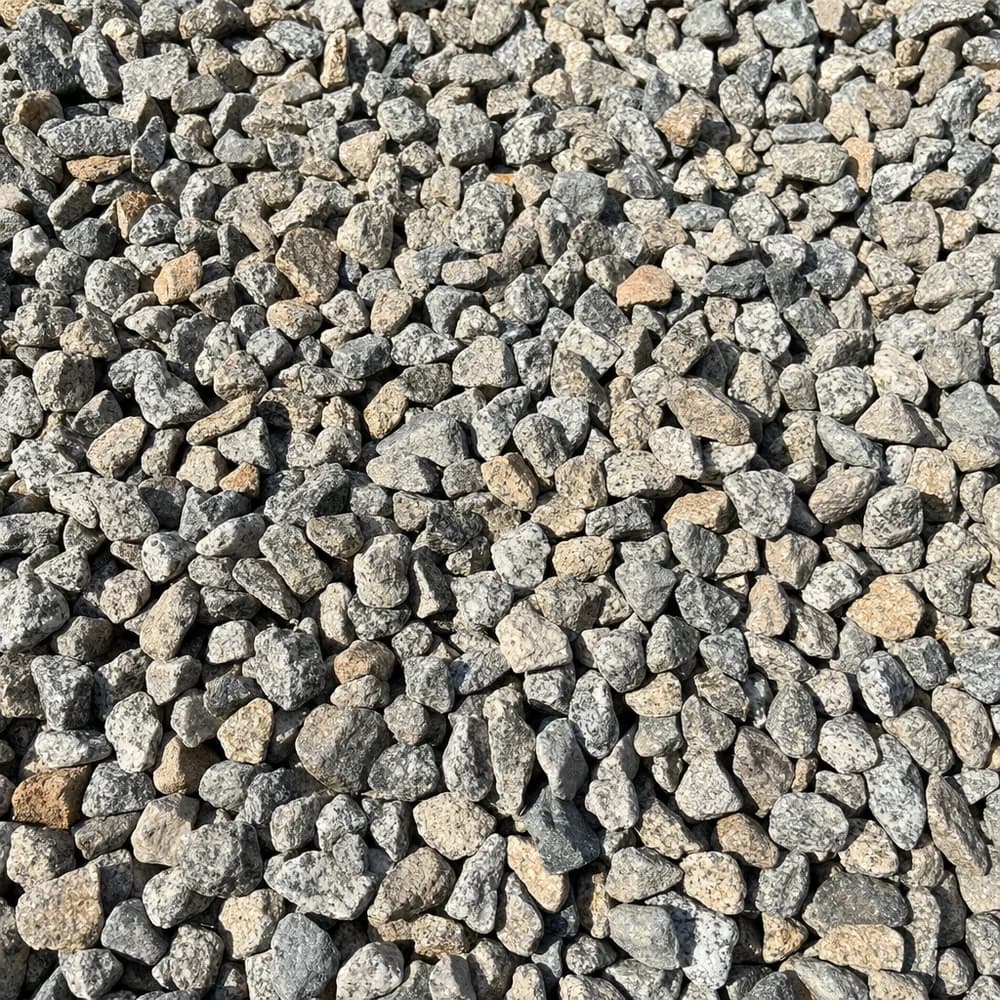
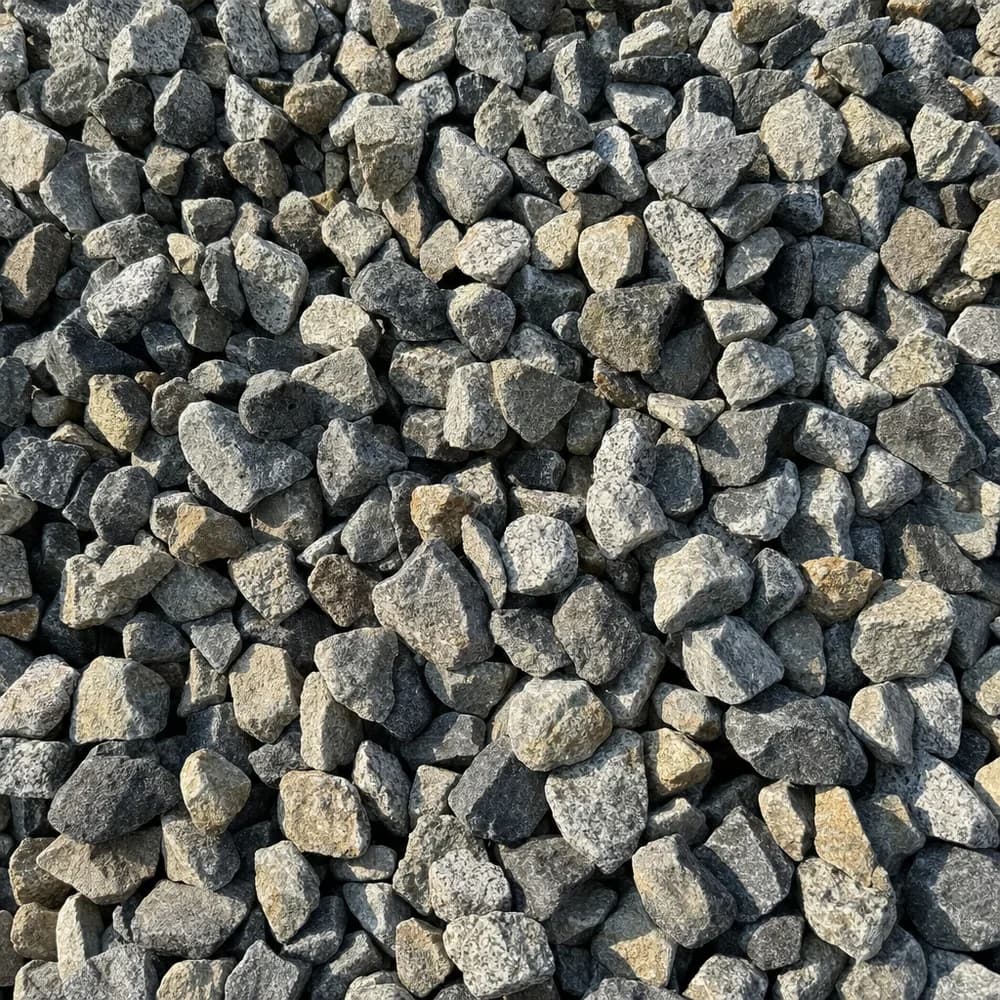
Drain Rock: Moving Snowmelt Away From What It Is Sitting Against
For Colorado French drains and wall backfill, Drain Rock keeps water moving where spring melt meets tight clay soil.
- Size: 3/4 inch to 1-1/2 inch
- Grading: Washed to remove fines and dust
- Type: Rounded or angular varieties
From $392 for 1 ton, delivery included
Larger loads cost less per ton: 500 tons is $27,595 ($55.19 per ton). Pick any quantity below for a delivered price.
Free delivery included
Free delivery anywhere in Colorado
Pick a delivery date
Weekday delivery, earliest Oct 20
Get a Free Quote
Fill out the form and our sales team will get back to you within the hour.
Size and Grading
- Size
- 3/4 inch to 1-1/2 inch
- Grading
- Washed to remove fines and dust
- Type
- Rounded or angular varieties
The week the snowpack in the yard finally goes is the week most people find out where their water ends up. A damp line along the basement wall, a window well with an inch in the bottom, a soft patch behind a retaining wall that was fine in October. The ground is still frozen a foot down, so nothing can be dug yet, and that gap between finding the problem in March and fixing it in May is the useful time to work out what the trench actually needs. Drain Rock is the washed stone that goes in it: 3/4 inch to 1-1/2 inch, with the fines and dust washed off, in rounded or angular varieties.
The problem is not the water, it is the clay holding it there
Front Range clay does not take water in and pass it along. It holds it, swells against whatever it is touching, and gives the moisture up slowly through the dry months. Water arriving at a foundation or the back of a wall through soil like that has nowhere to go, so it stands, it presses, and through a winter that can run several freeze-thaw cycles in a week it does that over and over.
A drainage run replaces a stretch of that soil with a path. The voids between washed stones are the path, and they only exist because the fines were taken out at the wash plant. Put a material with fines in the same trench and you have built a slightly better-looking piece of clay.
Angular or rounded drain rock, and why the choice is about load
Both varieties drain. The difference shows up when something presses on them.
Where soil and backfill bear on the stone, use the angular variety, because the pieces interlock and hold the open structure under that weight. Rounded stone in the same position can settle together tightly enough to restrict flow. Keep the rounded material for exposed landscape drainage features where the stone is visible and a natural look is wanted.
Fabric, pipe, stone, fold: the order a foundation trench goes in
- Dig to fall. A drain that runs level is a trench that stores water. Set a consistent slope toward the outlet before anything else goes in.
- Line the excavation with filter fabric, up both walls with enough left over to fold across the top. On clay this is not optional, because silt entering the stone is what eventually shuts the run down.
- Bed 2 to 3 inches of stone along the bottom so the pipe sits on drainage, not on soil.
- Lay perforated pipe on that bed, holes down, running to daylight or to a drywell.
- Backfill around and over the pipe with more stone, bringing it up the depth the design calls for. Place it, do not compact it.
- Fold the fabric over the top before the cover material goes on, so the run is wrapped on all sides.
Behind a wall, the vertical column of stone that lets it breathe
A retaining wall fails from water pressure far more often than from the weight it holds back. The fix is a continuous zone of open stone against the back of the block, usually a foot wide, running from the footing drain up most of the height, with fabric separating it from the retained soil and an outlet at the base that daylights.
Where the wall retains a slope that sheds snowmelt, that outlet matters more than the stone does. Stone with nowhere to drain to is storage.
A downspout landing zone is a splash problem, not a drainage one
A hypothetical 4 by 5 foot pad under a downspout at 4 inches deep comes to 20 square feet, 20 x 4 / 12 = 6.7 cubic feet, 6.7 / 27 = 0.25 cubic yards, or about 0.35 tons. It is worth adding to another order rather than buying alone, and its job is to break the fall of the water and keep it off the soil, not to move it anywhere. Send the flow somewhere with an extension or a buried line before it reaches the pad, and use River Rock if the spot is visible from the patio.
At a pond or shoreline edge, drainage is beside the point entirely. Lapping water sorts and moves stone this size, so an edge that has to stay put wants Large River Rock, or RipRap where a culvert or a swale concentrates the flow.
Nearly six tons behind a 28-foot wall
Hypothetical, using this site's published figure for washed 3/4 inch crushed stone, about 2,800 lb per cubic yard or 1.40 tons per cubic yard. Drain Rock runs slightly coarser at 3/4 to 1-1/2 inch, so treat the figure as approximate and round up rather than down. Checked twice.
Drainage zone, 28 ft long, 4 ft high, 1 ft thick. 28 x 4 x 1 = 112 cubic feet. 112 / 27 = 4.15 cubic yards. At 1.40, that is 5.8 tons.
Add the downspout pad above and you are at roughly 6.2 tons for the two. Trench shapes that change depth along their length are easier worked in sections, and the stone calculator takes up to five at once and adds 5 percent on top by default.
Silt is what eventually kills a trench, not the stone
A wrapped run in clean stone should need nothing for years. What shortens its life is fine material getting in: a flower bed dug against the fabric, a downspout dumping mud straight into the top of the run, or a neighbor's regrade sending silty runoff across it. Keep surface water out of the trench and into it only through the pipe.
If you want the trench build checked before ordering, send the wall height, the run length and the outlet position through the contact form. Otherwise set tonnage and a delivery date on this page. Delivery is arranged at checkout by ZIP code, and the truck needs clear access to somewhere it can tip, which on a wall job usually means deciding whether the pile lands at the top of the slope or the bottom.
Quickly Calculate How Much You Need
Material: Drain Rock
How to Measure
Measure the length and width of your project area in feet
Decide on depth in inches (2" for landscaping, 4" for driveways)
Enter the values above and we'll calculate the tonnage you need
Need help figuring out the right amount? We can help!
Call or text us at (719) 781-8522 and we'll help you calculate the right quantity for your project.
Not sure how much you need? The River Rock Calculator has depth guides, coverage charts and worked examples for this material.
Frequently Asked Questions About Drain Rock
Drain Rock delivery across Colorado
- Denver
- Colorado Springs
- Aurora
- Fort Collins
- Thornton
- Arvada
- Westminster
- Greeley
- Pueblo
- Boulder
- Longmont
- Castle Rock