What Is Gravel? How It's Made, the Main Types and What Each Is Used For
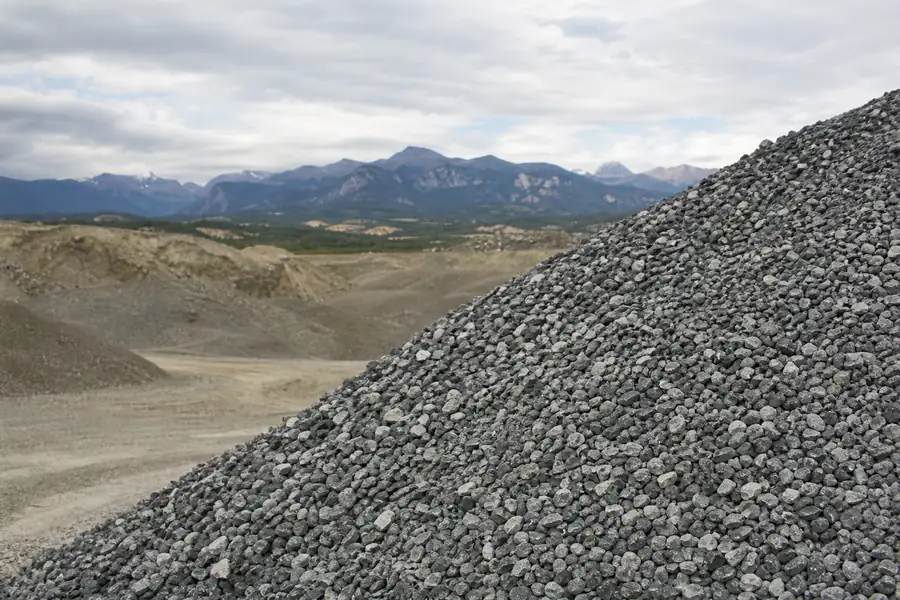
Gravel is loose rock fragments larger than sand but smaller than cobbles, generally 2 millimeters to 3 inches across. It forms naturally when water and weather break rock apart over time, or it gets manufactured at a quarry by crushing stone and screening it into graded sizes. Both kinds turn up on Colorado job sites, and knowing which one you're looking at decides what you order for a driveway, a French drain, or a xeriscape bed.
Front Range clay drains poorly and heaves in the spring melt, so the gravel you pick, and how it was made, matters more here than in milder climates. The sections below cover how natural gravel differs from crushed, how a Colorado quarry turns raw granite into graded product, and which size fits which job.
Natural Gravel vs Crushed Gravel: What Is the Difference
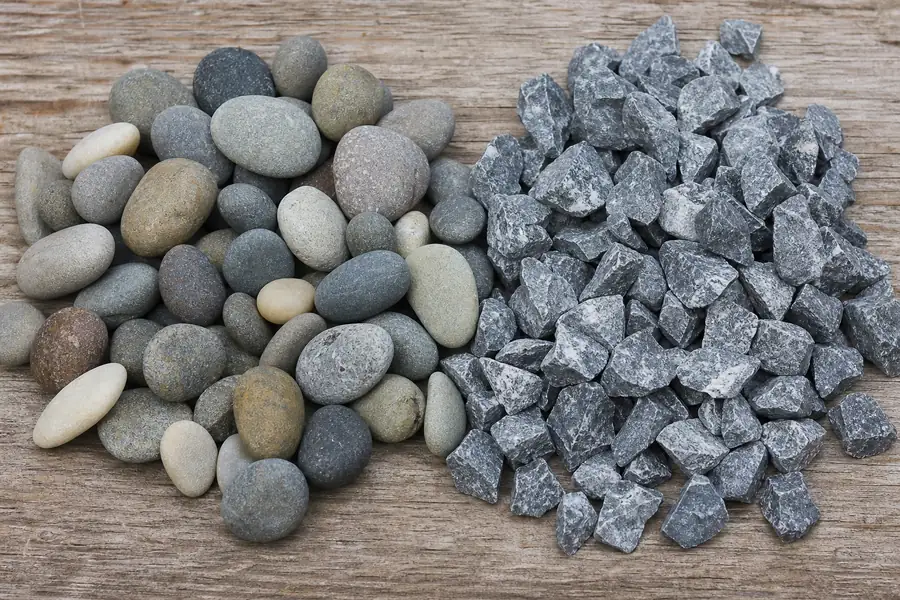
Natural gravel is rounded, smooth stone shaped by centuries of water tumbling it in a riverbed or glacial deposit. Crushed gravel is quarried rock that's been blasted, run through a crusher, and screened into graded sizes, leaving each piece angular instead of round.
The shape changes how the material behaves underfoot and underground. Rounded stone, like natural pea gravel, rolls and shifts easily, which makes it a poor choice for a driveway base but a good look for a dry creek bed or a walkway that gets light foot traffic. Angular crushed stone locks together when compacted, which is exactly why it carries weight on a driveway or under a patio slab.
Neither type is better across the board. The job decides which one you need, and most Colorado projects actually use both: crushed stone for structure, natural stone for the finished surface.
How Colorado Quarries Turn Granite Into Gravel
A Colorado quarry makes crushed gravel by blasting hard rock, usually granite or gneiss from Front Range deposits, then running the broken rock through a jaw or cone crusher that breaks it down into smaller, more uniform pieces. From there it passes over a series of vibrating screens, each one sized to catch a specific range of stone and let the rest fall through.
That screening step is what produces graded sizes like three-quarter inch crushed stone, where every piece in the pile falls within a tight size range instead of a random mix. Consistent grading is what lets a contractor calculate compaction and coverage with any confidence. A load with mixed, ungraded sizes compacts unevenly, and an unevenly compacted base is the most common reason a Colorado driveway heaves after the spring thaw.
Some of the fine material left over from crushing and screening gets sold on its own rather than discarded. That's crusher run (also called crusher fines locally), a mix of small crushed stone and rock dust that compacts into a dense, stable surface used for pathways and as a leveling layer under pavers.
Main Types of Gravel and What Each Is Used For
Each gravel type earns its place on a job site by size, shape, or both. Here's what the most common ones actually do.
#57 Stone is a mid-size, roughly 3/16 inch to 1 inch crushed stone with good drainage and enough weight to stay put. It's a standard choice for 57 Stone drainage beds, footing drains, and as fill around drain pipe, since the gaps between the angular pieces let water pass through instead of pooling against a foundation.
Crusher run compacts tighter than any loose stone because the rock dust fills the gaps between larger fragments as it's compacted, leaving almost no voids. That makes crusher run the material of choice for pathways, a sub base under pavers, or filling low spots before a final surface goes down.
Class 6 Road Base, CDOT's standard aggregate base material, is the crushed stone Colorado contractors reach for under driveways and parking areas because it compacts into a dense, load-bearing layer. Colorado's 36 inch frost depth means a mountain or Front Range driveway needs real base depth to survive freeze-thaw cycles, and we've laid out exactly how much in our guide to Class 6 Road Base in Colorado.
Pea gravel, being rounded and small, is the go-to for xeriscape beds, decorative borders, and dry creek beds where you want a finished look rather than structural strength. Its round shape is also comfortable underfoot, which is why it shows up in playground surfacing and garden paths.
You can see the full range of graded gravel and crushed stone on our gravel and stone products page, with exact size specs for each one.
Which Gravel Size Fits Your Project?
Matching the right gravel to the right job comes down to two things: how much weight it needs to carry, and whether drainage or appearance matters more. The table below covers the projects Colorado buyers ask about most.
| Project | Best gravel type | Why |
|---|---|---|
| Driveway base | Class 6 Road Base | Compacts dense enough to bear vehicle weight and resist frost heave |
| French drain / footing drain | #57 Stone | Large gaps let water pass through instead of pooling |
| Paver base or pathway | Crusher run | Rock dust locks large and small pieces into a tight, stable surface |
| Xeriscape or garden bed | Pea gravel | Rounded, comfortable to walk on, holds its decorative look |
| Dry creek bed | Pea gravel or larger river rock | Rounded shape reads as natural stream stone |
FAQs
Is gravel the same thing as crushed stone?
Not exactly. Gravel is the broad category of loose rock fragments between about 2 millimeters and 3 inches, and it includes both naturally rounded stone and crushed stone. Crushed stone is one type of gravel, made by mechanically breaking larger rock into angular pieces rather than letting water round it over time.
What size is considered gravel versus sand or rock?
Material smaller than about 2 millimeters is sand, material from roughly 2 millimeters to 3 inches is gravel, and anything larger than that is generally called rock or riprap. The exact cutoffs vary a bit by source, but that range covers what's sold as gravel on most Colorado job sites.
Can I use pea gravel under a driveway?
Pea gravel is not a good driveway base because its rounded shape rolls and shifts under vehicle weight instead of locking into a stable layer. Class 6 Road Base or a similar angular crushed stone is the standard choice for a driveway base in Colorado.
Does gravel come pre-washed?
Some gravel products are washed to remove dust and fine particles, which matters for drainage applications like French drains where clogging is a concern. Crushed stone straight from screening, like crusher run, retains its rock dust on purpose because that dust is what helps it compact tightly.
How do I know how much gravel I need?
Gravel coverage depends on the area, the depth you're filling, and the material's density, which varies by type. Our gravel calculator works out tons needed once you enter your dimensions and desired depth.