Topsoil Calculator for Lawns, Topdressing and Final Grade
Enter your project dimensions
Orders that come out wrong on a lawn job almost never come from the tape measure. People measure a yard carefully enough. What they do next is guess at the depth, and on the clay-heavy ground common across much of this state that guess is the difference between a load that finishes the job and a load that sits in the way of it. The topsoil calculator below settles the depth question by making you answer it, so it is worth knowing which two answers cause the trouble.
The depth box is where a lawn order goes wrong
Take a side yard of 1,560 square feet. At four inches, which is what new seed or sod wants over a loosened subgrade, it needs about 19 cubic yards. At a half inch, which is a topdressing over grass that is already growing, it needs under 2.5. Same tape measure, same square footage, eight times the order.
Nothing else you type has that effect. Getting the width wrong by a foot moves the figure by a few percent. Typing four where you meant a half turns a pickup job into a truck job.
So decide before you calculate: are you building a growing layer from scratch, or feeding one that already exists? Everything else on this page follows from that.
Raising a grade with topsoil, and the order it should have been
The second error costs more. A low corner sits four inches down, a sunken trench line shows across the lawn, or the ground slopes back toward the house and needs lifting. The instinct is to order topsoil, because topsoil is the stuff lawns grow in.
Screened topsoil is a finishing material, not a structural one. Built up in depth it holds water, stays soft under foot traffic, and settles unevenly through a winter of freeze and thaw, which at altitude can mean several cycles in a single week. Anything more than a few inches of lift wants fill dirt underneath, compacted, with topsoil reserved for the top four to six inches where roots actually live.
That makes a regrade two calculations and two orders. Size the fill on the dirt calculator, then come back here for the growing layer. The alternative is a lawn that looks right in June and shows every low spot by the following spring.
Area in feet, depth in inches: filling the topsoil calculator in
The tool wants a rectangle, a circle, or up to five areas totaled together, with anything horizontal in feet and anything vertical in inches.
Enter each part of the lawn separately if the shape is awkward. A front lawn split by a path is two rectangles, not one rectangle with a guess taken off it. Circles want a diameter rather than a radius.
The depth field runs from 0.25 up to 24 inches, and that lower end matters here more than on any other tool on the site, because a quarter-inch topdress is a real order. Select the material so the correct weight is applied, then decide whether to leave "Add 5% extra for compaction & spillage" ticked. It is optional, and it is on unless you untick it.
Useful depths to have in mind: a quarter to a half inch for topdressing established grass, a half to an inch for preparing an overseed, four to six inches under new seed or sod, and six inches when you are building a planting bed rather than a lawn.
Cubic yards on the order, tons on the ticket
Three numbers come back for the same pile: cubic yards, tons, cubic feet.
Topsoil is planned in cubic yards, because depth and spread are both volume. A yard covers a little over 80 square feet at four inches, or close to 650 square feet spread as a half-inch topdress, and that spread is what tells you whether the load will reach the far fence.
Tons is what the truck is carrying, worked out from the published figure of roughly 2,200 lb per cubic yard, which the tool reads as 1.10 tons per yard. Cubic feet is the raw volume and the easiest figure to check the arithmetic against.
Rain changes the weight of what is sitting on your drive without changing any of the three numbers you ordered against. A soaked pile is heavier by the shovelful and it smears rather than rakes, which is a reason to time the delivery close to the week you plan to spread it, not a reason to order differently.
What this page sizes, and what it does not
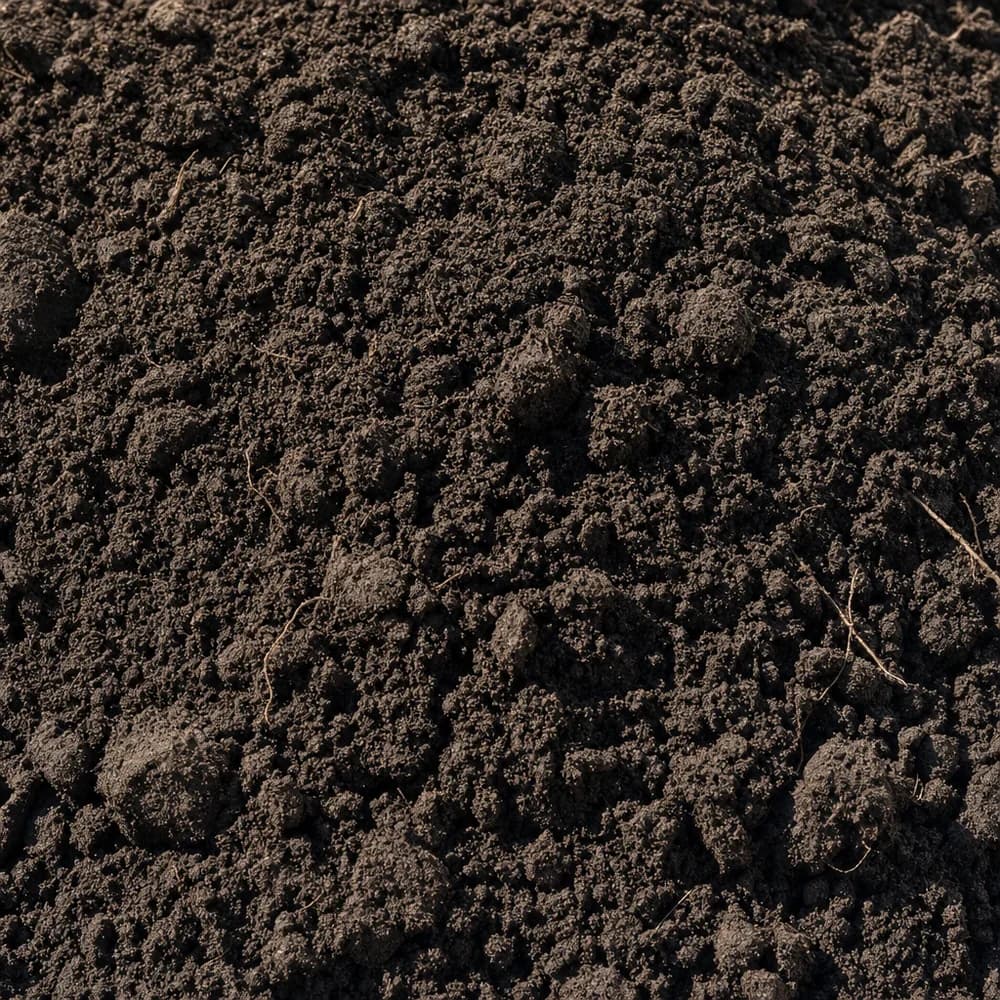
This is the lawn page. It sizes screened topsoil: natural soil run over mesh to take out stones, roots and clods, for seeding, sodding, topdressing and final grading. In the alkaline, low-organic ground common here that is the layer worth amending, and it is the layer you finish with.
The compost blend for raised beds and planting areas is garden soil, sized on the soil calculator; structure below grade is fill dirt, sized on the dirt calculator. Each is published at its own weight, so the same measurements return different ton figures. The cubic yards never move.
A 1,560-square-foot side yard, seeded in the fall
A hypothetical example, run at four inches of screened topsoil.
1,560 square feet multiplied by 4 and divided by 12 gives 520 cubic feet. Divided by 27 that is 19.3 cubic yards. Multiplied by 1.10, about 21 tons. With the five percent ticked, 20.2 cubic yards and 22 tons.
Order 20 yards rather than 19. The extra goes into the low spots you find once a rake has been over it, and into the edges along the fence line, which is where every lawn job runs thin.
Before any of it goes down, break the surface of the subgrade an inch or two. Four inches of loose topsoil laid onto sealed clay behaves like a bath with the plug in: water reaches the boundary and stops there, and roots do the same. Slope the finished grade away from the house, and settle the soil by watering rather than by walking on it.
Topdressing, overseeding and finish grade on the same lawn
The same 1,560 square feet gives very different orders depending on the job.
A half-inch topdress over existing grass works out at 65 cubic feet, which is 2.4 cubic yards or about 2.6 tons. Keep it to a half inch or less so the grass can grow through it. A one-inch pass before overseeding roughly doubles that. Finishing a grade over fill sits back at three to four inches.
Anything over about an inch on established turf stops being topdressing. Covered sod breaks down unevenly and leaves bumps that take a season to flatten, so strip or kill the turf first if you are adding real height.
Once you have your yardage, take it to the Top Soil product page, set a quantity and a date there, and sort the drop spot before you confirm. Delivery is arranged at checkout against your ZIP code, and the driver needs firm ground with clear access to tip on.
Common questions
Where should twenty yards of topsoil go on an average lot?
On the drive or another firm surface, on a tarp, and as close to the work as the truck can safely reach. Twenty yards is a substantial heap and it will not sit politely to one side, so plan the route from pile to lawn before the date rather than on the day. Do not have it tipped on the grass you are about to seed, since a pile kills what is under it within days, and avoid ground that is still soft from snowmelt because a loaded truck will leave ruts you then have to repair.
Why show tons at all when topsoil is planned by the yard?
Because the two answer different questions. Cubic yards tells you how far the load spreads at the depth you chose. Tons tells you what is arriving and how much material there is to move, worked out from the published 1.10 tons per cubic yard. Order in the unit the product page uses and treat the other figure as your sanity check.
Do I enter the depth before it settles or after?
Enter the finished depth you want underfoot. Topsoil is not compacted the way base stone is, so there is no separate compacted figure to convert to, but a fresh spread does drop as it is watered in. Leaving the surface a touch proud of the surrounding grade lets it settle flush instead of leaving a dish.
How do I handle a round lawn area or a ring around a tree?
Use circle mode and enter the diameter. For a ring where the middle is staying put, work out the outer circle, subtract the inner one on paper, and enter the difference as a rectangle of the same area. A twelve-foot circle is 113 square feet; take off a four-foot trunk ring at 12.6 and you are ordering for about 100.
Can I check the number by hand before I commit to it?
Square footage multiplied by depth in inches, divided by 12, gives cubic feet. Divide that by 27 for cubic yards, then multiply by 1.10 for tons of topsoil. If your figure and the screen disagree, the usual cause is a depth typed in feet instead of inches.
Related calculators
Lawn math done? Soil's on us to deliver.
Screened topsoil by the cubic yard, free delivery across Colorado.