Soil Calculator for Raised Beds, Planters and Bed Renovation
Enter your project dimensions
Two cedar beds go in along a south fence, each four feet by ten and built three boards high. The gardener who built them is usually holding a bag of soil from the garden center when they work out what filling those beds actually takes, and it is rarely close. That arithmetic is what this soil calculator is for, so here are those two beds run through it before anything else gets explained.
Two beds, four by ten, filled to fourteen inches
A hypothetical example, and the figures are the ones the tool returns.
Each bed is 40 square feet, so 80 square feet together. Filling to fourteen inches means 80 multiplied by 14 and divided by 12, which is 93.3 cubic feet. Divide that by 27 and you have 3.46 cubic yards.
Garden soil is published on this site at roughly 2,000 lb to the cubic yard, which the tool reads as 1.00 tons per yard, so the ton figure and the yard figure come out the same: 3.46 of each. With the optional five percent ticked, both move to 3.63.
Round to three and a half or four yards. That is more than double what most people guess by looking at the beds, and it is the whole reason this page exists.
Entering four beds, a planter and a ring without adding them up yourself
The tool takes a rectangle, a circle, or up to five areas totaled together, which is the mode most bed jobs want.
Every bed goes in as its own entry, in feet. Two identical beds are still two entries, not one entry doubled, because it is easier to spot a mistake that way. Circles want a diameter rather than a radius, so a five-foot planter is entered as 5.
Depth goes in inches and the field runs from 0.25 to 24. That range covers everything a bed job needs: twelve to fourteen inches to fill an empty raised bed, six inches for a new in-ground bed, and four to six inches when you are lifting an established bed rather than starting it.
Select the material before you calculate, since the tonnage comes from the weight of whatever is chosen. Then decide on the tick box marked "Add 5% extra for compaction & spillage". It is optional and it stays ticked until you untick it.
Reading the panel: yards fill a bed, tons fill a truck
Three outputs come back for the same pile.
Cubic yards is the working unit for anything to do with beds. It is what tells you the depth you can reach across a given footprint, and it is what you compare against a bag: a two cubic foot bag is roughly a thirteenth of a yard, so the 93.3 cubic feet in the example above is about forty-seven bags. Working out how many times you would lift forty-seven bags is usually the moment a bulk order starts making sense.
Tons is the weight on the truck, taken from the published figure for the material selected. Cubic feet is the raw volume, useful for checking the sums by hand.
The gap between the two main figures changes with the material. At 1.00 tons per yard, garden soil is the one case where they read the same. Screened topsoil is heavier at about 2,200 lb per yard, or 1.10 tons, and fill dirt heavier again at roughly 2,400 lb, or 1.20, so the same measurements return a bigger ton figure without any change to the volume.
Settling, the tick box, and the wheelbarrow you keep back until spring
Blended soil drops after it is placed, and it drops most in the first few waterings while the compost in it consolidates. Fill to the rim on delivery day and by the time you plant you are an inch or two below it.
The five percent option is not really designed for that. It covers spillage and the material that packs down under a wheelbarrow wheel, so it is a sensible tick on any bed job but it is not a settlement allowance. The practical approach is to fill slightly proud, water it in hard, and hold back a wheelbarrow load to top up the corners once everything has settled. Beds that are planted heavily will want another inch the following spring regardless.
Where the result lands between two figures, take the higher one. Soil left over goes into the bottom of a planter or gets worked into a tired bed. Soil you are short of stops the planting.
Growing layer, lawn layer, structure: three jobs, three tools
Each tool applies a different weight, and the thing that decides which one you want is the job rather than the name on the product.
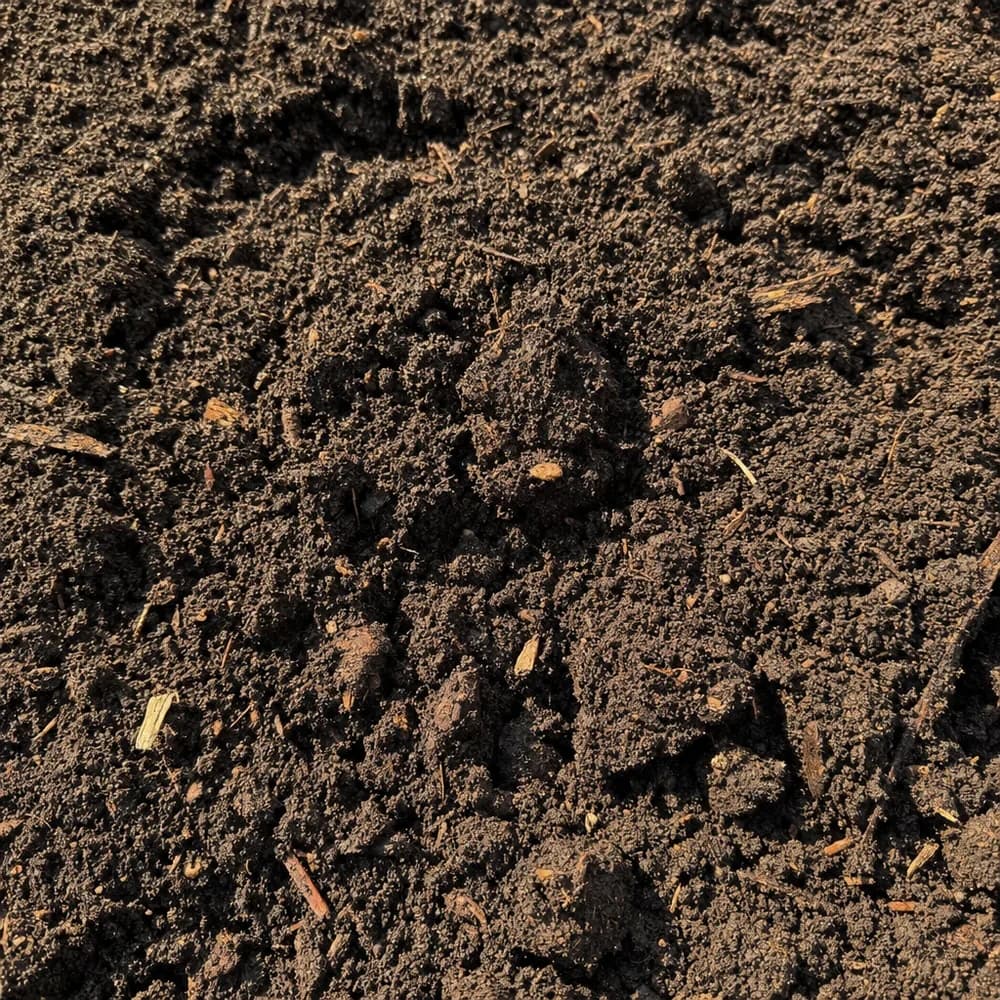
This one is the bed job: Garden Soil, the compost-blended material that goes into raised beds, planters and planting areas and is ready to plant into as it lands.
The lawn job is the topsoil calculator, with screened topsoil for seeding and finishing a grade. Structure is the dirt calculator, with fill dirt, which fills holes and raises ground and never belongs in the top layer of anything you are growing in. The mulch calculator takes over once the beds are planted.
A deep bed can honestly use two of those. Anything taller than about eighteen inches does not need blended soil all the way down: the lower third can be fill or coarse organic material, with the blend reserved for the depth roots actually occupy. Run the tool twice, once for each layer, and order them separately.
Alkaline ground, low organic matter, and the case for mixing rather than replacing
The native soil across much of this state is alkaline and short on organic matter, and along the Front Range it is clay that swells when it is wet and shrinks back when it dries. Dropping a band of imported blend on top of that and leaving it creates a sharp boundary, and roots and water both stall at boundaries.
For an in-ground bed, working two or three inches of blend through the top six inches of what is already there does more than replacing the lot, and it uses a fraction of the material. Run the calculator at the depth you are adding, not at the depth of the finished bed, and the order comes down accordingly. Full replacement is worth it where there is builder's rubble or a construction scrape under the surface and nothing else will fix it.
When the yardage is settled, open the product page, choose a quantity and a date there, and pick your drop spot before you confirm. Delivery is booked at checkout against your ZIP code and the driver needs firm, clear ground to tip on. Put a tarp down first, because soil stains a drive and a tarp is the difference between sweeping up and scrubbing.
Common questions
Why does the panel give me tons as well as cubic yards for a raised bed?
Because beds are planned by volume and trucks are loaded by weight. Cubic yards tells you whether three yards will fill what you have built; tons tells you what is arriving. With garden soil the two happen to match, since it is published here at 1.00 tons per cubic yard, but that is a quirk of this one material rather than a rule you can carry across to topsoil or fill.
Should I enter the depth of the empty bed or the depth I want after it has settled?
Enter the depth of the space you are filling, measured from the base to the top board. Soil is not compacted in a bed the way base stone is under a drive, so there is no compacted depth to convert to. What there is instead is settlement over the first weeks, which is handled by filling proud and topping up rather than by changing the number you type in.
How do I size a round planter or a ring around a tree?
Switch to circle mode and give it the diameter. A five-foot planter filled sixteen inches deep is 19.6 square feet, which works out at 26.2 cubic feet or just under one cubic yard. For a ring where the middle is not being filled, calculate the outer circle, subtract the inner one on paper, and enter the difference as a rectangle of the same area.
Can I verify the result myself before I order?
Take the bed area in square feet, multiply by the depth in inches, divide by 12 for cubic feet, then divide by 27 for cubic yards. For garden soil the ton figure is the same number again. If your answer and the screen disagree, check whether one of you has the depth in feet.
Why do identical beds come back with different tonnages when I change the material?
The volume never changes, only the weight applied to it. Garden soil is published here at about 2,000 lb per cubic yard, screened topsoil at about 2,200, and fill dirt at about 2,400. Filling the same beds with fill instead of blend would put roughly a fifth more weight on the truck for exactly the same cubic yards, which is worth knowing if you are planning a wheelbarrow route.
Related calculators
Beds measured? Soil's a click away.
Garden soil, topsoil and fill dirt by the yard, free delivery included.