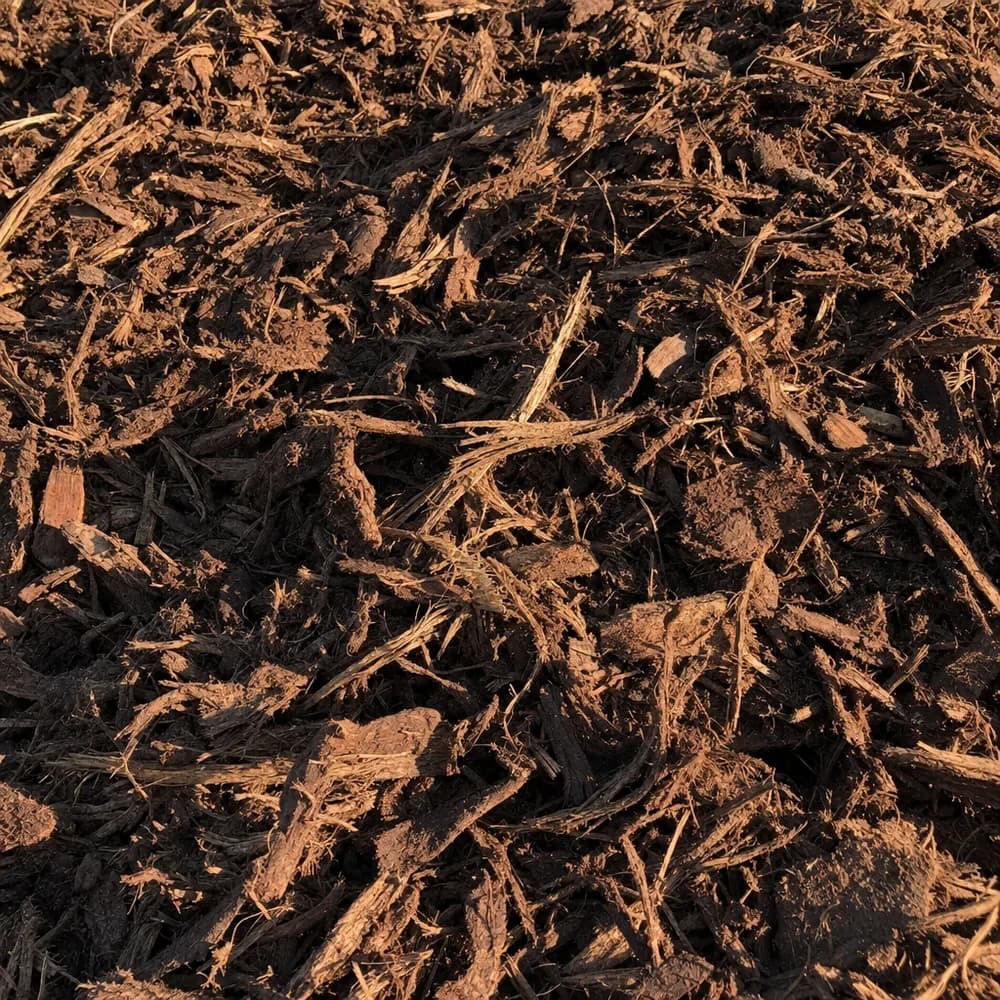
Mulch Calculator for Beds, Tree Rings and Xeric Borders
Enter your project dimensions
Mulch does more work at altitude than it does at sea level. Thin, dry air, hard sun and the wind that comes with an afternoon storm pull moisture out of an open bed faster than most people water it back in, and bare soil bakes to a crust that sheds the next rain instead of taking it. The mulch calculator answers the quantity question. The depth you feed it is what decides whether the bed holds water through July.
Beds that curve, and the layer you already have
Two things make a mulch estimate harder than it looks, and neither of them is arithmetic.
The first is shape. Beds along a house are near enough rectangles, but an island bed or a border that follows a path is not. Break it at the obvious points, measure each piece as a rectangle or a circle, and add up to five of them in the tool rather than trying to average one number out of the whole thing.
The second is what is already on the ground. A bed carrying two inches of last year's mulch does not want another three. Rake the old layer loose, measure what is actually there, and order the difference. If the old layer is matted or has a crust of fungus across it, pull it out and start from the soil.
Cubic yards, bags, and the one number on the results panel you can ignore
A cubic yard is 27 cubic feet. Divided by the 2 cubic foot bag most garden centers sell, that is 13.5 bags to the yard, which is the conversion this page mainly exists to do.
The ton figure is the one to skim past. Shredded mulch is published on this site at around 600 lb per cubic yard, or 0.30 tons. That is a fifth of what a yard of gravel weighs, and it is why mulch is bought, delivered and spread by volume. A three yard order weighs less than a ton. Nobody is watching the scale on it.
| What you have | What to do with it |
|---|---|
| Cubic yards | The figure you order against |
| Cubic feet | Divide by your bag size to compare against a store price |
| Tons | Useful only for knowing the load is light |
A 36-foot foundation bed through the mulch calculator
Hypothetical example. A bed runs 36 ft along the front of a house and is 4.5 ft deep, and it was stripped back to soil last fall.
- Choose Rectangle.
- Length 36, Width 4.5, in feet. That is 162 sq ft.
- Depth 3, in inches. Bare ground wants three.
- Pick the material so the mulch weight is applied.
- Tick Add 5% extra for compaction & spillage. Shredded mulch blows off a wheelbarrow in any wind worth the name.
- Calculate.
- 162 x 3 ÷ 12 = 40.5 cubic feet
- 40.5 ÷ 27 = 1.50 cubic yards
- 1.50 x 13.5 = about 20 bags of 2 cubic feet
- 1.50 x 0.30 = 0.45 tons
- With the 5% ticked: 1.58 cubic yards
Order a yard and a half. Twenty bags is several trips in a car with the seats down.
Tree rings are a good use of Multiple areas. Six circles 4 ft across is 6 x 12.6 = 75.4 sq ft. At 3 inches that is 18.9 cubic feet, or 0.70 cubic yards, roughly 9 bags. Enter them as six circles with a diameter of 4 rather than trying to convert them into a rectangle, and run them at the same depth as the bed above or as a second calculation, since the depth box takes one figure for the whole run.
Two inches over old mulch, three over bare soil, none against the trunk
- Refreshing an existing bed: 2 inches over a raked, loosened layer. Any more and the combined depth starts smothering roots.
- A new or stripped bed: 3 inches. That is the depth that stops most weed seed germinating and keeps soil moisture in through the dry part of the summer.
- The ceiling: 4 inches, anywhere. Deep mulch that stays damp starves roots of air.
- Tree rings: keep a gap of 3 to 6 inches of bare soil around the trunk. Flat like a doughnut, never piled up the bark, where it traps damp against the trunk and gives rodents cover through the winter.
- Slopes and wind: shredded mulch knits together and stays put better than nuggets, which float in a hard summer downpour and end up on the path.
Rule of thumb: one cubic yard covers about 108 sq ft at 3 inches, or 162 sq ft at 2 inches.
Mulch, garden soil and the order they go on in
If the bed is being rebuilt rather than topped up, two calculations happen in sequence and only one of them is this tool.
Bringing the soil level up or improving it is sized in the soil calculator against garden soil, which weighs more than three times what mulch does per yard. Mulch goes on afterwards as a surface layer. Running one figure for both leaves you short of soil and long on mulch.
For beds finished with stone instead of bark, the weights change completely. Decorative rock goes through the river rock calculator, and pea gravel through the pea gravel calculator, both at more than four times the mulch weight per yard.
The half yard for the beds you forgot about
Almost everyone measures the front beds and forgets the strip behind the garage, the two tree rings by the drive and the run along the fence. Walk the whole property with the tape before you order, not after.
Then add a little. A pile that gets rained on loses some to the driveway, some blows away spreading it on a windy afternoon, and a bed always looks thin in the spot you finish last. Spread the load within a week or two of it arriving. A big pile left standing for a month heats up in the middle and turns sour.
Take your yardage to the Shredded Mulch page to choose an amount and a date. Delivery is arranged at checkout from your ZIP code: the order is matched to a supplier in the network near that address, and an agent confirms the exact delivery address before the load goes out. How delivery works covers the access the truck needs, and a tarp goes down first if the drop spot is fresh concrete. Anything in the same project that is not a bed has its own tool among all the calculators.
Common questions
Is a leftover half yard worth having, or do I order exactly what the tool says?
Worth having. Order exactly to the tool and you finish the beds that show and leave the ones that do not. Mulch is also the lightest material here to have a little spare of, and a leftover half yard under a tarp will top up the tree rings in August once the first layer has thinned. Round up rather than down.
An island bed that snakes round the patio: how many pieces do I break it into?
Two or three rectangles and a circle will get you within a wheelbarrow load on a normal front yard. One eyeballed rectangle over a bed that snakes around a patio will not.
Does building the bed up first go on the same order as the shredded mulch?
It can, as a second line rather than a second order. If the same job needs the bed built up first, size that separately against Garden Soil and add it to the order as its own line.
Can the mulch pile sit on the concrete drive while I wheelbarrow it to the beds?
It can, on a tarp. Pick somewhere firm, out of the wind, and within a short wheelbarrow run of the beds. Lay a tarp under it on a drive you care about, since shredded mulch can stain concrete, and keep the pile clear of anything you do not want stained or shaded for a week.
Why show tons at all when mulch is sold by the yard?
Because the same calculator serves materials that are ordered by weight. For mulch, the yardage is the number that matters. At roughly 600 lb per cubic yard, even a large bed order comes in under two tons, which is why the volume figure is the one to work from.
Related calculators
Skip the 27-bag cart.
Bulk shredded hardwood by the yard, tipped in your driveway, delivery free.